



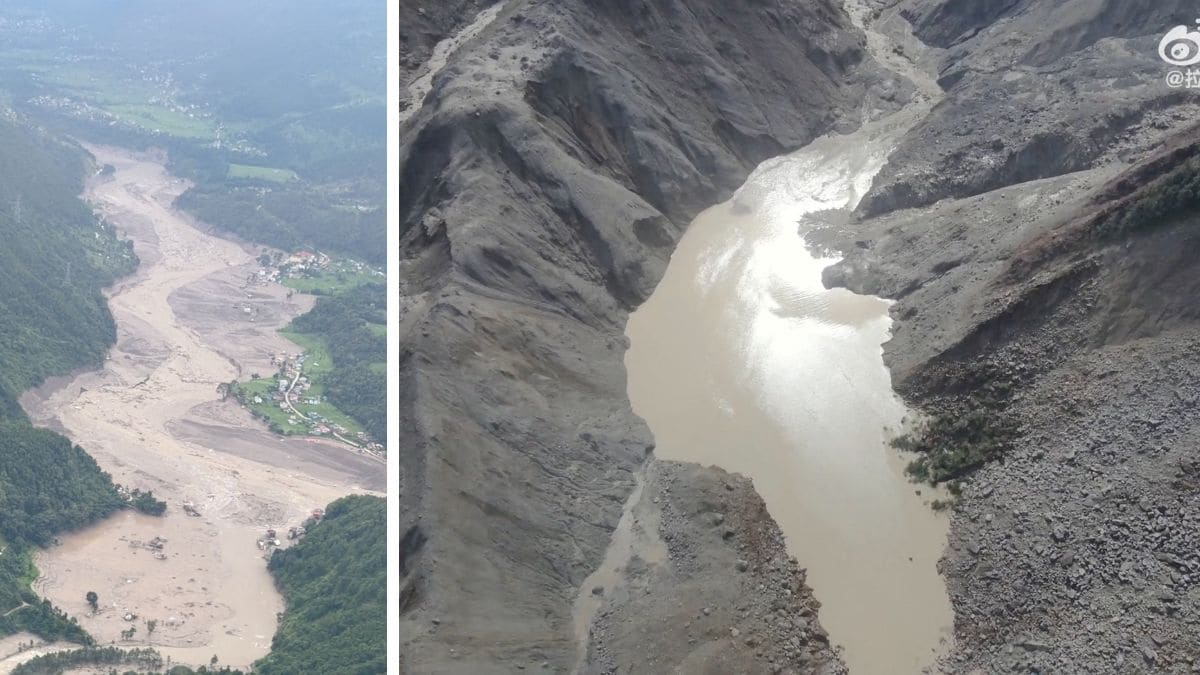
Rescue operations have resumed in Nepal after a brief pause amid fears of a fresh deluge, an army spokesperson said.
China has also resumed downstream rescue operations after pausing for the same reason, after the flood risks were deemed to be manageable, Reuters reported.
The operations were paused after a barrier lake created by the glacial landslide broke its banks, causing water to overflow. This sparked fears of new flash floods.
Officials in both China and Nepal later said that the immediate risk from the barrier lake was diminished and the water began to drain, and lowered the risk of a new flood.
Meanwhile, Nepal has refused foreign assistants for search and rescue operations following the floods despite offers from several countries that had nationals missing it the disaster.
Nepal's foreign ministry said on Friday that it was managing the rescue efforts.
"The offer for help is natural. Our security agencies are doing the search and rescue operation. For now we don’t require such help," Lok Bahadur Chhetri, spokesperson for the foreign ministry, said without providing further details.
India, China, the United States, Britain, Japan, South Korea, Sri Lanka and Bangladesh are among the countries that asked the government to allow search and rescue teams to assist the operation, The Kathmandu Post reported.
"South Korea meanwhile said that it continues to negotiate with Nepal on the matter.
Seoul has pledged $1 million in humanitarian assistance through international organisations, i
Dinesh Bhattarai, a former Nepali ambassador to the United Nations in Geneva, told Reuters, "They may have thought about the locational sensitivity of the region and decided not to accept foreign teams."
The flood-affected region of Rasuwa lies close to China’s Tibet, a region that has faced territorial issues.
Chinese President Xi Jinping offered his condolences to Nepal’s president on Friday.
