



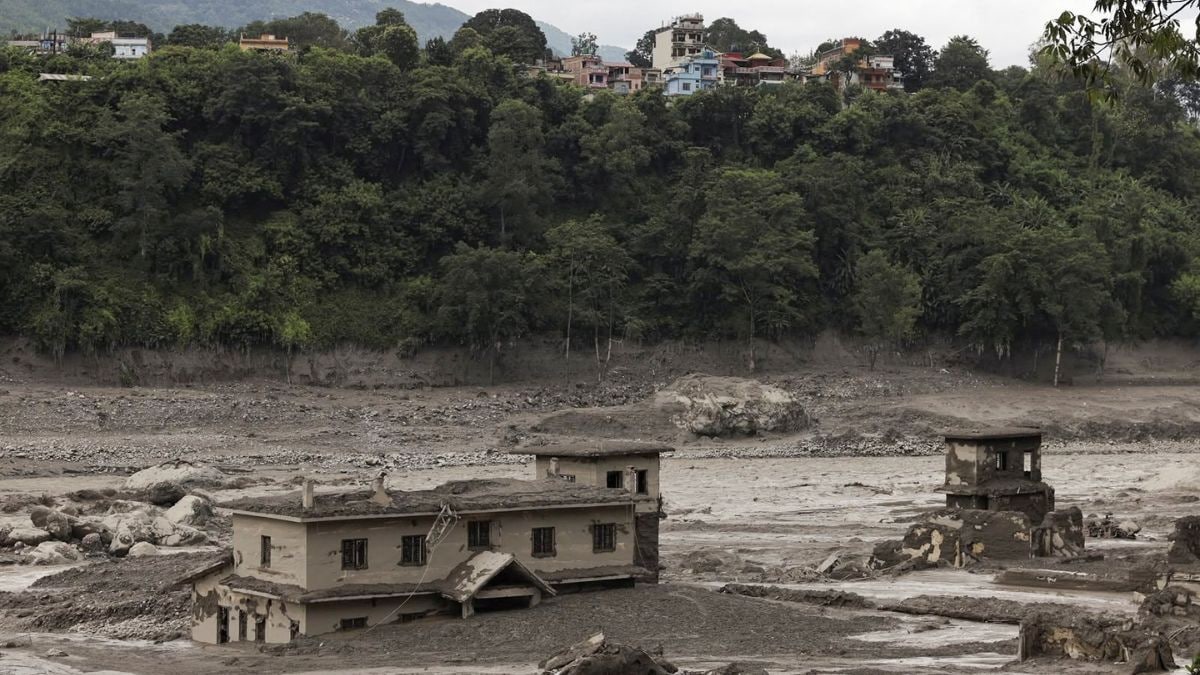
Nepal Foreign Minister Shisir Khanal on Tuesday said the an earthquake might have triggered an avalanche that resulted in the deadly flash floods in the country's Rasuwa district.
At least 142 Indians are among the nearly 400 people missing in Rasuwa district, on Tibetan border. At least 93 Nepalese citizens and 141 tourists from USA, Malaysia, UK, South Africa, Australia and Netherlands are also missing.
Heavy rainfall, glacial lake outbursts and avalanches upstream in Tibet often sends massive surges down the river into areas like Timure and Syabrubesi in Rasuwa. Timure and Syabrubesi were heavily struck by the latest flash floods in Bhote Koshi river. The river originating in Tibet often sees landslides and floods due to avalanches upstream in Tibet.
Why is Rasuwa is prone to climate-induced disasters?
Rasuwa district is prone to sudden and destructive flash floods as well as other climate-induced disasters due to its steep mountain terrain with slopes over 30 degrees. This causes water to race downhill quickly through narrow valleys. The rock and soil structures are fragile and easily destabilised.
Prime Minister Narendra Modi on Wednesday spoke to his Nepalese counterpart Balendra Shah and conveyed condolences on the loss of lives due to the floods there and told him that India is ready to provide all possible humanitarian assistance to the neighbouring country
