



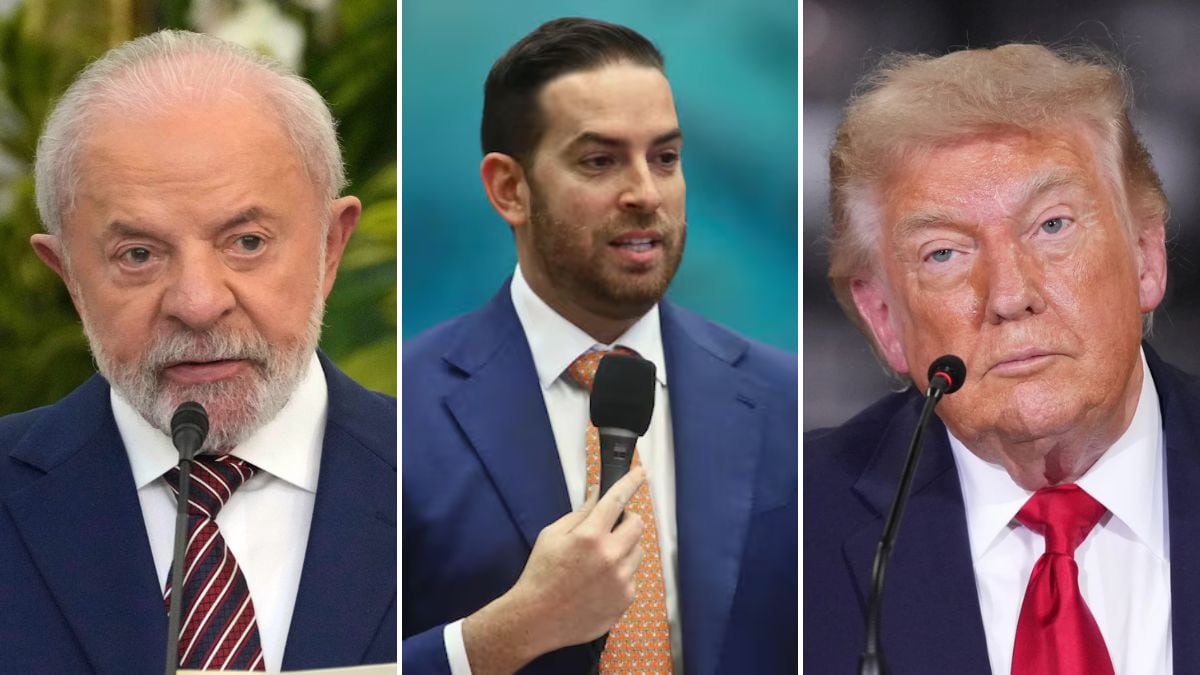
The US is now mulling punitive measures against Brazil in what is seen as a fresh twist in the tensions between the two nations over trade, agriculture, and diplomatic cooperation.
This comes as Brazil is yet to approve the nomination of Florida lawmaker Daniel Perez, Washington's pick for the ambassador to Brasilia and a close aide of Secretary of State Marco Rubio.
The weeks-long delay has angered officials of the Donald Trump administration, as it comes just months ahead of Brazil's presidential elections in October this year.
From snub to standoff
Tensions over Perez's approval date back to his nomination by Trump on June 1 this year, which took place before the US sought Brazil's formal consent to it—a common diplomatic practice known as an "agrément".
This was viewed by Brazilian officials as an insult and a breach of long-established diplomatic protocol—in line with months of tensions over what Brasilia sees as US intervention in its internal politics, a Reuters report said, citing officials in the loop.
Perez's nomination has now passed the Senate Foreign Relations Committee, but has not yet received a full Senate vote. Even if it did so, there is one key hurdle in his way: an agrément, which Brazil has not granted him yet.
As the delay in Brazil granting its consent continues, it leaves the US without an ambassador in Brasilia at a crucial time when its left-leaning president Luiz Inacio Lula da Silva tries to maintain his slim lead over conservative candidate and Trump ally Senator Flavio Bolsonaro.
"We are not saying we won't give the agrément, but there is no deadline ... It is up to the host country to decide when the appropriate time is," an official said about the diplomatic procedure, which remains highly confidential, as per the Vienna Convention.
The US, however, considers this delay as Brazil's attempt to tilt the scales against the conservatives, since Bolsonaro has been vocal about supporting Trump in the past.
"We reject any effort by foreign countries to interfere in our domestic processes," a US State Department spokesperson said, defending the Trump administration's decision to nominate Perez before the agrément.
With the Lula-led government on Wednesday rejecting the visa requests of two Trump administration officials—who he claimed wanted to fly to Brazil and "meddle" in its elections—weeks after Washington imposed a 25 per cent tariff and a 12.5 per cent add-on tariff on top of it, it is yet to be seen what punitive measures the US could resort to over the Perez standoff, and how Brazil's response to it will affect Lula's projected margin over Bolsonaro.
