



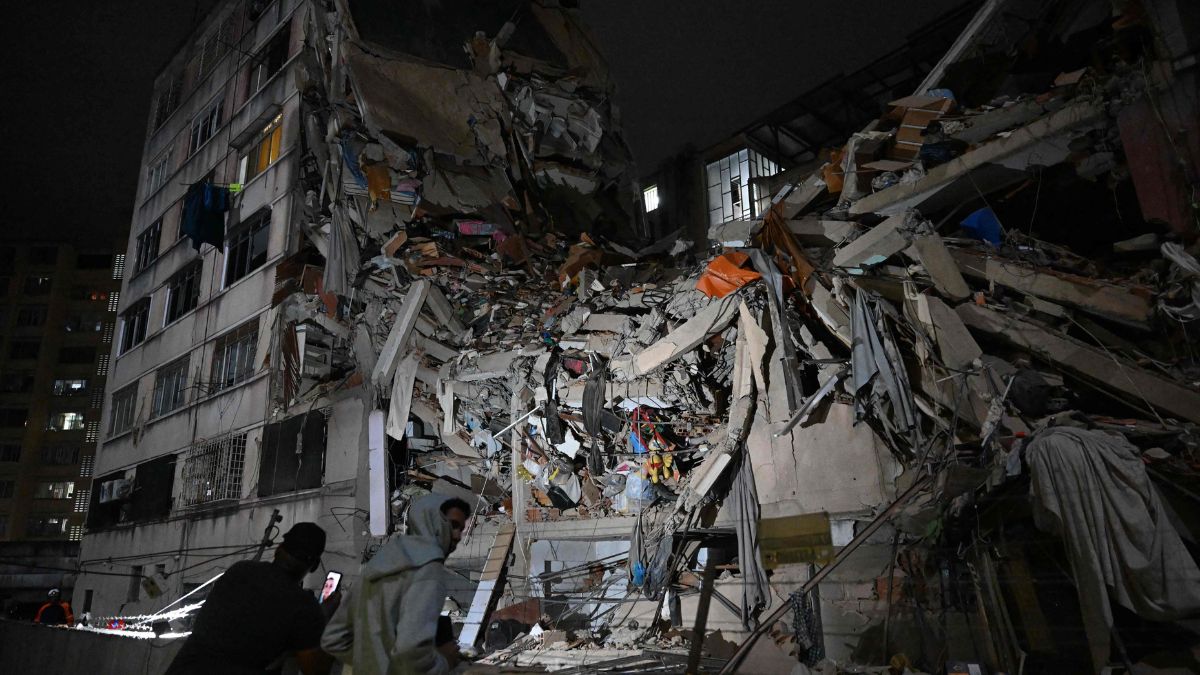
The death toll of the disastrous earthquake that hit South American nation of Venezuela could be between most likely range from 10,000 to 100,000, according to the U.S. Geological Survey (USGS). The first quake had a magnitude of 7.2 and hit about 160 km (100 miles) west of Caracas, followed less than a minute later by a magnitude 7.5 tremor, which the USGS terms as a “seismic doublet” — a phenomenon in which two large earthquakes occur within seconds of each other in the same area.
Though the real toll is yet to come out, reports quoting the Venezuelan Ministry said the situation is very alarming. US President Donald Trump also put up a post on Truth Social stating there could be a devastating number of deaths. "We will be the
According to local media reports, the quake was felt most strongly in Trujillo, Yaracuy, Carabobo, Aragua, Miranda, Caracas and La Guaira.
Venezuela's acting President Delcy Rodríguez has declared a state of emergency, and the rescue crews continue searching for survivors in the rubble of collapsed multi-storey buildings. In Caracas, the roof of Maiquetía airport caved in, and all flights have been cancelled. Rodríguez has also announced that she will hold a press conference “shortly” after 9 p.m., local time, to provide an update on the situation.
Buildings collapsed
Residents rushed out as buildings shook, with many describing the aftermath to a scene in a horror movie. "There was a cloud of smoke that wouldn't let us see. And when we went downstairs, the scene was like a horror movie. We had to climb over the rubble and everything," a survivor told BBC News.
Some residents claimed they are in the dark about things happening around. Javier, a resident of downtown Caracas, says all the information is has is from acquaintances and social media platforms: “When you turn on the TV, no channel is reporting what’s happening. There’s no official information; we don’t know how many people are affected or how they’re organising to help. You don’t see any police or firefighters on the streets,” Javier told El País.
“People were running through the streets in fear, and some were screaming. We’re still out on the street; we don’t want to go back inside our homes for fear they might collapse, because the structures of many houses in Venezuela are fragile,” another resident told El País.
