



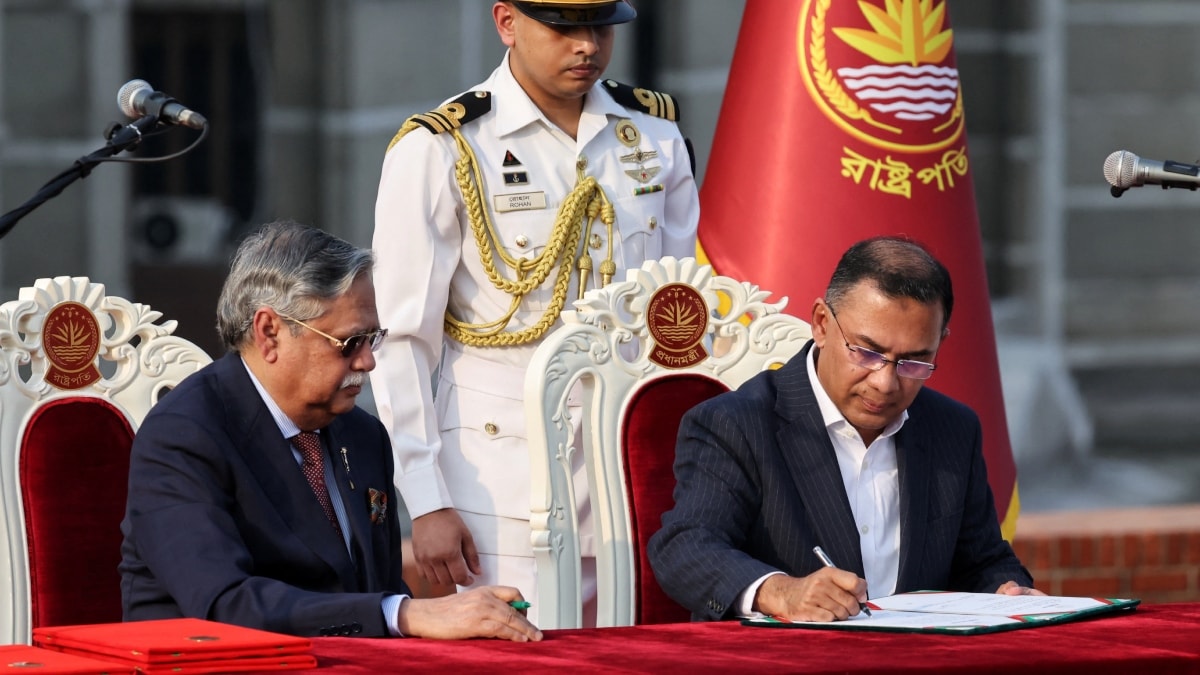
On 12 February 2026, Bangladesh held a historic referendum alongside its 13th national parliamentary election. Voters were asked whether to accept the “July National Charter 2025,” a package of constitutional and governance reforms that emerged from the political transition following the mass uprisings of 2024. The vote was widely seen as a defining step in recalibrating state power after years of polarisation.
The Charter proposes to decentralise authority, introduce stronger checks on the executive, and reinforce democratic safeguards. Key provisions include establishing a bicameral legislature, imposing term limits on the Prime Minister, strengthening judicial independence, enhancing women’s representation, and restructuring the Election Commission and caretaker mechanisms. What might have been a technical constitutional vote quickly became a political test shaped by how major parties positioned themselves.
The Bangladesh Nationalist Party (BNP), led by Tarique Rahman, officially campaigned for a “Yes” vote. The party argued that structural reforms were necessary to prevent a return to executive dominance and to restore accountability. The BNP framed the referendum as part of democratic renewal—a safeguard against one-party hegemony.
Yet its endorsement was measured. While publicly backing the Charter, some within the BNP expressed reservations about clauses that could constrain executive authority or redefine the balance between party leadership and government office. Provisions limiting the Prime Minister’s role generated quiet concern. This reflected a strategic tension: supporting reform while remaining cautious about institutional limits that might later restrict a BNP-led government.
Despite this nuance, the BNP aligned with public sentiment. The referendum passed decisively, with 68 per cent voting “Yes” and turnout around 60 per cent. On the same day, the BNP and its allies secured 212 seats in the 300-member Jatiya Sangsad, gaining a commanding majority. The scale of this victory places the BNP at the centre of implementing the Charter’s reforms.
In contrast, Bangladesh Jamaat-e-Islami adopted a clearer and more enthusiastic stance in favour of the Charter. Jamaat portrayed the referendum as a necessary correction to elite domination and governance failures. Rather than focusing heavily on institutional mechanics, it emphasised moral governance, accountability, and restoring integrity in public life. Reform, in its narrative, was tied to broader questions of national identity, religion, history, and social order.
Though Jamaat did not present a detailed constitutional blueprint, it consistently supported reforms that dispersed power and strengthened oversight. Its blend of conservative social themes with calls for structural change resonated with segments of voters. Winning 68 parliamentary seats, Jamaat remains influential, though not dominant, in the new legislature.
The combined outcome—a strong “Yes” vote and a landslide BNP victory—creates both opportunity and tension. Voters have endorsed limits on concentrated authority while granting overwhelming legislative control to one party. This dual mandate places responsibility on the BNP to implement reforms faithfully.
If executed sincerely, the Charter could redistribute institutional power, strengthen judicial independence, and introduce greater scrutiny in lawmaking through a bicameral system. However, the BNP’s earlier reservations suggest that implementation may test the party’s willingness to accept meaningful constraints.
The peaceful conduct of both the referendum and the election has signalled political stability to regional observers, including India. Yet the real measure of success lies ahead. The 2026 referendum was more than a procedural exercise; it was a demand for institutional recalibration. Bangladesh now faces the challenge of turning that mandate into durable democratic practice.
Zillur Rahman is a political analyst and president of the Centre for Governance Studies (CGS).
The opinions expressed in this article are those of the author and do not purport to reflect the opinions or views of THE WEEK.
