



Bangladesh stands at a crossroads between opportunity and dilemma in the post-Sheikh Hasina period, where the ballot will be shaped by expressions of identity as much as a political choice. As the country heads into national elections today, the contest is between the Bangladesh Nationalist Party and the Jamaat-e-Islami-National Citizen Party alliance.
The BNP has historically positioned itself as a culturally Muslim but politically not Islamist party that can keep the fabric of Bangladesh as vibrant as its traditional jamdani shawl. On the other hand, the JeI-NCP alliance is riding on the sentiment of a distinct Bangladeshi identity that needs to be safeguarded from “old blocs” (Awami or BNP), to avoid a repeat of the horrific killings that remain fresh in the memory of its people since 2024.
The Jamaat’s confidence comes not just from its organised cadres but also from the rise of the National Citizen Party, the youngest party in Bangladesh, born out of the July 2024 protests.
Notably, for a section of the youth, their sacrifices during the student-led protests of July 2024 have come to define their history. This new narrative contrasts with the one that was handed down to them by their elders, where the soft power of poets like Rabindranath Tagore and Kazi Nazrul Islam found resonance in conversations over shared cultural spaces with India over decades.
The anti-India sentiment—which strongly prevails across the board and often mirrors itself as the anti-Hasina sentiment—can consolidate the vote in favour of a party that can free them from "cultural hegemony" and allow them the freedom to make new friends, sing new songs and write new literature.
But here lies the catch as well. The people will decide not just who will govern after the forced ouster of the Awami League government, but also what kind of nation they want to rebuild after the 2024 uprising.
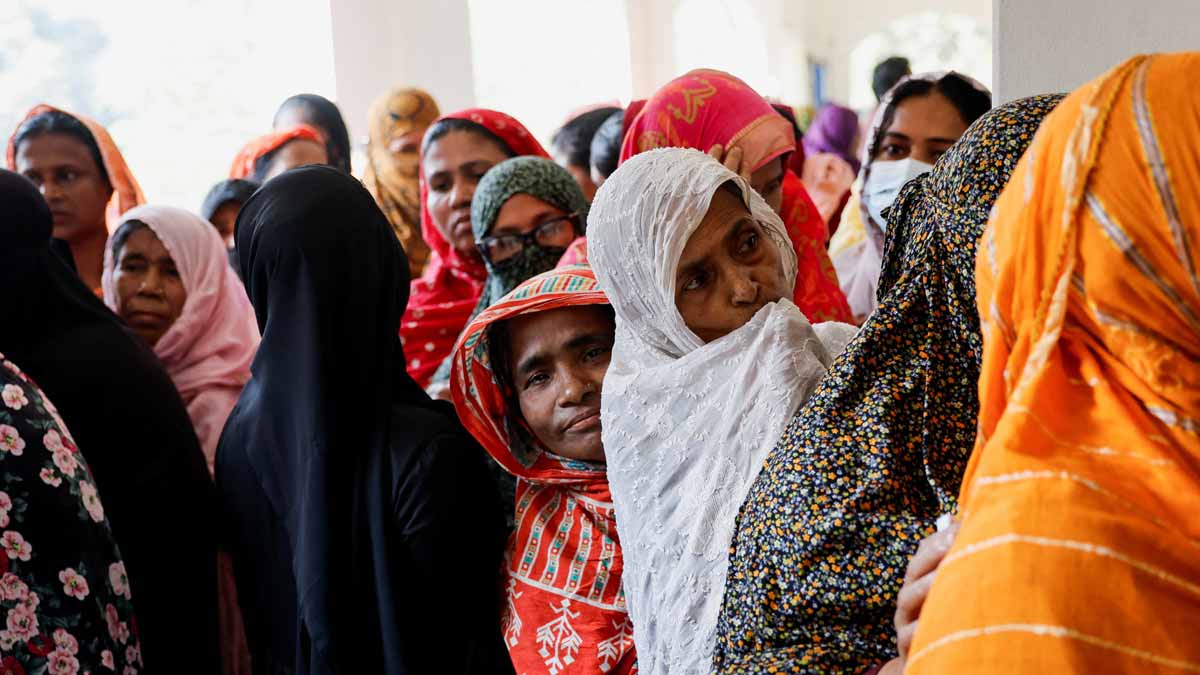
The youth and the women are going to be the two deciding factors in this election. The youth—many of whom are first-time voters, along with those who participated in the student-led protests—are crucial in driving the change they seek for the country, while the voice and freedom of women have always been a critical pillar in Bangladesh's democracy.
For the BNP, it is an opportunity to position itself as inclusive, democratic and culturally aligned to the identity surge of its people. The party is also positioning itself as the principal vehicle for restoring electoral legitimacy after years of disenfranchisement.
“After Hasina departed from the country, public expectations rose dramatically,” says Amir Khasru Chowdhary, former commerce minister and standing committee member of BNP. “People now expect honesty, accountability and performance from politicians and from the state.”
Aware of the high expectations, the BNP is already hard-selling its 31-point reform agenda, besides carefully balancing its approach to the second most important task—a Constitutional referendum to the July charter brought during the interim regime containing over 80 reform proposals that will reshape Bangladesh’s governance model.
The elections and the referendum—a first in Bangladesh's political history—will go hand in hand. A key reform, being agreed to by the BNP in the referendum, includes limiting the term of the prime minister to two terms, giving more powers to the President, expanding women’s political representation, and protecting judicial independence. What it does not agree to is the proposal to grant the Opposition parties the prerogative to hold the position of president of the parliamentary bodies of major ministries.
Within the BNP, there is growing concern that if it comes to power, opposition from Jamaat-e-Islami and the NCP could block its major policy decisions, potentially rendering the government ineffective. Discussions are already underway about how JeI cadres might take to the streets in protest within just six months.
The BNP, therefore, is pinning its hope on a two-thirds majority to form a stable government. With Hasina’s party sitting out, the BNP is eyeing the accumulation of the anti-Hasina vote to give it the buffer to keep the Jamaat at bay in a post-election scenario. While the Hindu voter may still go to the BNP, political analysts say, it is the hard-line Muslim voter of the Awami League who makes the election outcome uncertain. Given the fact that both sides believe that the Awami League voter still exists as a sizable double-digit percentage, it will be interesting to see who gets the maximum benefit.
