



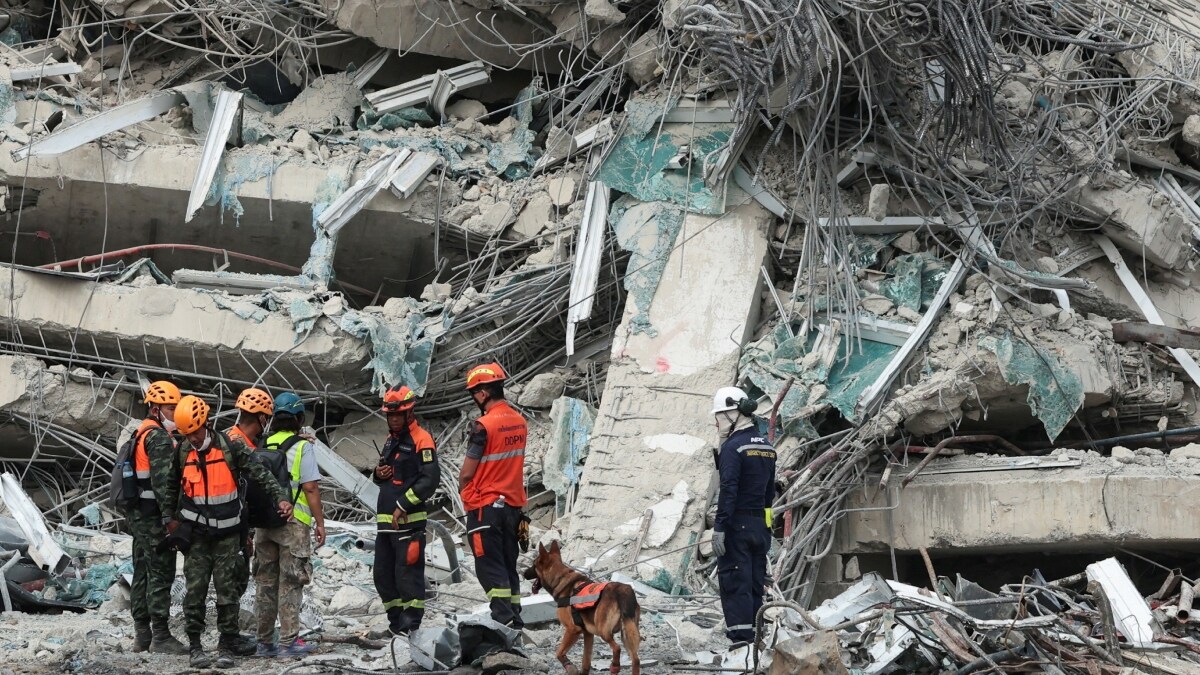
Aftershocks were reported in Myanmar's Mandalay city even two days after a massive earthquake killed more than 1,600 people in the country and scores in neighbouring Thailand.
The deadliest natural disaster to hit Myanmar in years damaged critical infrastructure, including an airport, highways and bridges, slowing humanitarian operations, according to the United Nations. After the initial 7.7-magnitude earthquake rattled Mandalay on Friday afternoon, aftershocks of magnitude 6.7 were reported minutes later in the central Myanmar city, reports said.
What are aftershocks?
Aftershocks are earthquakes of lower-magnitude or low-intensity that follow the principal tremors or the "main shock." According to Britannica, this main shock would be the largest in a sequence of earthquakes. They occur more frequently in the hours and days that follow an earthquake.
"When an earthquake occurs some of the energy released from the sudden fracturing of rock is transferred to the rocks nearby, which adds to the pushing, pulling, and twisting stresses already placed on them," the encyclopedia said.
ALSO READ | Earthquake shadow over BIMSTEC Summit next week in disaster-hit Bangkok
When these stresses are too much for the rocks to bear, they break as well, releasing a new round of pent-up energy and creating new faults in the rock. Thus, earthquakes beget aftershocks, and aftershocks beget smaller-and-smaller aftershocks. However, their magnitude and frequency decrease over time.
Although the shaking intensity associated with most aftershocks is relatively small compared with that of the principal earthquake, it can be large enough to hamper rescue efforts by further destabilizing buildings and other structures. In addition, aftershocks can be stressful for local residents coping with the damage and loss of life wrought by the principal quake.
Myanmar earthquake: Latest updates
Myanmar's neighbours sent warships and aircraft laden with relief materials and rescue personnel on Sunday, as international aid gained steam after a massive earthquake ravaged much of the poor Southeast Asian nation. At least 1,600 people have been killed and 3,400 injured by Friday's 7.7-magnitude quake, one of Myanmar's strongest in a century, its military government said.
"All military and civilian hospitals, as well as healthcare workers, must work together in a coordinated and efficient manner to ensure effective medical response," said the junta chief, Senior General Min Aung Hlaing, according to state-run media.
