



“Gek sok ngowo drenpé pal pelwé
tashi lhamo gyé la chaktsal lo”
"Homage to you, the Eight Auspicious Goddesses - Beauty, Garlands, Song, Dance, Flowers, Incense, Light and Perfume…
Merely thinking of you makes success grow more and more!"
The verses of the ‘Eight Auspicious Ones’ hold an important place in the life of a Bhutanese, starting as a morning ritual, or before an important action. A devotional invocation built around five groups of eight auspicious figures in Buddhism; what it really does, though, is reveal the inner strength the Bhutanese people possess. Our guide Laja recited it in Dzongkha (declared the national language of Bhutan in 1971), before we embarked on a hike in the valley outside our window. Through a meandering forest trail laden with colourful berries, buzzing grasshoppers, mushrooms and swaying wildflowers, went the slightly muddy, densely canopied tracks. On a crisp autumn morning, we were out communing with nature, in a place of reverence. Tufty clouds kissed the highest hills of the Gangtey-Phobjikha valley in the distance. Said before a journey, Laja’s recitation allowed us to meditate on the very idea that Bhutan tries to leave you with.
The lure could have been its proximity, wellness, or self-searching – for those of us who once lived closer, in West Bengal. Arriving here feels like being rewarded for patience, though it comes with an appetite for expenditure, as the luxury of location and warm hospitality in the branded hotel circuit is unmatched. Laja walked with us through the valley from our base, overlooking the landscape.
But it was nature that drew us first to Thimphu, then on to Punakha and Gangtey, two valleys now firmly on the country's evolved and planned tourism routes, for a nation that only opened its doors to foreign travellers in 1974.
Of habits and habitats
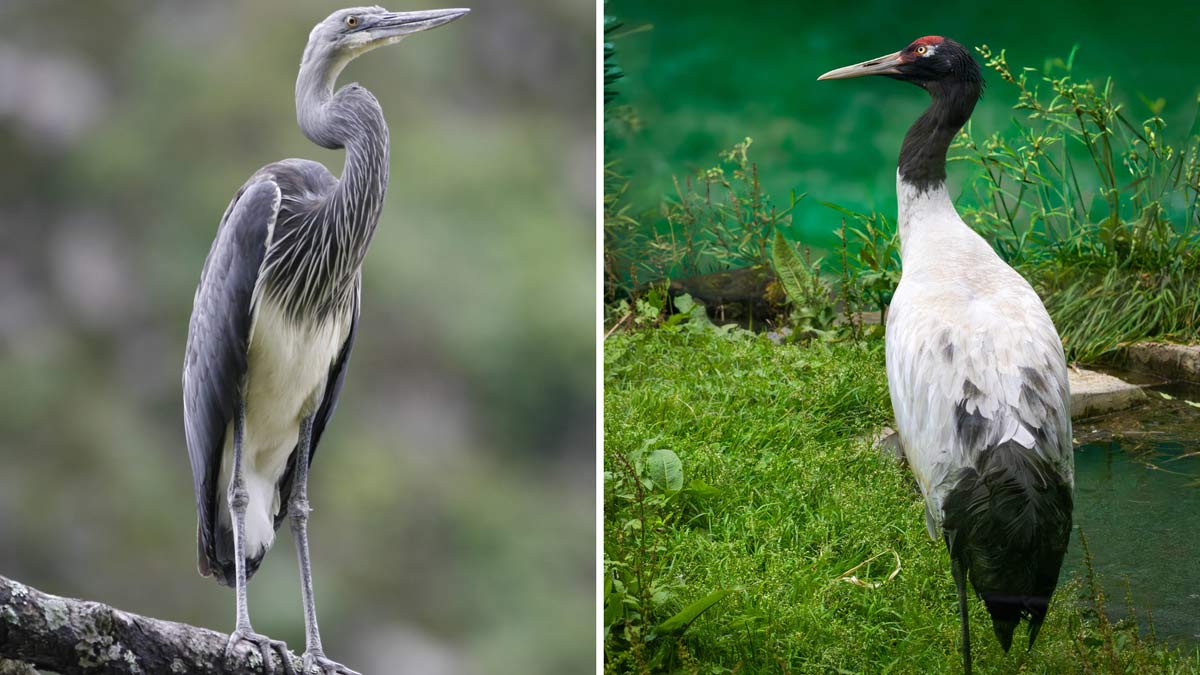
At about 3,000 metres above sea level, the Gangtey-Phobjikha Ramsar site is a wide alpine wetland valley, the largest and most significant in Bhutan, known for the harmonious existence of its inhabitants with nature. The valley holds great cultural significance as the site of the annual Black-necked Crane Festival on November 11, organised by the Royal Society for the Protection of Nature (RSPN) under its Integrated Conservation and Development Program. Locals believe the Thrung Thrung Karmo arrives after circling Gangtey monastery three times, and does so again months later when leaving. The species is vulnerable to extinction, and known too for its spectacular mating ritual, with courtship displays of song and dance before the breeding season; given adult birds stand over a metre tall, it's quite a sight.

The bird's winter ground has been protected for generations by locals' traditional respect for all living beings. Every year, over 500 cranes migrate here for winter, where power lines are built underground to protect them.
Locals perform folk songs and mask dances (Drametse Ngacham); monks and villagers honour the birds on arrival, with children in crane costumes performing a precisely choreographed crane dance, a reminder that in Bhutan, preserving a single species is a responsibility binding an entire community.
Attending the festival is a rare privilege, a chance to witness how nature's rhythms are embedded in the cultural fabric. For the Bhutanese, cranes symbolise prosperity, longevity, and the delicate balance between land and people. Held after the harvest season, against the backdrop of Gangtey Gompa monastery, the festival also promotes eco-tourism in the region, with villagers sharing stories freely and the knowledge centre hosting sessions for visitors to learn about the bird.
An avian’s survival in Punakha
In the Punakha valley, another conservation programme protects the endangered white-bellied heron (Ardea insignis), also known as the imperial heron. One of the rarest and most critically endangered herons in the world, with fewer than 60 individuals left globally, it stands on the brink of extinction. Bhutan harbours one of the last viable populations, making its conservation efforts crucial to the species' survival.
We travelled there next, following this rare resident of fast-flowing river habitats with only 20 to 30 individuals recorded in surveys over two decades, roughly half the global population. The heron favours this habitat for foraging and nesting in forested areas near water. With changing landscapes due to rapid development and global climatic events, the species is at equal risk here, just as elsewhere.
On a soundless, weightless raft guided by our hosts, we floated past a few of the designated sites on the Mo Chhu river, but none of the intriguing birds was seen that day. Understandably so, given how few remain.
Our time in Bhutan left us reflecting on the extraordinary lessons the country offers the world. At a time when nations grapple with environmental degradation, climate events, wildfires and flash floods, Bhutan stands as a beacon reminding us that true prosperity lies not in accumulated wealth, but in preserving what remains of the planet and its little habitats that we all occupy. We are confident that fifty years from now, Bhutan will perhaps look the same as it does today.
