



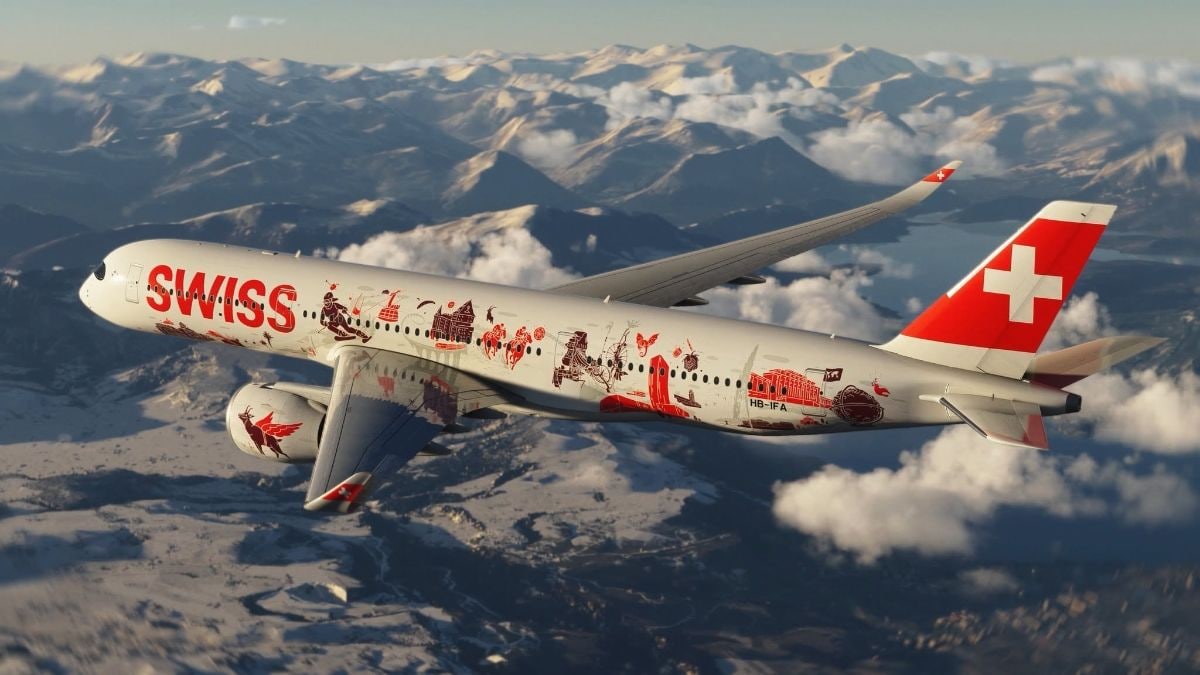
This is the first time that Swiss International Air Lines is adding a destination in Southern India in the form of Bengaluru with five weekly flights from the Indian IT city to its Swiss hub of Zurich. More than 600,000 tourists from India travelled to Switzerland in the year 2025, and the numbers are expected to further increase with the addition of the third direct flight to Switzerland from Bengaluru.
“The potential and interest of Switzerland is significant for the people of India. We are a premium tourist destination, and we are not really aiming to get as many people as possible to Switzerland, people who would love to travel to Switzerland, spend a bit longer time in there and are ready to pay the price it takes,” remarked Simon Bosshart, Chief of Markets East at Switzerland Tourism.
As per the leadership team from Swiss International Air Lines not all airlines offer first class on long-haul flights but the Swiss Airlines has it on every single flight. “When we talk about the premium traveller, premium does not only mean a first-class traveller. Premium can be a traveller in economy class looking for a premium experience, and Swiss delivers that. ,” said Jens Fehlinger, the CEO of Swiss International Air Lines, during an interaction in Bengaluru.
He added that the Bengaluru flight had been planned years ago and their immediate aim is to have added business on their flight out of India. For this purpose, it is now targeting profitability for its newly launched Bengaluru-Zurich route before scaling up operations to a daily service, betting on India's growing demand for direct international connectivity despite geopolitical uncertainty and rising aviation costs. “Our first-year target is to make this a profitable operation that we can scale up to a daily flight,” said Fehlinger.
Interestingly, the inaugural flight from Zurich to Bengaluru was nearly full, with only five seats vacant, while the return service recorded comparatively lighter bookings. Fehlinger said it was too early to assess the route's overall performance, pointing to seasonal variations in passenger traffic between India and Europe, despite uncertainty arising from geopolitical tensions and higher oil prices. Our expansion plans were based on long-term assessments. Aircraft typically remain in service for 25 to 30 years, while new cabin products can be used for up to a decade, making the route a long-term commitment rather than a short-term commercial opportunity,” said Fehlinger.
Fehlinger also added that they would aim to maintain competitive fares despite rising operating costs, seeking to attract passengers from Bengaluru and other cities in Karnataka and neighbouring regions. The Bengaluru launch is part of the Lufthansa Group's wider expansion in India. The group plans to increase capacity on its Frankfurt-Hyderabad and Frankfurt-Chennai services and introduce a second daily Munich-Delhi flight from March 2027.
It was also discussed that the India-European Free Trade Association Trade and Economic Partnership Agreement had improved conditions for cross-border investment and could generate additional business travel over time.
It was observed that Indian tourists were shifting from conventional group tours towards independent travel, family holidays and smaller groups, with younger travellers increasingly exploring destinations beyond established attractions such as Interlaken and Mount Titlis.
“We would continue working with Indian travel operators to promote wider itineraries, while maintaining the country's premium positioning rather than pursuing visitor numbers through discount-led packages,” remarked Bossahrt.
Cricketer Jemimah Rodrigues, who has been recently appointed Switzerland Tourism's friendship ambassador in India, is expected to help connect the destination with younger travellers.
Swiss said it would initially rely on its existing Indian workforce, including personnel based in Mumbai and Delhi, alongside Swiss cabin crew for the Bengaluru service. Further local recruitment could be considered as the operation expands. The airline's immediate challenge is to convert initial demand into sustained two-way passenger traffic and profitability before committing to daily flights.
