



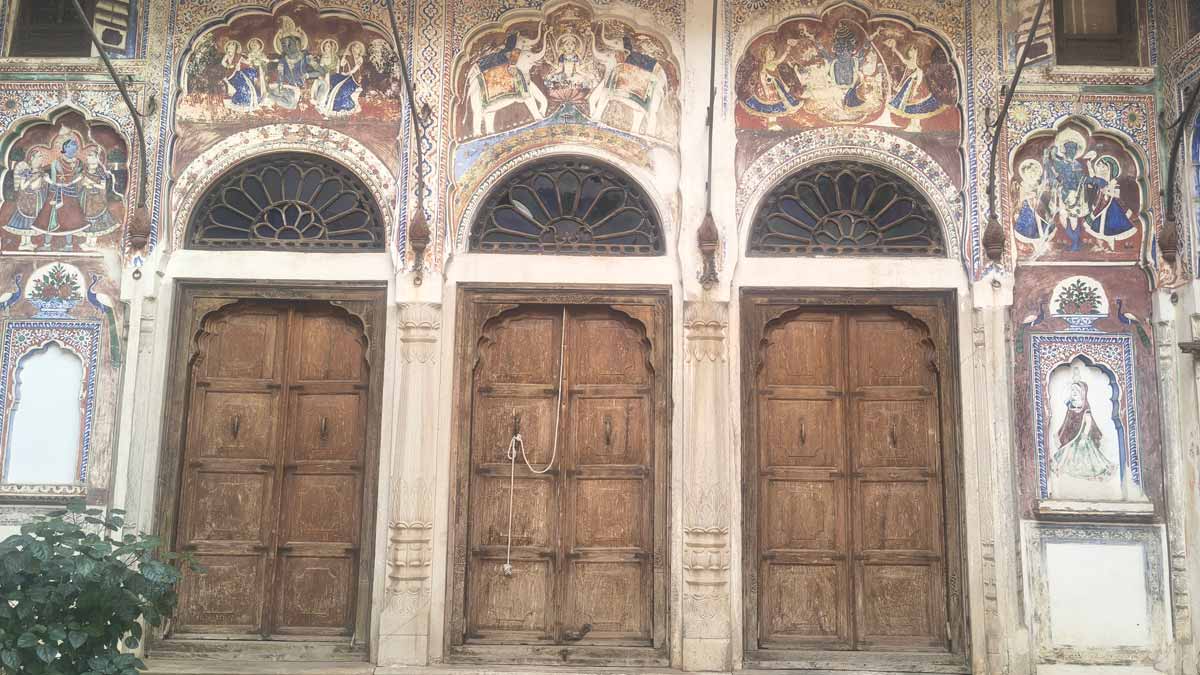
On a not-so-hot afternoon in March, over a long weekend, I arrived in Mandawa, Rajasthan's lesser-known painted haveli town, about a four-hour drive from Jaipur airport, unsure of what to expect from this small Shekhawati region I had only read about in passing.
The journey gave way to quieter roads and eventually to a landscape that felt suspended between past and present. By the time I entered its narrow lanes, lined with fading frescoes and time-worn facades, it was clear that Mandawa was going to be more than just another stop on a map; it was a place that would slowly unfold, one haveli, one story at a time.
In the desert heart of Rajasthan’s Shekhawati region lies Mandawa, a small, quiet, rustic area, hanging between a municipality and a town, that feels like an open-air art gallery. Its narrow lanes are lined with grand havelis, ornate mansions built by wealthy Marwari traders in the 18th and 19th centuries, whose walls are covered with elaborate frescoes. Gods, British officers, trains, elephants, and scenes of everyday life spill across fading plaster walls, telling stories of a time when Mandawa sat along the lucrative caravan routes connecting India with Central Asia.
Today, while many travellers rush through Shekhawati on their way to larger destinations in Rajasthan, Mandawa offers something rare: a chance to slow down and wander through history.

I arrived at Gulab Haveli, now part of IHCL’s expanding heritage portfolio and set right in the heart of this culturally rich region. It felt like stepping into the centre of Mandawa’s storied past. Carefully restored to retain its original structure, the haveli stands amid a cluster of grand, sprawling mansions, once owned by some of India’s most prominent business families, including the Goenkas and Birlas, each echoing a time when wealth was expressed through architecture and art, and lives were lived in opulence.
From low doorways and thick walls to frescoed surfaces and traditional layouts, the haveli’s character remains intact. Modern comforts have been introduced with restraint, almost gently, so as not to disturb the soul of the space. It is marked by its imposing wooden gates, beyond which lie open courtyards, delicately carved jharokhas (overhanging balconies), lattice windows, and walls covered in frescoes that stretch from floor to ceiling. This is the story of all the other grand and royal havelis that make up the region; while some have opened their doors as museums, others have turned into hotels, and yet a few others have kept their history untouched.
Mandawa’s havelis and their frescoes are its biggest draw. Built by merchant families who grew wealthy through trade, these homes were meant to display prosperity as much as provide residence. The result was an extraordinary fusion of architecture and art. What makes Mandawa’s frescoes remarkable is the range of stories they capture. While traditional Hindu mythological scenes dominate many walls, others reveal how global influences shaped the imagination of Shekhawati’s traders.
One might find images of steam locomotives, European soldiers, gramophones, and even early motorcars painted alongside Krishna, Shiva, and scenes from the Ramayan. These paintings reflect the period when Marwari merchants travelled across colonial India and beyond, bringing back stories and symbols from distant lands.
Some of the most famous havelis in Mandawa include the Morarka Haveli, known for its detailed paintings depicting everything from mythological figures to early images of trains and British-era influences. Nearby, the Hanuman Prasad Goenka Haveli features exquisite frescoes of gods and goddesses, while the Jhunjhunwala Haveli stands out for its vibrant colour palette and intricate detailing.
Food in Mandawa is best enjoyed local and authentic. Chef Seva Singh, a resident of Jammu who spent years in the kitchens of the Shekhawati region, served us an elaborate Rajasthani thali that seemed almost endless, with over 25 items laid out in a careful spread. There were local vegetables, seasonal preparations, a variety of desserts, and a towering glass of buttermilk that completed the meal. It was indulgent without feeling excessive, offering a generous glimpse into the region’s culinary richness.
Art historians often describe Shekhawati as the world’s largest open-air art gallery, and Mandawa stands among its finest showcases.
Yet, many of these artworks face the slow erosion of time. Weather, neglect, and urbanisation have damaged several havelis, and some have fallen into disrepair as descendants of the original merchant families moved to cities like Kolkata, Mumbai, and Chennai decades ago. Fortunately, a handful of these historic mansions have been carefully restored and converted into heritage hotels, allowing travellers to experience life inside a haveli.
Beyond the havelis themselves, Mandawa’s charm lies in its unhurried atmosphere. Camel carts move along dusty streets, shopkeepers sit outside small stores selling handicrafts and textiles, and everyone seems to know everyone. The surrounding landmarks are equally historic. We visited the Mertani Bawri (Stepwell) in Jhunjhunu, a few kilometres from Mandawa, and this was followed by a visit to the famous Sati temple that is surrounded by vast landscaped gardens.
Mandawa Fort, which overlooks the town, offers panoramic views of the surrounding desert landscape and the maze of rooftops below. From here, the town’s architectural heritage becomes even clearer—a patchwork of domes, courtyards, and terraces shaped by centuries of mercantile prosperity.
For travellers willing to venture beyond Rajasthan’s better-known cities, Mandawa offers something rare, and for a moment, Mandawa’s painted mansions seem to whisper the stories they have guarded for more than a century.
