



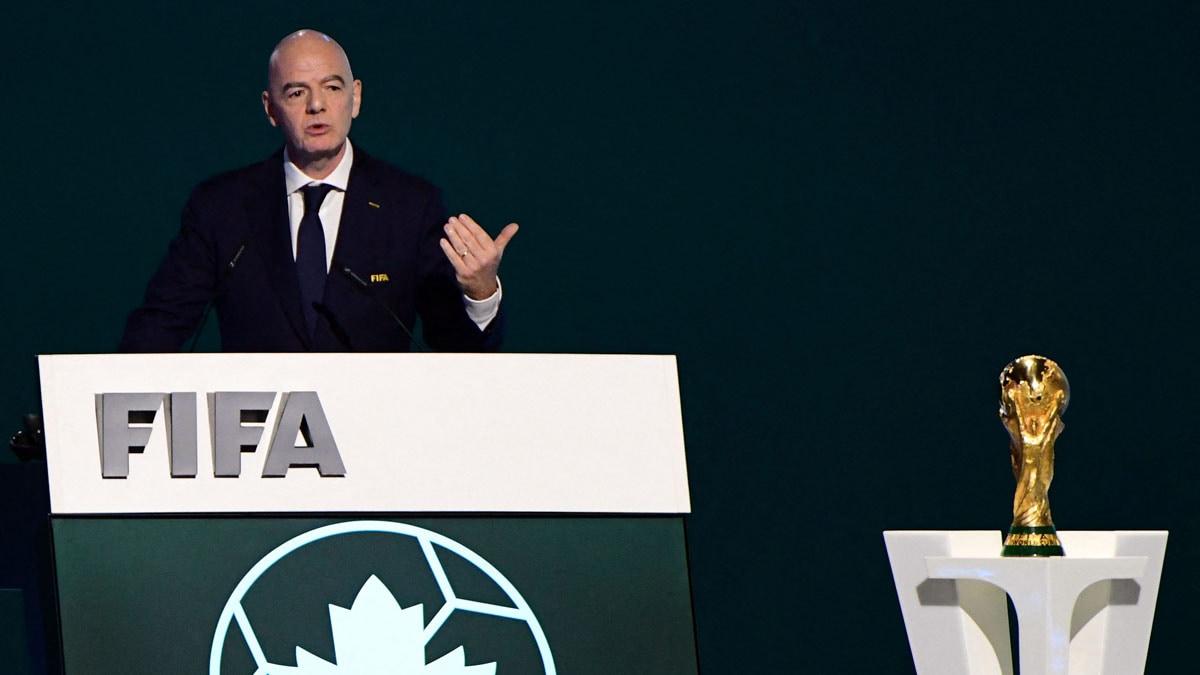
Former FIFA vice president Prince Ali bin Al Hussein, who serves as the president of the Jordanian football federation now, slammed the global football body for withholding the Arab Cup prize money owed to his Jordan national team and using it to “blackmail” the federation.
Prince Ali said that his organisation has still not received the payment it is due for reaching the final of the FIFA Arab Cup, which was played last December in Qatar.
In a post on social media, he said that during the World Cup in June—where Jordan made its debut—he was told that if he endorsed FIFA President Gianni Infantino, "it would go a long way to helping our FA out”.
This allegation comes as Infantino faces mounting pressure to salvage his presidency. He has recently faced a fierce backlash from global football leaders over a now-abandoned plan to sell a stake in future World Cup profits to investors led by Joshua Kushner.
“We pride ourselves in Jordan in upholding ethical values. We did not endorse him before and certainly will not now,” said Prince Ali. He was third in the five-candidate FIFA presidential election when Infantino was first elected in February 2016.
“But the whole situation amounts to blackmail and we refuse to give in to that,” the Jordanian royal wrote.
The 2025 FIFA Arab Cup, where Jordan lost to Morocco in the final match, was set to award USD 4.2 million to the runner-up, according to Jordanian media reports last year.
“The money our team should receive for having reached the final has not been delivered yet,” Prince Ali wrote, “while at the same time FIFA brags about how many billions they have in reserve.”
He added, “It is clear the problem really is with leadership. For months, FIFA has been refusing to help us on any of these or other matters.”
FIFA is yet to comment on these claims.
Prince Ali was elected by Asian football’s governing body to FIFA's ruling executive committee from 2011 to 2015. He famously stood against the incumbent president Sepp Blatter in the May 2015 election. That vote, which re-elected Blatter, took place just two days after Swiss and US federal agencies conducted raids at Zurich hotels to arrest football officials as part of major investigations.
Infantino seemed certain to be re-elected unopposed for a fourth and final term, which would see him lead FIFA until 2031. However, the fallout from his stake sale plan has sent shockwaves through the football world. The proposal would have paid $20 million to Jordan and every other FIFA member federation if they had accepted it by a September 19 deadline.
Infantino’s former colleagues at the European football body, UEFA, are now reportedly searching for a rival candidate to challenge him. UEFA is also threatening a boycott of FIFA games, events, and meetings. The leadership of both the North American football body, CONCACAF, and the Asian Football Confederation, to which Jordan belongs, have also spoken out against Infantino.
FIFA has set a deadline of November 18 for candidates to declare for the presidential election, set to be held on March 18 in Rabat, Morocco, by its 211 member federations.
Wenger, Grafstrom distance themselves from Infantino's plan
Two of FIFA's most senior figures – legendary coach Arsene Wenger and secretary general Mattias Grafstrom – have publicly distanced themselves Infantino, following the collapse of the controversial World Cup sell-off plan.
In a statement, Wenger revealed he had no knowledge of the $20 billion proposal and insisted it was "absolutely necessary" to abandon it. Meanwhile, Grafstrom reportedly sent an email to all FIFA staff, describing the past week as a "sad and reproachable series of events". He added that the situation had created "turmoil which is difficult to comprehend and accept."
On Friday, FIFA’s chief operating officer Kevin Lamour had said that staff had been "deceived" by the private equity plan, and branded it the "project of one person". He added that FIFA employees "deserve better than contempt and intimidation".
