



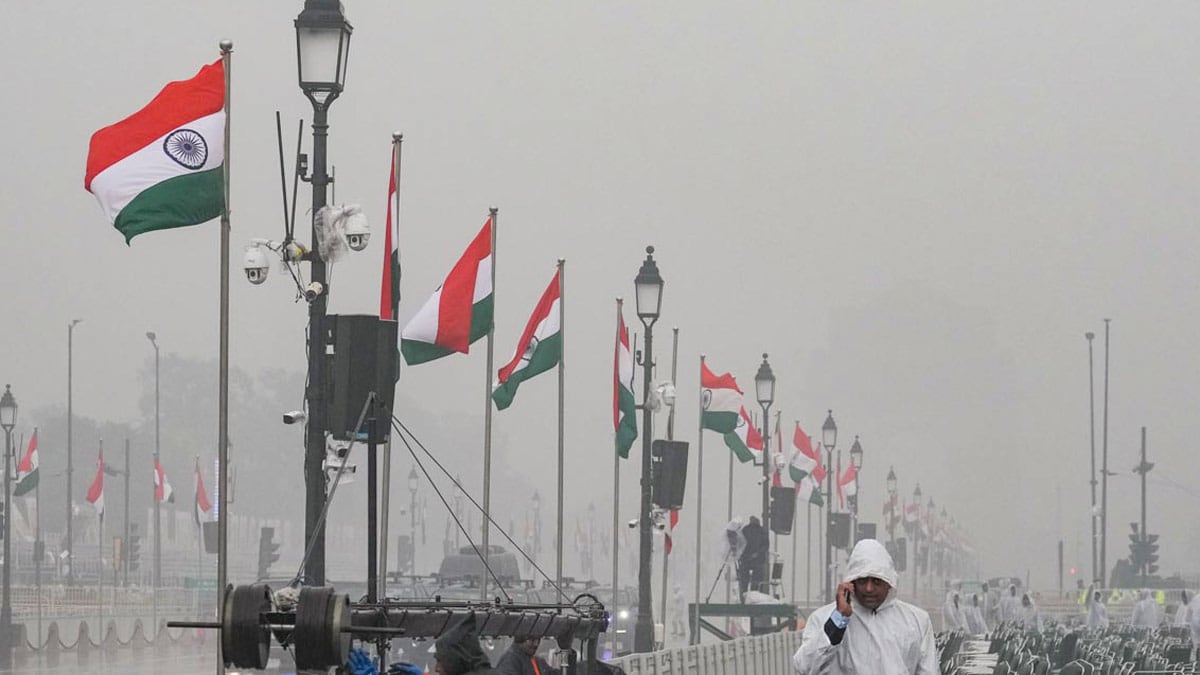
India celebrates its 77th Republic Day today (January 26, 2026) and the country is basking in extreme levels of patriotism during this occasion. Two days before the Republic Day of 1950, January 24 to be precise, Vande Mataram was chosen as the National Song of India. This decision was taken almost 75 years after the song had been composed by Bankim Chandra Chatterjee.
While everybody knows the composer of the song and his history, not many know that the reason behind the composition has a strong connection to it. To be put it more accurately, cricket played a role in fuelling Chatterjee's mind, which ultimately led him towards composing Vande Mataram.
The incident happened in 1873 at Berhampore where a group of British officers were indulging in a game of cricket. It was a common mode of recreation during the British rule back then. Chatterjee, the deputy collector of Murshidabad during this period, was on his way back home through a traditional procession.
For reasons unknown, the procession took a diversion and had to pass through the field where the cricket match was being played. Colonel Duffin, the presiding officer, was enraged at the disruption and not only halted the palanquin but also assaulted Chatterjee in broad daylight in front of a huge gathering.
Chatterjee was understandably furious at the insult and vowed to fight back. A legal case was filed against Colonel Duffin and with the help of strong eye witnesses, Chatterjee held a significant edge in the court case. However, the judge who was in-charge of the lawsuit managed to convince Chatterjee for a private settlement with Colonel Duffin.
Initially, Chatterjee was reluctant but he then agreed with just one condition - Colonel Duffin had to offer a public apology. Not many thought that the condition would be met but historic scenes played out later as Colonel Duffin apologized openly in the court, creating an unprecedented euphoria among the local people who had gathered there.
Chatterjee didn't get much time to rejoice over his emphatic moral victory as reports of assassination plans against him started to do the rounds. With the help of Raja Jogindra Narayan Roy of Lalgola, a person of extreme power, Chatterjee relocated to Lalgola and these events inspired him to compose Vande Mataram.
The composition was completed on November 7, 1875 as an assortment of Bengali and Sanskrit. It was Rabindranath Tagore who first sang Vande Mataram as a political instrument in 1896, 14 years after it had first appeared in a publication. Ultimately, on January 24, 1950, Vande Mataram was chosen as the National Song of India.
Ironically, cricket also got embraced by India and today, it is unofficially the main sport of the country.
