




-
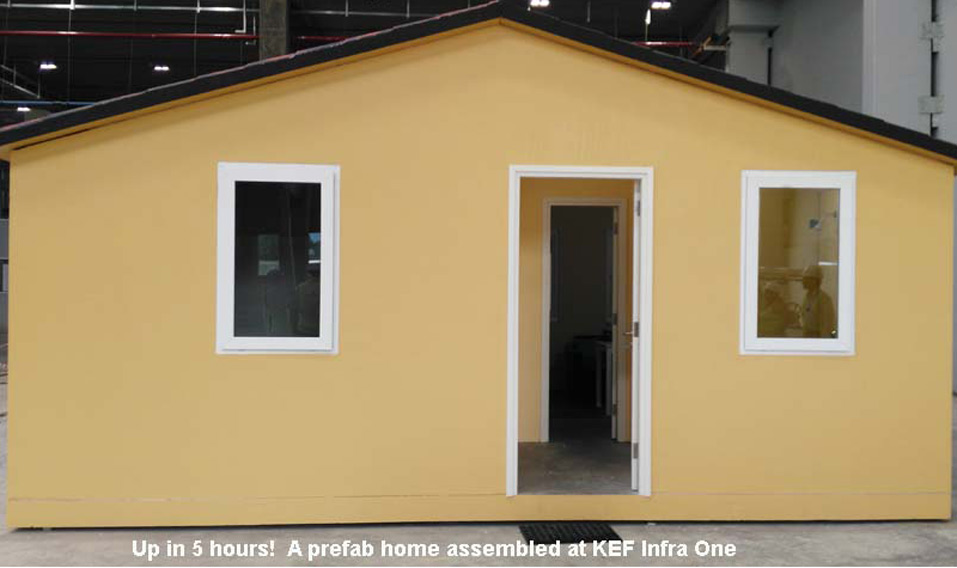
Indian talent-fueled, KEF Infra, the world's largest offsite manufacturing facility, uses automation, robotics and prefabrication technology to make and assemble building elements almost like Lego blocks. The proof can be seen in Kochi, Kozhikode, Bangalore and Mysore
The construction industry is one of the major contributors to India’s GDP. Yet it still uses conventional technology and processes that is proving to be costly and time consuming.
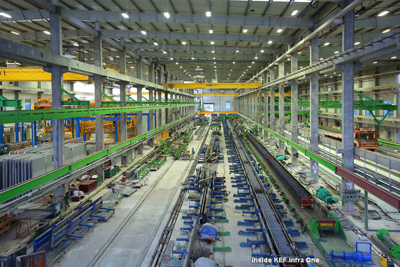
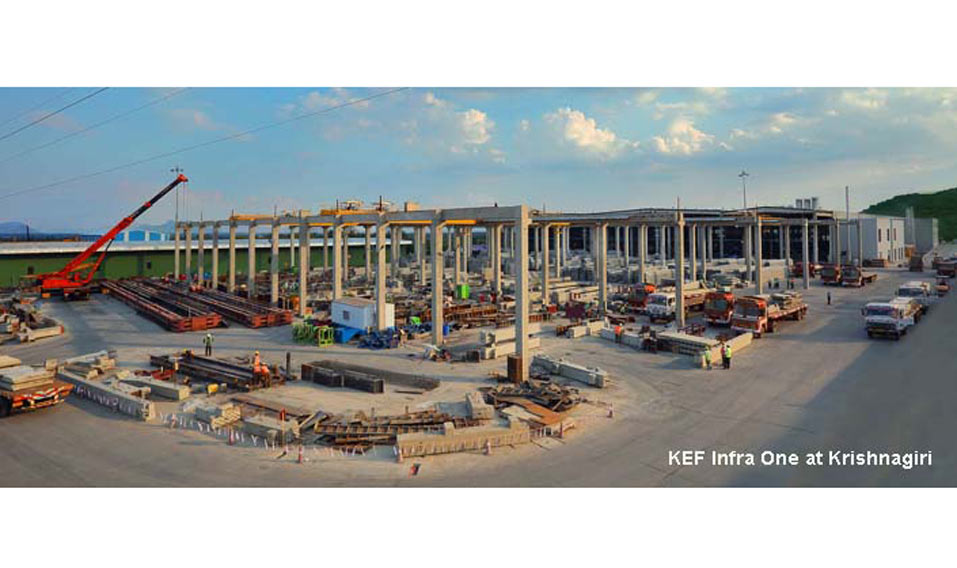
KEF Infra, a Bangalore based manufacturing and engineering company and a subsidiary of UAE-based KEF Holdings is one of the few players in the Indian construction business that is using advanced automation techniques and robotics in large scale for their infrastructure projects. The company recently opened the doors of its first offsite manufacturing factory, KEF Infra One in Krishnagiri, Tamil Nadu just across the Karnataka border. Last week media had an opportunity to visit the site and see how they are using advanced technology to manufacture prefabricated buildings. Built on an area of one million square feet and developed with an investment of INR 650 crores, KEF Infra One is the largest fully integrated offsite manufacturing park in the world, said CEO Sumesh Sachar.
The facility was officially launched in a function in Bangalore this week with Infosys co-founder N R Narayana Murthy as chief guest.
The KEF Infra One has five dedicated units – Precast, Modular pod factory that can prefabricate Rooms, Bathrooms and Modular Mechanical, Electrical and Plumbing (MEP), Joinery, Glazing and Stone Processing. It takes care of end-to-end manufacturing for building components that include columns, beams, hollow core slabs, wall panels, staircases, windows and facades, doors, bathroom units, woodwork including furniture and upholstery and fit-outs.
The prefabricated buildings are developed using automation and robotics technology that includes BIM level 6 (Building Information Model Level 6), Internet of Things and Sensors, Automated Double Wall technology, Mobile Precast technology, etc.
According to Faizal E. Kottikollon, Chairman and Founder, KEF Holdings, the Krishnagiri plant has capacity of producing 50,000 homes every year, with an area of 400 square feet, which would cost around Rs. 5 lakh per home. It takes 4 to 5 hours for them to build a single house. These houses would come with a life span of 50 to 60 years. Hence, it is ideal for building affordable housing in India, he added.
As part of their philanthropy initiative, KEF Holdings started a non-profit organization, the Faizal and Shabana Foundation and partnered with the Kerala government for renovating the Government Vocational Higher Secondary School for Girls at Nadakkavu, Kozikode. They used the same process of manufacturing building elements offsite and rebuilt the school in 95 days with proper facilities like new classrooms, toilets, gymnasium, library, sports center, etc. Their second project includes partnership Tamil Nadu government to revamp a government school in Krishnagiri.
Earlier this year, KEF Infra bagged the project of building the tallest clock tower for Infosys in its Mysore campus. Their other projects include Infosys Electronic City Phase II and Embassy 7B in Bangalore, Meitra Hospital in Kozhikode, Gems Modern Academy in Kochi.

“This integrated system will change the concept of constructing buildings to manufacturing building,” said Faizal. He added that they are adopting best practice technologies that would not only help to accelerate the pace of construction, but also give best quality results.
Technologies like ‘prefabrication and precast’, have been around for quite some time in European countries and other parts of the world, but the concept is relatively new in many Asian countries, including India. According to a Research and Markets report, Singapore was the first country to use prefabrication technology in the construction industry in the Southeast Asian region.
Even though in nascent stage, prefabrication technology is slowly picking up in India
Tech Note: Prefabrication is the practice of assembling components of a structure in a factory or other manufacturing site, and transporting complete assemblies or sub-assemblies to the construction site where the structure is to be located. So, instead of building a structure on the site, brick by brick, this system manufactures buildings offsite and ships it to be assembled onsite. This technology very much reminds us of automotive industry, where parts are manufactured separately and assembled at one place. (Wikipedia)