



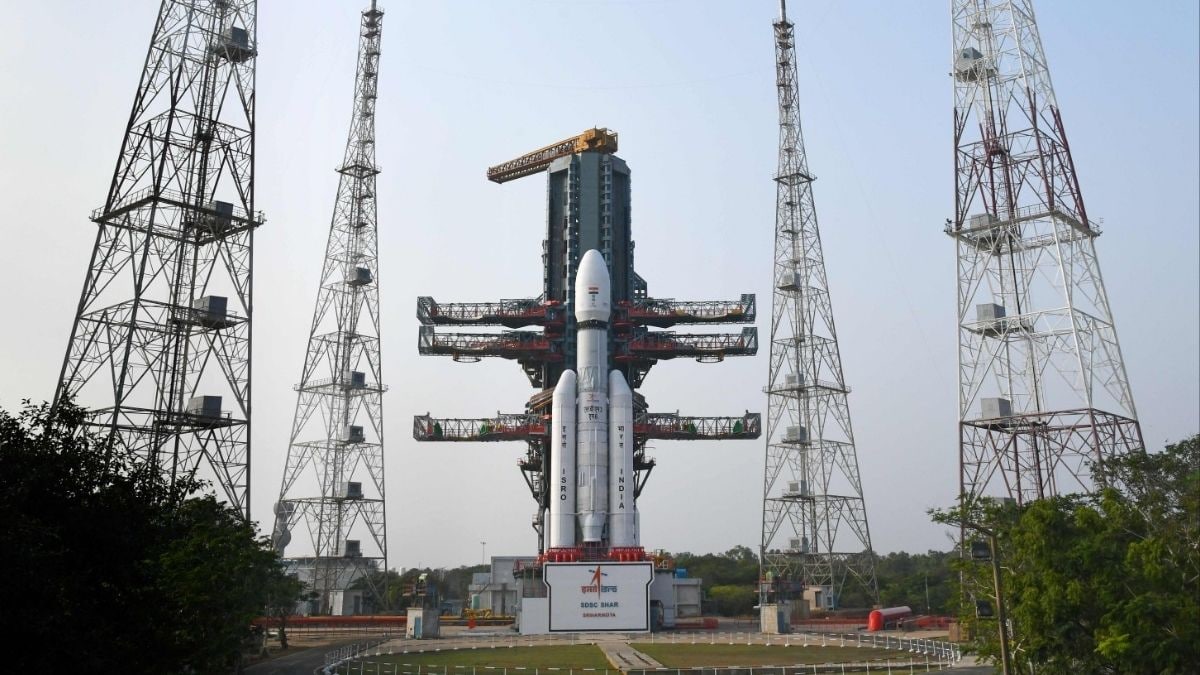
Every rocket that leaves Indian soil today departs from one of just two concrete platforms on the island of Sriharikota. Those two pads, the First and Second Launch Pads at the Satish Dhawan Space Centre in Andhra Pradesh, have carried the PSLV, the SSLV, the GSLV and the mighty LVM3 for decades. They have also become a bottleneck. The ISRO Chairman V. Narayanan recently announced that India will double that number to four working launch pads, and the reasons reach far beyond engineering.
When compared to India, the global space powers operate on multiple launch pads. In the United States, the Kennedy Space Center runs two main pads, while several more sit at neighbouring Cape Canaveral, shared among SpaceX, United Launch Alliance and Blue Origin. China launches from multiple pads spread across Jiuquan, Xichang, Taiyuan and Wenchang, and its new commercial site on Hainan island is itself aiming for four pads. Russia keeps multiple active pads humming at Baikonur and Plesetsk. Against this backdrop, India's two pads look modest for a nation that has already reached the Moon and Mars. Moving to four narrows that gap and signals that India intends to compete, not merely participate.
“A launch pad is best imagined as a specialised railway platform. A train can only depart from a platform, and if a station has two platforms, only two trains can be prepared at once. Each rocket must be stacked, fuelled, tested and cleared, a process that occupies the pad for weeks. When one pad is undergoing repairs or an investigation after a failure, a two-pad country effectively has one. More platforms mean more departures, fewer delays and a cushion against the unexpected,” remarked space analyst Girish Linganna.
The two new that ISRO is planning to add to the existing two pads will have clearly different jobs: one for small satellites, the other for the big rockets of tomorrow. he first will rise on 2,000 acres at Kulasekarapattinam, a coastal village in Thoothukudi district of Tamil Nadu. This complex is being designed around the Small Satellite Launch Vehicle, a compact rocket built to carry small satellites into orbit. The site will host launch pads, assembly buildings where rocket stages are brought together and readied, and ground systems for three vital tasks: telemetry, which gathers health data from the rocket in flight the way a doctor reads a patient's pulse; tracking, which follows the rocket's position and path; and communication, the two-way radio link between the vehicle and ground control. A dedicated home for small-satellite launches could let customers with lighter payloads fly sooner and with less waiting.
The second is a Third Launch Pad at Sriharikota itself. This one looks to the future, built to accommodate the larger next-generation vehicles that ISRO is still developing, and targeted for around 2029. Together, the two new facilities would free the existing pads for heavier rockets and, crucially, for crewed missions.
That brings us to the human heart of this expansion. Even as concrete is poured, ISRO is preparing to fly the Gaganyaan spacecraft without astronauts, a rehearsal to prove the capsule can keep human beings safe before Indian crew members strap in. Chandrayaan-5, a lunar mission being planned with Japan, waits in the wings as well. Each of these demands launch capacity that two pads simply cannot spare. The commercial stakes are equally weighty. “Thousands of satellites are expected to seek rides to orbit in the coming years, for observing the Earth, monitoring weather, tracking floods and cyclones, carrying television, telephone and internet signals, and guiding navigation on roads and seas. Nations and companies alike are shopping for affordable, reliable launchers. India's reputation for frugal engineering gives it a seat at that table, but only if it can promise timely slots,” added Linganna.
As per the ISRO chairman, ISRO will not be privatised. Instead, it intends to share technology with Indian startups and established industries, drawing them into building rockets, satellites and ground equipment. The hoped-for result is more production, more skilled jobs and Indian firms able to sell launch services to customers at home and abroad.
A note of realism belongs here. How many rockets India actually launches will depend on when these sites are finished, tested and declared ready, on how many vehicles roll off assembly lines, and on whether every supporting system is in place. Deadlines in spaceflight have a way of slipping. From a single island with two platforms, India is building a national launch network. If the 2029 target holds, the country will stand closer to the world's space giants and carry its own astronauts skyward on pads built by Indian hands.
