



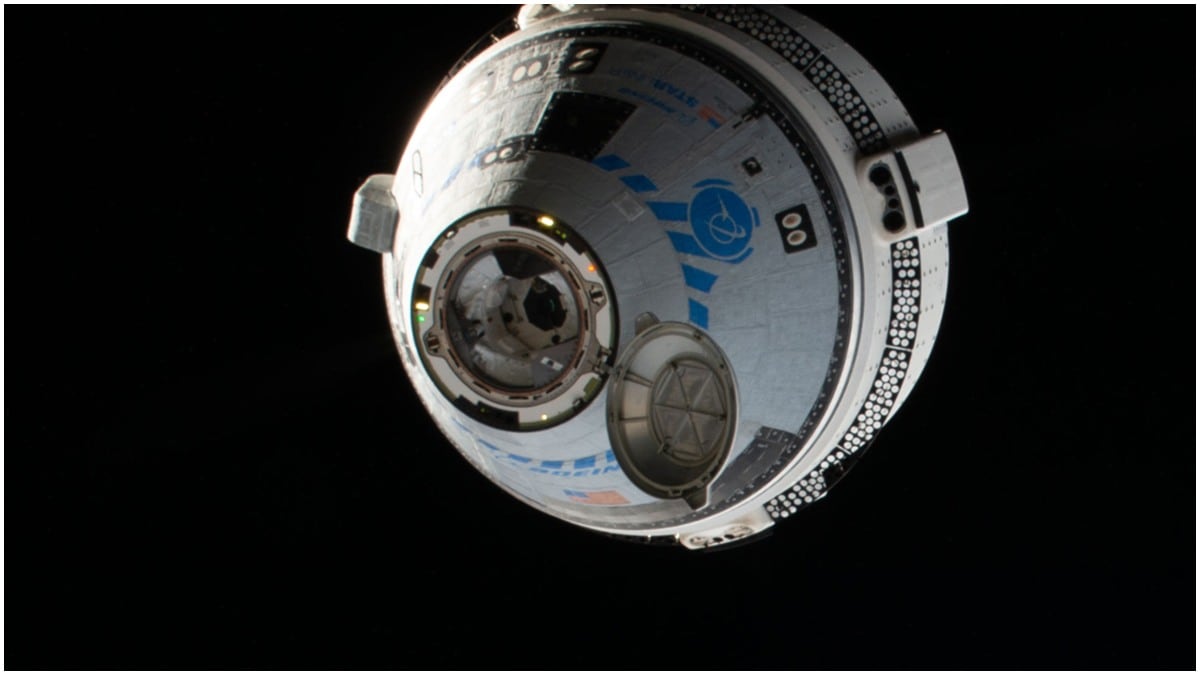
Imagine packing for a two-week trip and returning home nine months later. That is what happened to two astronauts who rode Boeing's Starliner to the International Space Station (ISS) in 2024. Their ordeal explains why the spacecraft's comeback is being handled with such caution today.
On that flight, Starliner sprang Helium leaks. Helium is the gas that pushes fuel towards the thrusters, much as the pressure inside an LPG cylinder pushes gas to the stove. The thrusters themselves also misbehaved. These are small engines that nudge a spacecraft in the right direction, like a boatman's gentle strokes of the oar. When they falter, steering a capsule safely becomes a serious worry. So the two crew members stayed aboard the station, far from their families, showing remarkable patience and courage while engineers searched for answers.
What troubled many people was how the episode was first described. NASA's early statements made it sound milder than it was. Only when the astronauts themselves spoke did its true gravity become known. People began asking how NASA and Boeing had failed to manage the problems properly. The agency is now firm: Starliner must prove itself safe and dependable before any human being sits inside it again.
“That proof will come from a flight with empty seats. It has been more than two years since Starliner last went to orbit. NASA and Boeing now say it could lift off as early as December 2026, or as late as January 2027. The mission is called Starliner-1. The name is a little misleading, because this is not the spacecraft's first trip to space. It will carry cargo to the ISS, but no astronauts to join the crew already living there. The purpose is simple: confirm that the faults of 2024 are cured, without risking a single life,” remarked space analyst Girish Linganna.
Boeing's engineers have been busy. Of the 21 issues reported, 19 have been resolved. Boeing expects the last two to close in October, though it has not named them publicly. One fix will fly on Starliner-1 itself: better control of heat in the service module. This is the section that supports the spacecraft in flight, rather like the engine that pulls a train while passengers sit in the coach.
“The valve work is really two separate jobs. A valve works like a household tap, opening and closing to regulate flow. The first job is in the service module, where the valves that control the small thrusters will get a new design. That change will be completed only after Starliner-1 returns to Earth. The second job is in the crew module, the cabin where astronauts ride. There, Boeing will replace the valves on all 12 small thrusters that control the cabin's movement. It will also take extra steps against corrosion, the slow eating away of metal familiar to anyone who has watched an iron gate rust in the monsoon,” added Linganna.
The crew module needs more besides. NASA says newer thrusters and batteries must be fitted there. Boeing also plans small changes to the parachute system. Boeing is already looking further ahead. It is reportedly preparing Starliner-2 to be ready by 2028. That mission would carry astronauts once again. NASA has announced no exact date, only a target of sometime that year. This may seem early. But it leaves a year or more to fix any surprises found after the cargo flight. The plan could still change as repairs continue.
The stakes go beyond one company. Today, SpaceX's Dragon is the capsule that ferries NASA's astronauts to the ISS, which circles in low-Earth orbit, the region close to our planet. But NASA Administrator Jared Isaacman has said SpaceX intends to retire Dragon as it moves to its newer Starship, while still supporting the station through 2030. America will then need another dependable ride, and Boeing may have to make Starliner fully reliable. This is a matter of national standing as much as engineering.
For now, we must wait for NASA and Boeing to share more details. When Starliner rises again, it will carry only cargo in its hold. But it will also carry the memory of two people who waited nine long months to come home.
