



XBox, Steam, Nintendo, PlayStation. Long ago, the four gaming communities lived together in harmony. Then, everything changed when Microsoft greenlit the 2013 Xbox One game licensing policies.
We gamers know the story. XBox, despite its issues recovering from that "attack", could not find a good supply-chain situation in India, so it never reached many. Nintendo went the handheld way with Switch, which is not available in India through official channels; therefore, making itself irrelevant. Steam powered millions of gamers in India and became the go-to platform for gaming in the country. But they were running on PCs, many of them hit by the jump in hardware prices. The true winner was, in spirit, PlayStation. All they had to do was change absolutely nothing.
But then, 2026 came. And corporate got ahead of the creatives yet again.
And now, it seems like the gaming industry is on the precipice of one more revolution. The villain, the same online "game licensing" policies, this time covering much more in its ambit.
The great 2026 gaming upheaval began exactly a month ago, on July 1, when PlayStation announced: "In response to shifting trends in consumer preference, new games will be released on PlayStation Store and at retailers in digital formats only." The policy is said to come into effect with physical disc production ending in January 2028.
This led to major backlash, which lasted four weeks. The month had finally almost ended, but then came Sony's earnings call. And they addressed the backlash from fans. But it looks like it did not have the desired effect. Sony CFO Lin Tao said: "...when we think about the future—and we put in a lot of thought and time, and we cautiously considered this [move to digital]—and we came to this conclusion, and we’re going to cautiously move this forward. And to this decision, we have received various opinions, and people have strong views, and we understand that the community has put forth those views to us. Games are loved by many people. It's a form of entertainment that is loved by people, and it is connected to people’s fond memories in many cases. And so we understand those emotions. We want to consider that. And in the future digital ecosystem, how do we engage the gamers is something that we would like to continue to explore..."
These words usually work in an earnings call, for investors and analysts. But gamers are not built like that. "He just said a lot of words that meant nothing to us," 32-year-old PlayStation gamer Rajesh K. from Kochi said, "If they really want to consider it, they should cancel this move."
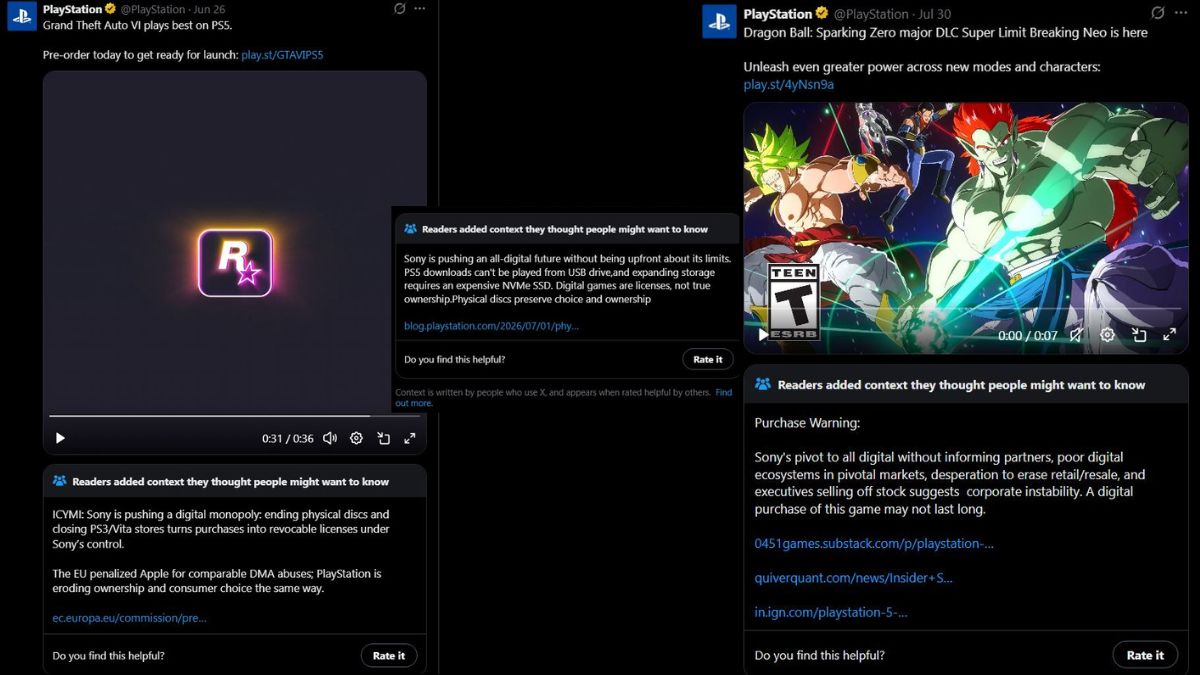
And it is not just Indian gamers who are not happy. Netizens on X have used their "social-media powers" to create a worthy adversary to PlayStation for this generation—community notes.
On the pinned X post of the global PlayStation profile about "GTA VI, played best on the PS5", the community note goes like this:
"ICYMI: Sony is pushing a digital monopoly: ending physical discs and closing PS3/Vita stores turns purchases into revocable licenses under Sony’s control. The EU penalised Apple for comparable DMA abuses; PlayStation is eroding ownership and consumer choice the same way."
And it even cites the European Commission report from that found "Apple and Meta in breach of the Digital Markets Act"
Another note, which cites 3-4 sources, on the post announcing a Dragon Ball: Sparking Zero DLC does not mince words either:
"Purchase Warning: Sony's pivot to all digital without informing partners, poor digital ecosystems in pivotal markets, desperation to erase retail/resale, and executives selling off stock suggests corporate instability. A digital purchase of this game may not last long."
A "community note" is something X introduced as a crowd-sourced fact-checking tool with a collaborative public context system. It lets users to add helpful context or corrections to misleading posts. In the social-media platform's words, "Context is written by people who use X, and appears when rated helpful by others."
And just like that, Sony now faces its biggest threat to PlayStation since the seventh-generation "console wars" where XBox 360 got a head start, and this time, it is driven by a community of angry gamers who believe physical media ownership is sacrosanct in gaming.
