



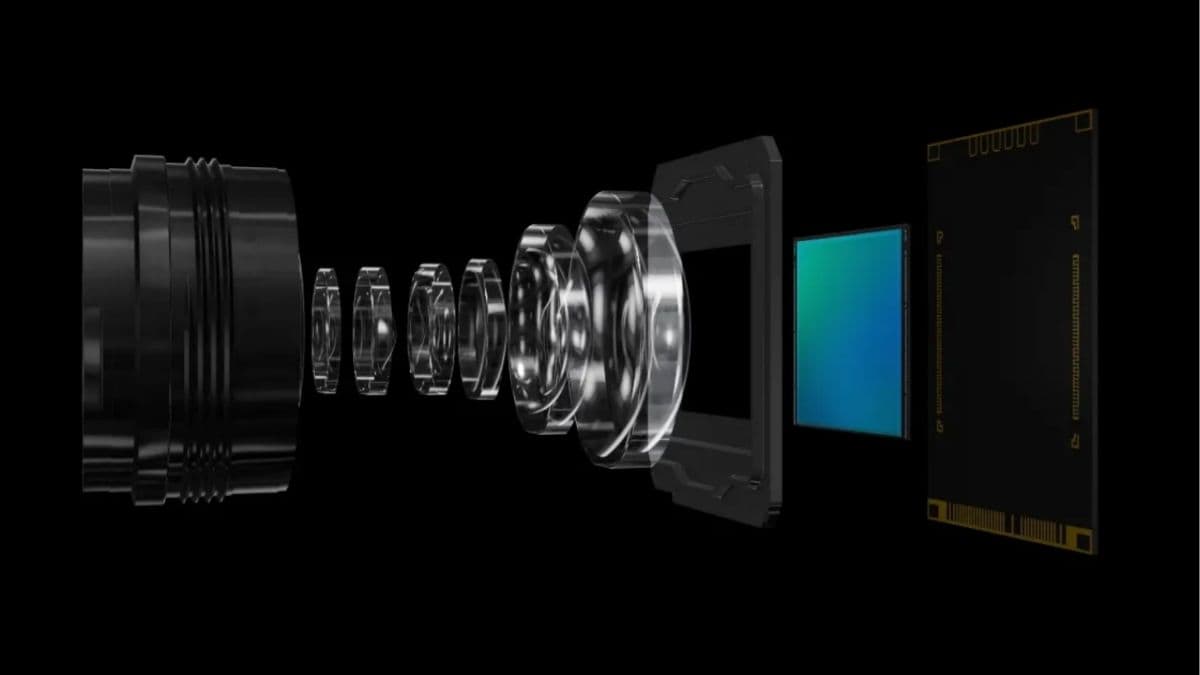
Sony Semiconductor Solutions Corporation today announced the LYTIA L910, a 50-megapixel stacked CMOS image sensor for smartphones that promises to fundamentally change how mobile cameras handle extreme lighting conditions. Mass-production shipments are scheduled for summer 2026, the company said.
According to Sony, the L910 can achieve a 100 dB dynamic range in a single exposure, which is a significant leap. This allows the sensor to simultaneously capture clear detail in the brightest highlights and the darkest shadows without the blurring or ghosting that afflicts older multi-exposure HDR techniques.
The key to this is Sony's LOFIC (Lateral Overflow Integration Capacitor) structure, which expands the sensor's saturation capacity by storing overflow charge from the photodiode.
Combined with Sony's new Triple Conversion Gain-HDR (TCG-HDR) technology, which reads out charge from a single exposure at three different conversion gains, and Ultra High Conversion Gain (UHCG) circuits, the sensor reduces random noise by approximately 30 per cent compared to Sony's conventional products.
For the lakhs of Indians who film reels, vlogs, and live streams on smartphones, particularly in mixed-light environments like markets or sunlit outdoor events, this could mean sharper, truer-to-life footage when the sensor comes on new smartphones.
The L910 supports HDR video recording at 4K, 60 fps without a corresponding spike in battery drain. This, Sony stated, is due to their proprietary circuit design that reduces the time required for analogue-to-digital signal conversion.
The sensor's physical specifications are: a 1/1.28-type image size with a 12.49 mm diagonal, 1.22 μm × 1.22 μm pixel cell size, and a Quad Bayer Coding colour filter. It can shoot at up to 120 fps at 12.5 megapixels and supports 4K at 60 fps in both DCG-HDR and TCG-HDR modes.
The L910 is one of the first sensors in Sony's LYTIA mobile image sensor lineup to feature the LOFIC structure. Therefore, this marks a meaningful jump in sensor generation for the brand that already dominates the global smartphone sensor supply chain.
