



For nearly two decades, the grid of icons was the universal language of the digital age. Whatever device you happened to carry in your pocket, your digital life looked roughly the same: a curated museum of colourful squares, each one a doorway into a separate piece of software. We “went into” applications to get things done. We searched, scrolled, tapped, and waited. The icon was both the map and the destination.
As we cross the midpoint of 2026, that era has quietly closed.
The centralised marketplace for software is not merely evolving; it is being hollowed out from the inside. This is the year of what I have taken to calling the Agentic Pivot, the moment when the smartphone stopped being a drawer of tools and started behaving as a singular, proactive partner.
I have been watching this shift unfold across classrooms, research labs, and conversations with colleagues in industry, and I can say with some conviction that what we are witnessing is not an incremental upgrade. It is a structural change in how human intent translates into digital action.
From app-first to intent-first
The primary driver of this shift is the quiet death of the middleman interface. Two years ago, if you wanted to book a flight, you opened a travel application, navigated through several menus, and entered your data by hand.
In 2026, you simply tell your operating system: get me to the city next Thursday at a reasonable fare, and book the window seat I preferred last time.
Behind the scenes, the operating system no longer launches a visual interface at all. Instead, through advanced system-level protocols and deep integrations, the core intelligence reaches directly into the service’s database.
The software has been reduced to a headless service, a backend provider of data and logic that never actually shows its face to the user. The icon, in other words, has become invisible. The work still happens; it simply happens out of sight.
The Rise of the Commander OS
Market signals from early 2026 confirm what many of us already sensed in our daily routines. Industry analysts report a meaningful drop in manual application usage this year, on the order of a quarter of all sessions. Users are not deleting their software; they have simply stopped opening it.
We have transitioned from copilots, intelligent helpers that suggest things while you work, to commanders, autonomous agents that execute multi-step workflows across different services without close supervision.
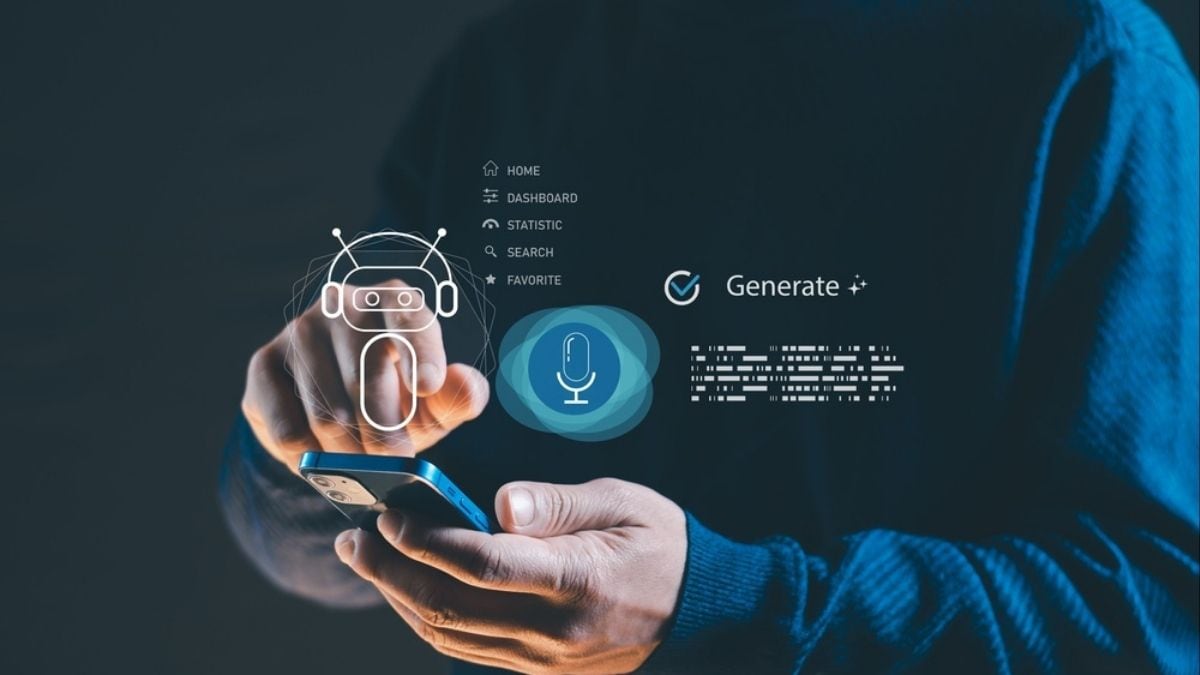
This Agentic UI has turned the home screen into a dynamic, intent-based dashboard. The static dock of favourite shortcuts is gone. In its place sits a conversational prompt and a live view of active tasks: your agent negotiating a refund with a utility provider, organising a surprise dinner, summarising your professional communications, all unfolding in parallel like a small private staff.
The protocol revolution
Open communication protocols helped transform digital storefronts for the better. Autonomous agents can now discover businesses and complete transactions without proprietary software or the old search-and-find model. Instead of relying on flashy tiles, they simply use an address, a schema, and a contract.
For developers, this has triggered what I have begun calling the Great Bifurcation. The services that relied on sticky interfaces, advertising views, and habitual returns are visibly struggling. The winners, in contrast, are those that have modernised their infrastructure, making their services the most legible and reliable for automated agents to call upon. Brand identity is no longer about a pretty icon on a glowing screen; it is about being the most trusted data source in the ecosystem. Trust, structure, and verifiability have quietly become the new aesthetics.
The legacy of the icon
We are living through the most significant platform shift since the transition from desktop to mobile. Traditional software repositories will likely survive as legacy archives, useful for high-performance gaming, specialised professional suites, and the occasional sentimental download.
But the era of the utility application, the small icon that did one specific thing for one specific moment, is effectively over.
In 2026, the icon is a relic of a time when we had to do the work ourselves. Today, we no longer use software the way we once did; we delegate to it.
The author is senior member of the Institute of Electrical and Electronics Engineers (IEEE), the world’s largest technical professional organisation.
Opinions and views expressed in this article are those of the author and do not purport to reflect the opinions or views of THE WEEK.
