



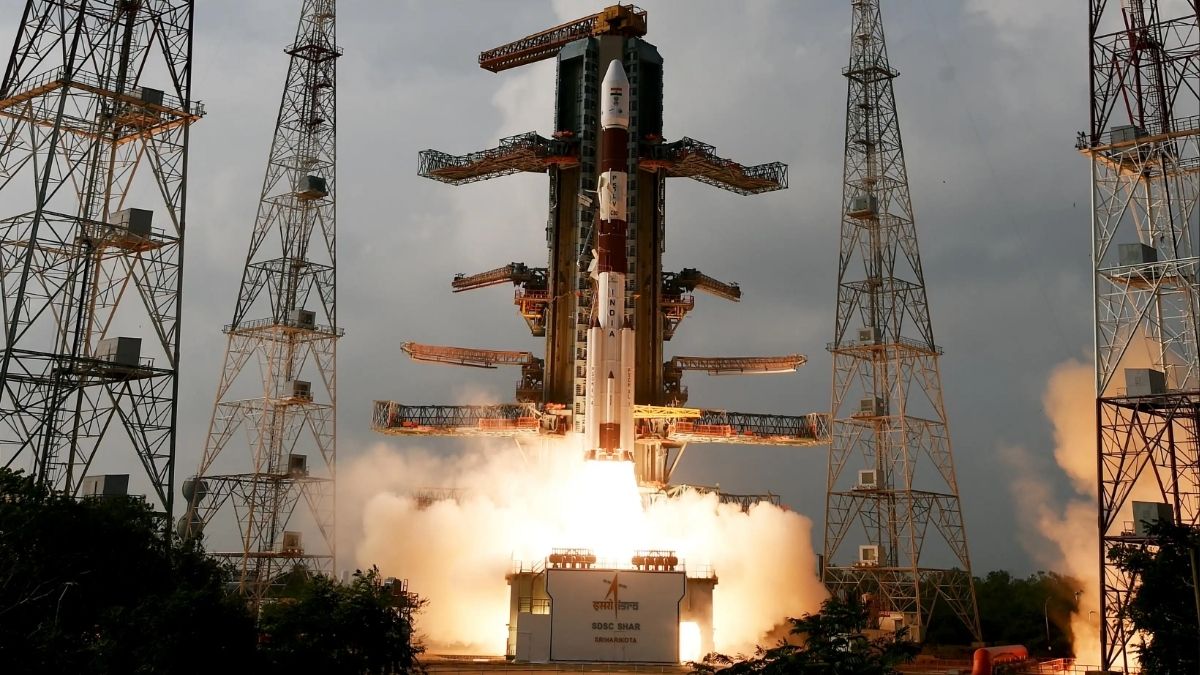
Recently, the ISRO Chairman V. Narayanan announced that India's ambitious G20 Satellite is likely to touch the skies in 2027.
Speaking to scientists from DRDO, ISRO, and the Aeronautical Society of India at the Engineering Staff College of India, Narayanan shared this news, which once again shows how India is quietly becoming the world's trusted partner in space.
This is a special satellite being built by India on behalf of all G-20 countries, which together include the world's biggest economies like the USA, China, the UK, Japan, Germany, and others. While these countries are members, India is playing the leading role in designing, building, and launching it. Think of it as India hosting a grand dinner where everyone is invited, but the main chef is Indian.
“The satellite has one big mission to keep an eye on our troubled planet. It will study climate change, track air pollution, and monitor weather patterns across the globe. In a time when cities such as Delhi choke every winter, when farmers worry about unseasonal rains, and when heatwaves are becoming deadly, such data is not just numbers on a screen. It can save lives, protect crops, and help governments prepare for disasters before they strike,” remarked space analyst Girish Linganna.
How will this satellite work?
The satellite will be placed in what scientists call a "sun-synchronous orbit" at a height of about 720 kilometres above Earth. “This fancy term simply means the satellite will pass over the same place at nearly the same time every single day. Imagine a postman who visits your street exactly at 10 am daily, you can easily notice what has changed since yesterday. Similarly, scientists can compare daily changes in forests, rivers, cities, and air quality. The satellite will circle Earth at an inclination of 98.269 degrees, allowing it to cover almost the entire globe, and will revisit the same spot every 48 days,” added Linganna.
The satellite carries four powerful instruments, each with a special duty. The EnSAC sensor will measure harmful trace gases floating in our atmosphere, the invisible enemies behind pollution and global warming. The HyMATHS instrument will track temperature and humidity, which will improve weather forecasts so farmers and common families can plan better. The POLSAC sensor will observe clouds, dust, and tiny particles called aerosols that decide whether rains come on time or not. Finally, the SACFF instrument will photograph land, forests, and even detect forest fires early, which can save lakhs of trees and wildlife.
Narayanan had recalled how India became the first country in the world to place 104 satellites into space using a single rocket without any collision, a record that stunned the world. He shared that ISRO had already launched 433 satellites for 34 countries through commercial missions, and the heaviest satellite ever launched from Indian soil was also a commercial one, earning valuable foreign exchange.
The G20 Satellite is expected to serve until 2032 and is much more than a machine floating in space, as it will help track the weather and pollution levels. For every farmer worried about rains, and every citizen gasping through polluted air, this satellite carries a quiet promise: better data, better decisions, and a safer tomorrow.
