



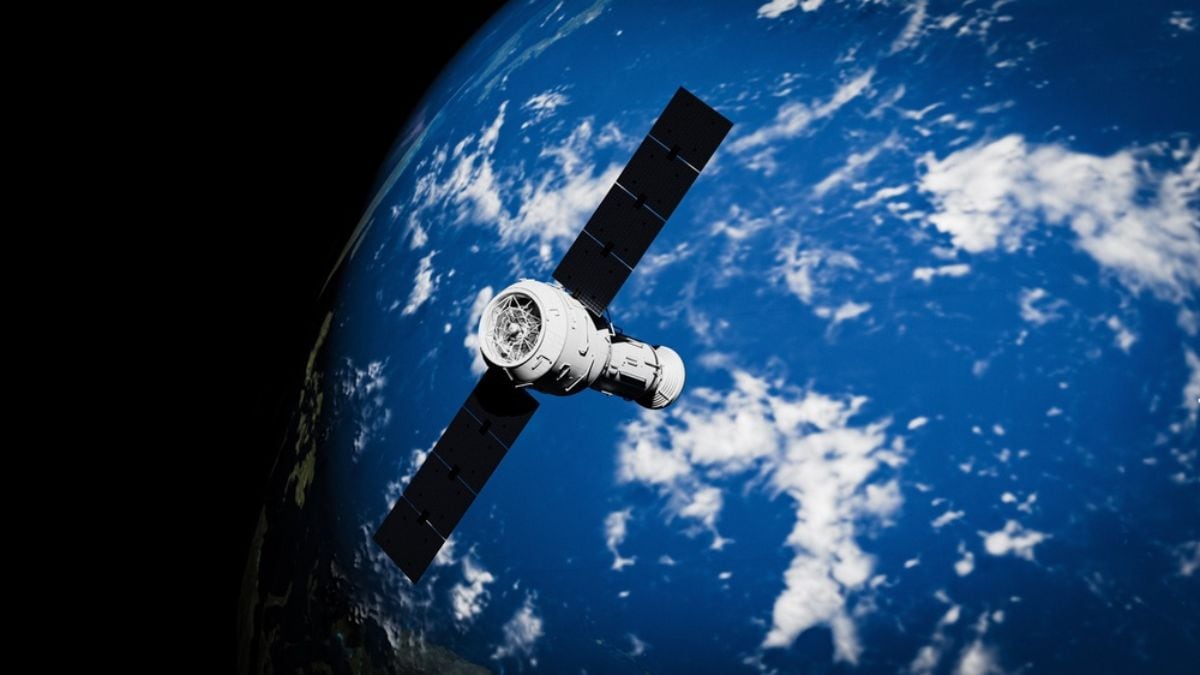
Imagine throwing your old, broken phone out of the window and just leaving it there, floating in the air forever. Sounds strange, right? Well, something very similar is happening hundreds of kilometres above our heads except instead of phones, we are talking about dead satellites and rocket parts silently drifting in space. And India is a part of this growing problem.
In a written reply given in the Lok Sabha, Union Science and Technology and Space Minister Dr Jitendra Singh confirmed that India currently has 129 trackable pieces of space debris orbiting the earth. Out of these, 49 are non-functional satellites, meaning they were once launched with a purpose, did their job, and now simply hang in space with no way to steer, no power, and no use. Think of them as abandoned vehicles parked on a busy highway, except this highway is outer space, and there is no traffic police up there.
Of these 49 dead satellites, 23 are in Low Earth Orbit (LEO), the zone roughly 200 to 2,000 kilometres above earth, where most communication and weather satellites operate. The remaining 26 are in Geostationary Orbit (GEO), which sits about 36,000 kilometres above the equator. This is where satellites stay fixed over one spot on earth, commonly used for television broadcasting and weather forecasting. Having dead satellites in both these zones is a serious concern because these are the most active and crowded areas in space.
The remaining 80 pieces of debris include 40 rocket parts from India's workhorse rocket PSLV, 4 from GSLV, and 3 from the heavier LVM3 rocket. On top of that, there are 33 fragments that broke off from a PSLV-C3 rocket stage that fell apart in orbit. These fragments are especially dangerous because they are irregular in shape and difficult to track precisely.
Now, why should a common person on the ground care about all this?
“Space debris travels at roughly 10 kilometres per second. That is about 36,000 kilometres per hour. At that speed, even a small screw or a paint flake can punch through a working satellite like a bullet. When a working satellite gets damaged or destroyed this way, it creates even more debris, which then threatens more satellites. This chain reaction is called the Kessler Syndrome, and if it goes unchecked, entire orbits could become unusable. That means no GPS on your phone, no weather forecasts on your television, no satellite internet, things that millions of Indians now depend on every single day,” explained space analyst Girish Linganna.
To tackle this, the Indian government launched the Debris Free Space Mission, or DFSM, in 2024. The target is bold and clear: zero space debris from all Indian space activities by the year 2030. This applies to both government missions and private space companies operating under India's growing space sector.
ISRO has already started building new design rules where rockets and satellites must carry extra fuel. This extra fuel is used at the end of a satellite's life to push it into a disposal orbit or bring it back into earth's atmosphere, where it burns up safely. Simple logic: clean up after yourself.
A big step forward came in early 2025 when India successfully demonstrated the SpaDeX mission. In this mission, two small spacecraft automatically docked and separated from each other in orbit without any human directly controlling them at that moment. This is a crucial technology because future debris-removal missions will need spacecraft to approach, grab, and redirect dead satellites without a human sitting inside. Think of it as teaching a robot to catch a moving ball while both are floating in zero gravity.
“Scientists are also developing robotic arms that can reach out and grab space junk, as well as drag sails and tethers that can slow debris down so it falls back into the atmosphere and burns up. Meanwhile, Project Netra India's own space surveillance system keeps a constant watch on all these floating objects and sends collision warnings to operators of active satellites. It is essentially India's radar system for space traffic,” added Linganna.
The road ahead is not easy. With only a few years left until 2030, India must move quickly from planning to real action. Every new launch must follow stricter debris-free rules. Every old satellite must be accounted for. And international cooperation will be just as important, because space does not belong to one country alone.
