



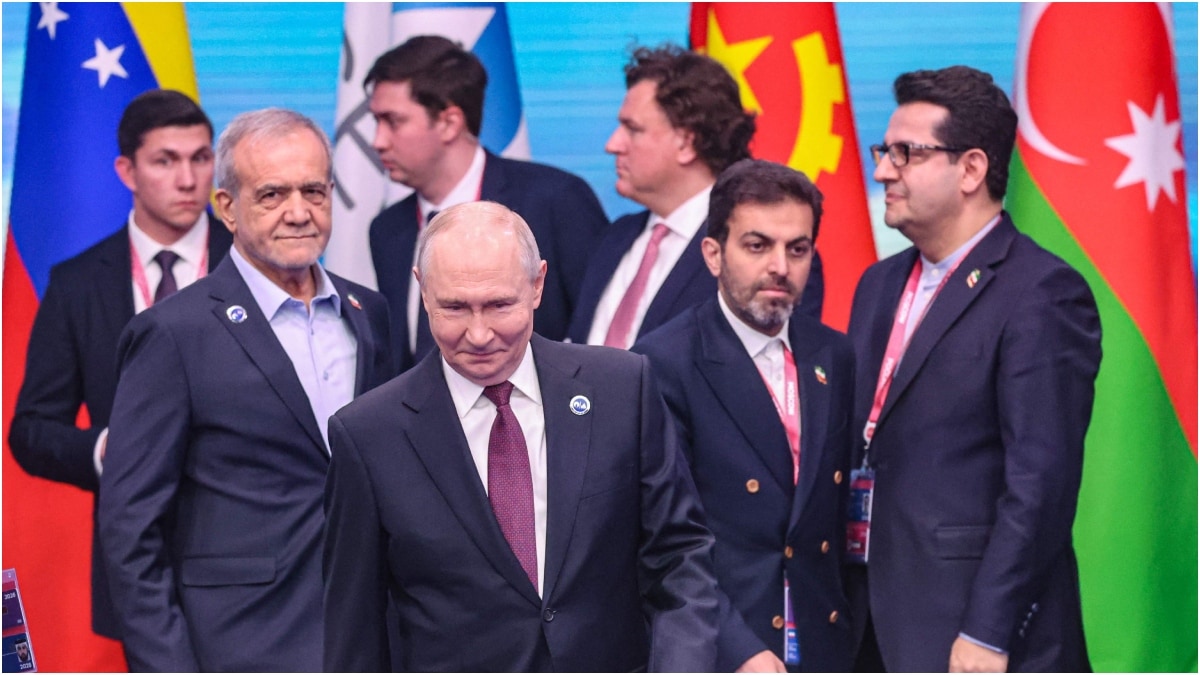
Iranian President Masoud Pezeshkian was in Moscow yesterday to attend the eighth summit of the Gas Exporting Countries Forum and to hold talks with Russian President Vladimir Putin at the Kremlin. While the stated business was energy, the real subject was war. A trade gathering became a stage for a message to Washington that the Middle East can settle its own affairs, and Iran has partners who agree.
The Kremlin meeting drew foreign ministers, energy chiefs, and defence representatives from both sides, a line-up that signalled strategic weight. Putin welcomed Pezeshkian personally, expressed satisfaction with the dialogue, and spoke of the extensive interests both Russia and Iran share. Both agreed that regional security was paramount given the turmoil across the Middle East, and both voiced hope that events would turn in a positive direction.
Pezeshkian was more specific. Middle Eastern nations, he argued, have the capacity to resolve their own problems without American intervention. Washington's aggressive actions and unilateral sanctions had, in his telling, pushed the affected countries closer together and made a multipolar order increasingly necessary. He added that the confrontational American approach had only hardened Tehran's resolve to build tighter ties with Moscow and other sovereign partners.
The economic record offered some support. Putin said bilateral trade turnover rose by 10.4 per cent in the first eight months of the year and pointed to progress on joint projects such as the Bushehr nuclear power plant. Cooperation also extends to energy, technology, security, and military-technical affairs. The two sides gave equal billing to softer ties, citing roughly 10,000 Iranian students at Russian universities and recent Iranian cultural festivals in Moscow, Kazan, and Astrakhan. Pezeshkian approved a larger Russian media presence in Tehran, including a new bureau for the state broadcaster VGTRK, and invited Russian cultural figures to an upcoming festival.
The gas forum also served as a diplomatic exchange. On its sidelines, Pezeshkian met Qatar's Emir, Sheikh Tamim bin Hamad Al Thani, to discuss political ties and cooperation in energy markets. Putin held separate talks with the emir, crediting Qatar with a stabilising role in global energy markets and praising its mediation in regional crises. Sheikh Tamim, for his part, warned that continuing conflict threatens Gulf stability, global supply chains, and maritime routes such as the Strait of Hormuz. The remark was clearly meant as a message for the United States.
Pezeshkian carried a wider appeal as well. In meetings with regional security officials from Saudi Arabia, Pakistan, and Turkey, he urged Muslim states to strengthen collective security, economic development, and political unity against foreign intervention. On the nuclear question, he reaffirmed that Iran's activities are peaceful and conducted under the Nuclear Non-Proliferation Treaty, and he denied any ambition to build weapons. He then turned the charge of bad faith on Washington, saying it professes to seek negotiations while supporting or launching strikes on Iranian infrastructure. The appeal to Islamic solidarity is old, and its reception among capitals with their own American ties and rivalries has rarely been warm. But it allows Tehran to cast itself as a defender of sovereignty rather than a lone defiant state.
Behind the courtesies lies a harsh reality. Reports say Washington has told Gulf allies to prepare for a possible intense military campaign against Iranian nuclear and infrastructure sites after the American midterm elections. Iranian officials and military figures have answered in kind, warning that any attack would bring severe strikes on regional energy infrastructure, gas pipelines, ports, and bases that host foreign forces. Some Iranian lawmakers have gone further, suggesting suspending cooperation under the NPT and deploying maximum deterrent measures if Iran is hit. Analysts caution that a long war would strain the stockpiles of every party, though Tehran retains a formidable arsenal of ballistic missiles and drones.
