



Saudi Arabia came under alleged Houthi fire on Wednesday with a drone attack at King Fahd International Airport in Dammam, killing one person and injuring eight others. The Kingdom also saw two people killed and two others hurt after debris fell while it intercepted a drone targeting a facility in the Shaybah oil field located in the oil-rich Eastern Province.
The ministry said in a statement that the two killed were of Filipino and Nepalese nationalities, and the injured were of Pakistani and Indian nationalities, without mentioning the source of the drone.
Though the Houthis are yet to take responsibility for the attacks, Saudi Arabia is clearly in a fix, with Iran stating it is yet to receive any interest from either the Saudis or the Houthis about a ceasefire.
However, in what could be a major development, a report claimed that Turkey is preparing to deploy troops to Saudi Arabia under the new joint defense agreement it signed with the Kingdom and Pakistan. The Turkish government intends to submit a memorandum authorizing the deployment of forces to Parliament once the deputies ratify the agreement, according to Reuters.
This two-stage process is in compliance with the Turkish Constitution, which requires separate parliamentary approval for the deployment of troops abroad, even after ratification of international treaties. The Turkish Ministry of Defense reiterated this during its weekly briefing on October 15, clarifying that the deployment of any troops or military capabilities to Saudi Arabia requires parliamentary approval, and that the scale of Turkish participation will be determined based on Riyadh's requests, the situation on the ground, and understandings between Ankara and Riyadh.
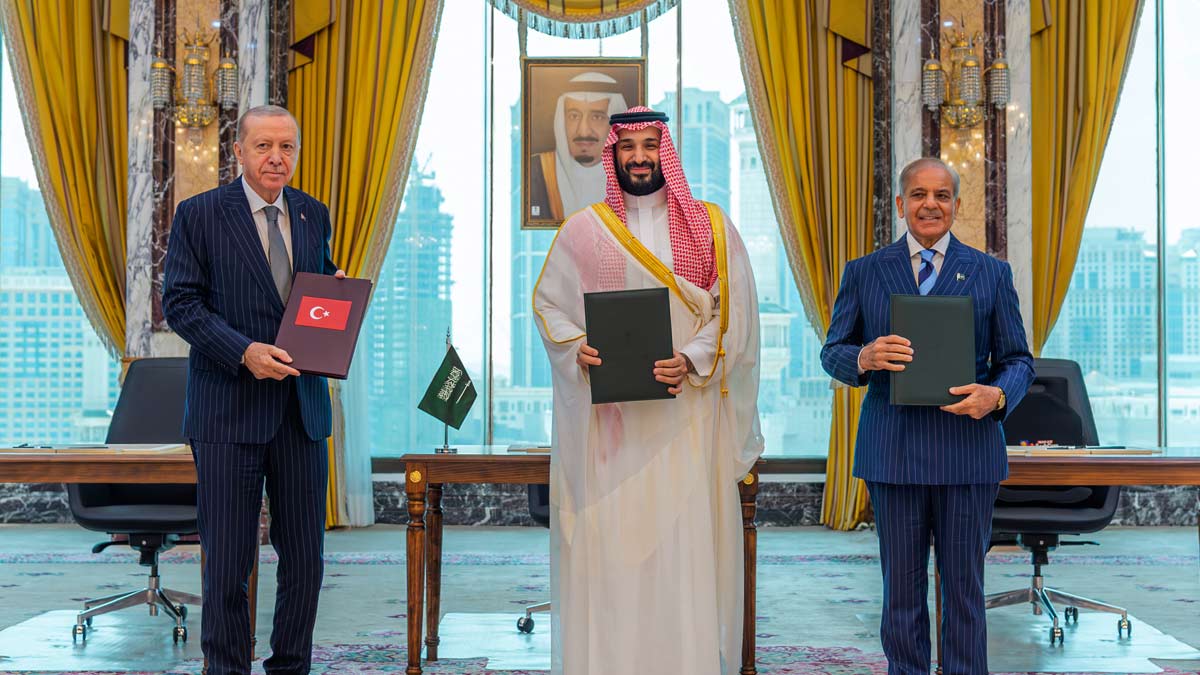
As per the Mecca agreement, Turkey, Saudi Arabia, and Pakistan signed the pact in Mecca on August 7, with the participation of Turkish President Recep Tayyip Erdoğan, Saudi Crown Prince Mohammed bin Salman, and Pakistani Prime Minister Shehbaz Sharif, where the leaders agreed to consider any armed attack targeting one of the three countries as an attack on all three.
That leaves the question of whether Pakistan would take a step in this regard. Two days ago, Pakistan’s army chief, Asim Munir, was in Tehran seeking its help to persuade Yemen’s Houthi group to halt attacks on Saudi Arabia during his latest meetings with Iranian leaders. Though no official statement was made, Munir’s visit was heavily focused on the Houthi attacks on Saudi Arabia.
Though Pakistan has condemned the Houthi attack on the Kingdom, it has still not made any move to send its troops. Its only recent response was a Pakistani military spokesman’s statement: "Escalating or widening military conflicts is not in the interest of Islamic countries or their people. If it is not possible to settle [matters] through negotiations and the situation turns into a military conflict, the collective defence system provided by the 'Mecca Pact' will inevitably be activated, as is already happening."
