



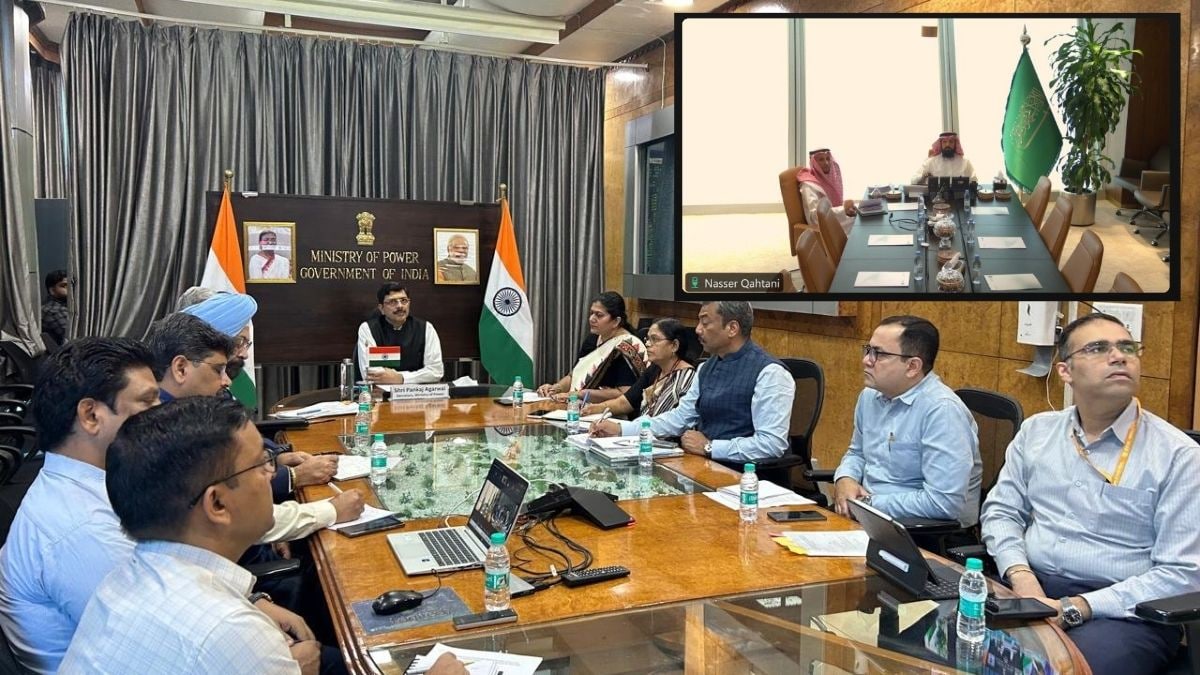
India and Saudi Arabia on Monday reviewed their proposed electricity interconnection, with discussions extending to renewable energy integration and rising demand from data centres.
According to the Union Ministry of Power, Secretary Pankaj Agarwal held a virtual meeting with Saudi Assistant Minister of Energy for Electricity Affairs Nasser Al-Qahtani. The proposed link’s capacity, route, cost, financing structure or commissioning date are yet to be disclosed.
An interconnection could enable electricity exchanges, but its commercial value would depend on infrastructure, operating arrangements and the terms under which power is bought and sold.
The initiative builds on an October 2023 memorandum of understanding between the new nations. According to Saudi Arabia’s state media, the agreement covered interconnection studies, electricity exchanges during peak periods and emergencies, renewable energy and green or clean hydrogen cooperation, and resilient supply chains.
According to the ministry, Saudi Arabia expressed interest in extra-high-voltage transmission, managing grids with greater renewable penetration, meeting emerging data-centre demand and updating grid codes. These codes set technical requirements for how participants connect to and operate within electricity systems.
This development comes on the heels of recent data releases by the Centre. India achieved 558.8GW of installed generation capacity at September-end, with 55 per cent (308GW) from non-fossil sources,
Union Minister of State for Power and New & Renewable Energy, Shripad Yesso Naik, revealed earlier this month at the 20th East Asia Summit Energy Ministers’ Meeting.
On October 14, the Central Electricity Authority released its 2026 transmission-planning manual during a conference on AI-enabled power systems, in the presence of Union Minister for Power Manohar Lal.
Factoring these in, the Saudi initiative seems to be a work in progress—something to identify priorities rather than a full-fledged energy pact. Any claims of cheaper household bills would be premature.
