



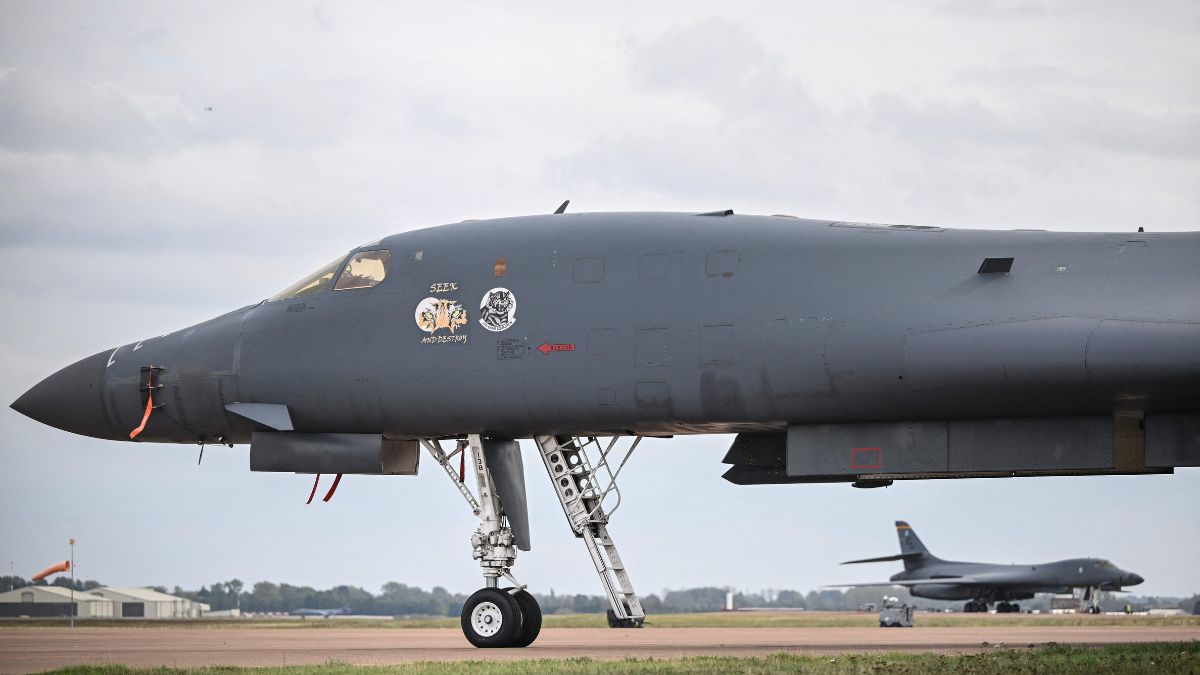
The Pentagon confirmed on Sunday that the US Air Force has withdrawn all bombers deployed at RAF Fairford in Gloucestershire in the United Kingdom. The aircraft, chiefly B-1 Lancers alongside other heavy strike assets, have returned to their home stations in the US. The decision was taken quickly and ranks among the faster redeployments from an allied European airbase in recent years.
Fairford had served as a forward operating location for American operations in the war against Iran. US commanders ordered the departure after a security incident near the base and intelligence pointing to a possible threat linked to Tehran.
The timing of the order is notable. Western intelligence agencies had issued general warnings about Fairford around three weeks earlier. Within a single day, the information became more specific and suggested an active plot. Several B-1s and their crews left while refuelling tankers were still being arranged for the Atlantic crossing, with Ellsworth Air Force Base in South Dakota among the destinations. Pentagon officials said operational security had prevented confirmation of the movements as they happened.
The incident that prompted the concern took place on September 27 when a farmer near the village of Whelford told police he had found three white vans blocking a road and had seen a group of masked men leaving the area. At least one van carried a false logo and telephone number, styled as those of a diesel delivery company. Police evacuated 85 homes and used bomb disposal robots to examine the vehicles. They recovered petrol but no improvised explosive devices. Counter-terrorism officers arrested five British nationals from London on suspicion of terrorism and explosives offences. A sixth arrest followed when a 25-year-old British-Iranian dual national was detained in central London on suspicion of preparing acts of terrorism.
Official statements have been measured. Prime Minister Andy Burnham said there were strong indications that Iran played a part. Secretary of State Marco Rubio said the incident clearly involved a foreign actor. American, British and Israeli assessments reportedly link the plan to the Islamic Revolutionary Guard Corps or a related command, with explosives or drones among the options considered. That is consistent with a statement the IRGC made in July, which said any overseas base used for launches against Iranian territory would be regarded as a legitimate target.
The episode also shows a difference of approach between London and Washington. All six suspects were released on bail, which British counter-terrorism officers described as an investigative decision. Donald Trump said he would not have done the same and that American law enforcement would not have released them. Rubio pointed to the evidence of foreign state involvement. The disagreement reflects differing procedures more than differing facts. British practice builds a case within strict legal timelines, while Washington, in an active conflict, treats the same material as a current threat.
There are wider implications. The plot, whatever its eventual findings, suggests that Iran may seek to reach allied territory through low-cost and deniable means, even as its military infrastructure has been significantly reduced. Israeli officials have since advised Germany that Ramstein and Spangdahlem air bases face a higher level of threat. Host nations across Europe may need to review the protection of facilities that support the campaign.
The military consequences are practical. Fairford is the only airbase on the British mainland authorised for American heavy bomber strike operations, and it lies about 150km west of London. Its value was geographic, offering a shorter route to the Middle East. Flying B-1 and B-52 sorties from bases such as those in South Dakota requires longer transatlantic transits and greater reliance on aerial refuelling. Defence officials maintain that strike capability is unaffected and that B-1, B-2 and B-52 units will operate directly from the continental United States.
Washington is adjusting its naval posture to compensate. The USS Theodore Roosevelt and the USS Makin Island amphibious ready group, carrying more than 7,000 sailors and 2,000 Marines, have been directed to the region. Officials say three carrier strike groups could be operating there by late October.
Trump has indicated that decisions on the next phase of the campaign will come soon. With Iranian military infrastructure significantly reduced, he said, the remaining question is whether matters are resolved the easy way or the hard way.
