



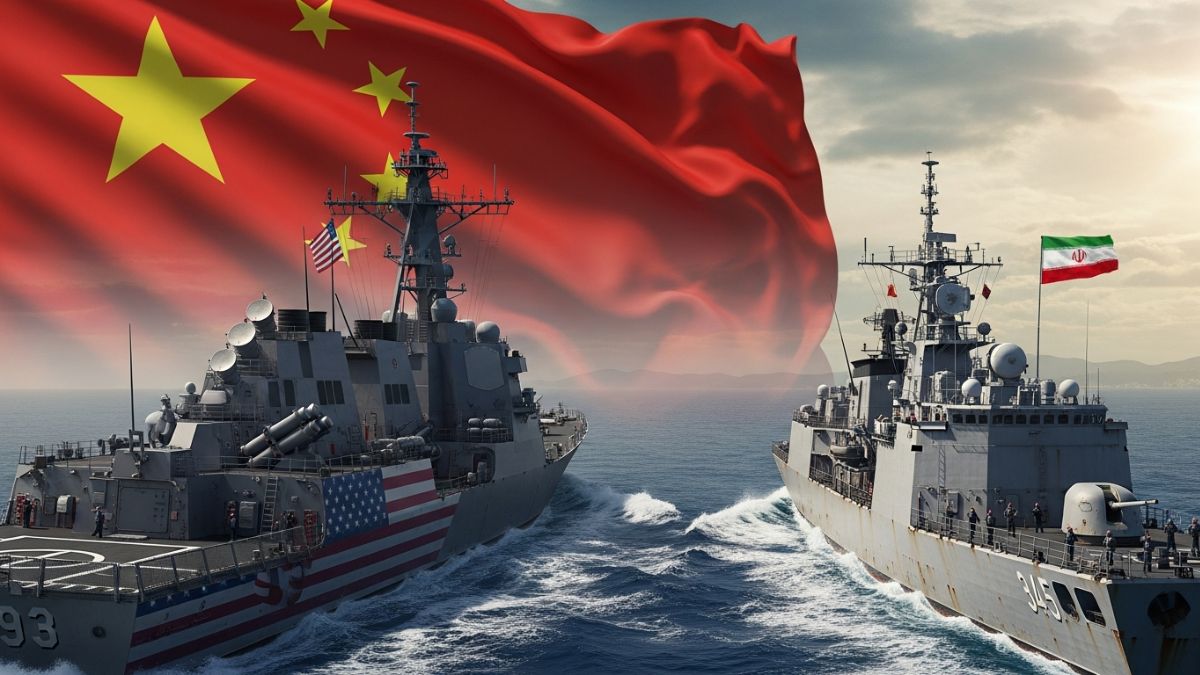
Six months into the war Washington and Tel Aviv launched against Tehran on February 28, the casualty ledger everyone is watching is the wrong one. Iran, Israel and the United States are the belligerents; they chose this fight, and each retains — however imperfectly — the ability to shape its own exit from it. The countries actually being reshaped by this war are the ones that never had a vote in starting it, and won't have one in ending it either. That is where the real strategic damage is accumulating.
The neighbours who didn't choose this
Kuwait and the UAE have taken direct missile and drone strikes on their own soil for the offence of geography. Jordan has been named in Iranian retaliatory messaging alongside the Gulf states. Lebanon has watched the Hezbollah–Israel front reignite around the Ali al-Taher ridge, a flashpoint Tehran had reportedly warned would trigger wider escalation. None of these states set the war's objectives. All of them now carry its insurance costs, its refugee flows, and its security exposure — while the actors who started the fire retain the option of walking away from it on their own terms.
The Gulf Cooperation Council's economic model — built on the assumption that the Strait of Hormuz stays open and shipping insurance stays affordable — has effectively collapsed under the strain. That is not collateral damage in the loose sense. It is a structural transfer of cost from the belligerents to the neighbourhood.
China: Losing the architecture it spent a decade building
If there is one non-belligerent whose long-term position has been genuinely damaged, it is China. Beijing built its energy security around a deliberate arbitrage: cheap, sanctioned Iranian crude — nearly 90 percent of Iran's oil exports — financed through a shadow banking architecture designed to defeat US secondary sanctions. Roughly half of China's total crude imports and a third of its LNG transit the Strait of Hormuz. That entire model now sits inside an active war zone. Beijing hedged well — pre-war stockpiling, diversified sourcing across some fifty countries, and a decade-long bet on electrification that has measurably reduced its oil dependence. That resilience is real and deserves credit. But resilience is not the same as strategic advantage.
The more consequential fact is what Washington did with the opening: US Treasury sanctions specifically targeted the China–Iran oil corridor, designating dozens of shipping firms and vessels and going after the independent "teapot" refineries that had built their business on discounted Iranian crude. And at a Beijing summit convened to discuss reopening the Strait, the US Energy Secretary said plainly that China would now simply buy more oil from America instead — calling it a "natural energy trade."
That is the real cost to China: not the price of a barrel, but the quiet replacement of an independent, US-sanctions-resistant energy architecture with growing exposure to the goodwill of its principal strategic competitor. A decade of de-dollarised energy planning has been partially unwound by a war Beijing did not start and could not stop.
The Iran-as-anti-China-proxy thesis — real, but overstated
It is tempting, watching the sanctions specifically aimed at the China–Iran oil trade and the explicit US messaging about redirecting Chinese demand, to conclude that Iran was simply chosen as a proxy battlefield against Beijing. The evidence for instrumentalisation is genuinely stronger than incidental — this was not collateral damage; it was targeted.
But the war's declared trigger was Iran's nuclear programme and Israeli security, not Chinese trade routes, and China's own hedging — the diversified sourcing, the electrification push — has partly defanged the leverage the sanctions were designed to generate. The more defensible reading is that Washington treated a war launched for other reasons as a target of opportunity, then leveraged its aftermath against China's energy dependency as one lever among several in a broader structural contest. Instrumentalised, yes. Engineered from the outset as an anti-China operation, not quite.
Russia: The exception that proves the rule
Set against China, Russia's position clarifies what "losing" actually means in this war. Moscow is not hurt — it is one of the few actors that comes out ahead. The Hormuz-driven oil price spike is funding a war chest strained by four years of fighting in Ukraine. The diplomatic bandwidth the war consumed had been building toward the first real US-mediated Ukraine talks since 2022; that momentum evaporated. Western air-defence stock that might have gone to Kyiv is being fought over by two theatres instead of one. Russia achieved all of this without committing troops, spending only intelligence-sharing and satellite feeds on Iran's behalf.
The caveats are real — the war exposed how thin the Moscow–Tehran partnership actually is under pressure, and it has destabilised the Gulf-based financial safe havens Russian capital has relied on to dodge sanctions. But on the ledger that matters most to the Kremlin right now — the ability to keep grinding in Ukraine without running out of money or friends — Russia is a net beneficiary of a war it did not fight.
The pattern
Line these cases up and a single logic emerges: exposure without agency is what gets punished in this war, not proximity to the fighting itself. The Gulf states and Jordan have geography without leverage. China has dependency without an alternative architecture, at least not yet. Russia, by contrast, has just enough distance and just enough opportunism to convert someone else's war into its own tactical relief. The belligerents chose their war and retain some control over how it ends. Everyone else is discovering that in a fragmenting global order, the space between "ally" and "target" is a great deal smaller than it looks — and considerably more expensive to occupy. — The author is a regional security analyst focused on Middle Eastern conflict dynamics and great-power competition.
The author is a regional security analyst focused on Middle Eastern conflict dynamics and great-power competition.
The views expressed in this article are solely those of the author and do not necessarily represent the views of the publication.
