



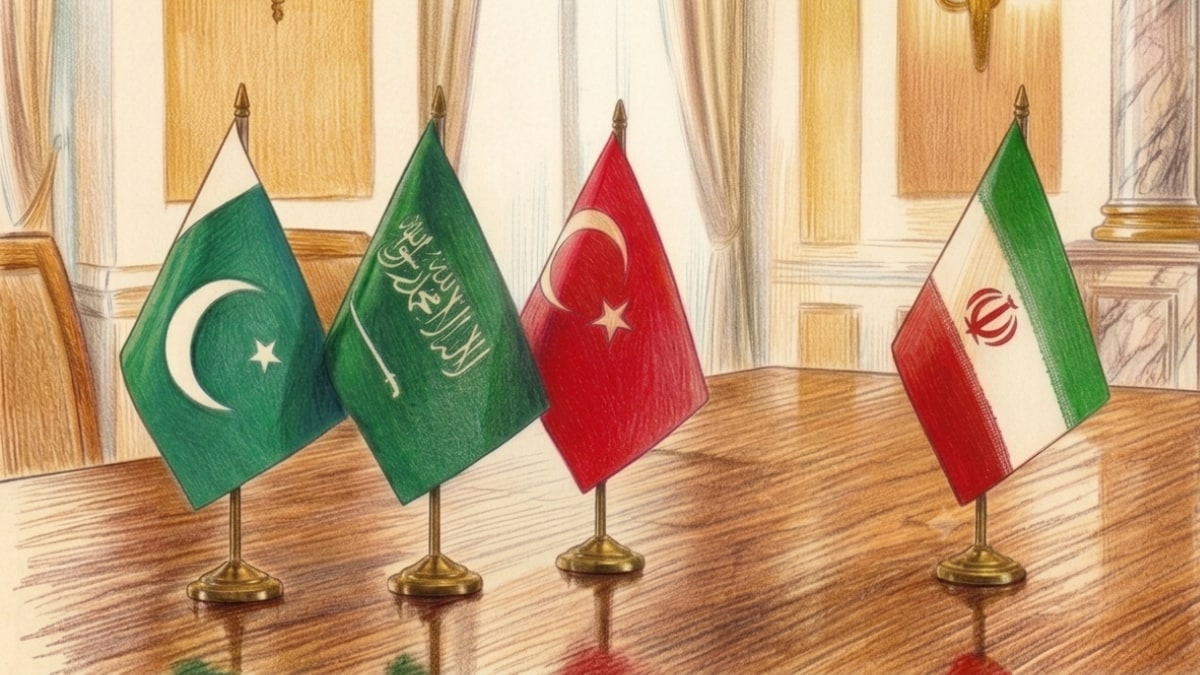
Just weeks after the Mecca Pact was inked between Pakistan, Saudi Arabia and Turkey, Iran has emerged as a possible fourth member of the defence agreement that could reshape the course of not just the war in the Gulf, but also the wider politics of the Middle East.
According to Mehdi Rahimi, the head of Iran’s parliament-linked news agency Khaneh Mellat, Iran's invitation to join the Mecca Joint Defence Agreement is "under consideration", as per a report from Pakistani news outlet Samaa TV.
However, none of the four nations have publicly commented on the major development amid the nearly six-month-long war in the Gulf.
According to the terms of the defence pact, an attack on one of the nations will be interpreted as an attack on all three, though the confusing rhetoric around the August 7 agreement indicates that actual military mobilisation may be the absolute last resort, and the real goal is to maintain diplomacy and build a regional security umbrella.
Rahimi added that the possible move was "a victory for Iran, because it has been calling for this for a long time".
Notably, though Iran has not publicly endorsed the pact as such, it has, on occasion, approved of the intention behind the move. For example, Tehran's foreign ministry spokesperson Esmaeil Baghaei on August 10 noted that Iran had "no reason" to be worried about the pact, despite it linking three nations with close security ties to the West.
This comes after Pakistan and Turkey indicated that the NATO-like pact could be opened up for other countries to join, with Bangladesh being one of the latest to express interest in joining what has often been called an 'Islamic NATO'.
Dhaka has said that its interest in joining the Mecca Pact is guided strictly by national interest and a desire to expand geopolitical ties amid regional and internal uncertainty.
In both cases, the move is expected to cause geopolitical friction, with a Bangladesh-Pakistan military alliance under the pact invoking historical tensions and a headache for India, while Iran's entry into the pact could alter the war altogether if future US attacks on Tehran would translate into tensions between the other Mecca Pact members and Washington, on whom they depend significantly.
What adds to the possible tumult amongst the Mecca Pact nations if Iran were to join is Saudi Arabia's strained equations with Tehran and its allied Houthis amid the war. Pakistan and Turkey, however, share better relations with Iran, given their attempts to mediate US-Iran tensions, with Pakistan’s armed forces chief Asim Munir to visit Tehran on Monday to retry bringing Washington and Iran to the table.
All eyes are now on whether Iran will accept the offer, and how the US could navigate that move to prevent a massive escalation of the war.
