



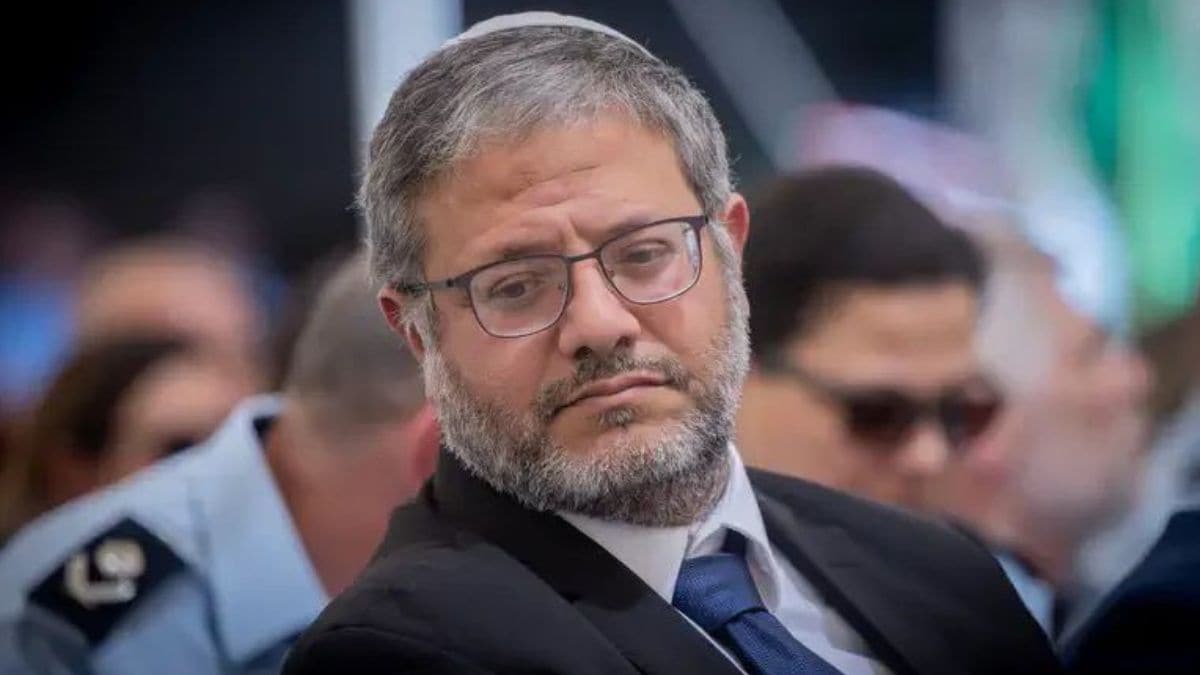
The trajectory of Kahanism in Israeli politics represents one of the consequential ideological shifts in the country’s parliamentary history. Originally rooted in the radical ideology of Rabbi Meir Kahane, whose Kach party was banned from the Knesset in 1988 under anti-racism legislation, it remained relegated to the political periphery for decades.
However, under the leadership of Itamar Ben-Gvir and his Otzma Yehudit (Jewish Power) party, Kahanism has become an indispensable partner in Netanyahu’s coalition, largely catalysed by the October 7 terror attacks. Currently, the party holds three ministerial portfolios, including the Ministry of National Security (Itamar Ben-Gvir), the Ministry of Heritage (Amichai Eliyahu), and the Ministry of Negev, Galilee, and National Resilience (Yitzhak Wasserlauf). By utilising institutional vulnerabilities and parliamentary leverage, Otzma Yehudit drastically expanded its political, administrative, and strategic influence.
Firstly, a central driver of Otzma Yehudit’s post-October 7 rise has been the capture of state security machinery and the aggressive mobilisation of grassroots cadres, often armed. Operating from his position as Minister of National Security, Ben-Gvir used the aftermath of the attacks to operationalise long-standing Kahanist doctrines under the guise of an emergency national defence framework.
Central to this effort was the rapid expansion and arming of civilian security squads (tzivtei konenut) across Jewish localities, alongside a relaxation of firearm licensing criteria. By streamlining gun ownership protocols, the ministry facilitated the purchase and distribution of hundreds of thousands of personal firearms to civilians. The initiative was concentrated heavily on frontline communities near the Gaza border, West Bank settlements, and mixed Jewish-Arab cities. Framed by the party as a necessary, decentralised upgrade to local security against future terror attacks, this policy effectively established Ben-Gvir as the torchbearer of domestic defence among right-wing constituencies.
Secondly, beyond arming civilians, the party successfully deepened its operational grip over the police force. Through direct ministerial intervention in high-level appointments and the aggressive push for hardline law enforcement against the Israeli Arab communities, the party systematically aligned state policing practices with its core ideological tenets. At the same time, in the Knesset, the party has capitalised on Netanyahu’s fragile coalition arithmetic by threatening the government over ceasefires, humanitarian aid, or hostage-negotiation terms perceived as unwarranted concessions.
This political brinkmanship culminated in early 2025, when the government approved the Gaza ceasefire deal. Following prior warnings, Ben-Gvir and his fellow ministers formally resigned from Netanyahu's coalition in January last year. But after the deal failed, Otzma Yehudit negotiated a return and rejoined the government in March that year. The party framed its high-profile exit as an unyielding rejection of both the ceasefire and the release of hundreds of Palestinian prisoners. From the political sidelines, the party championed an uncompromising platform: an indefinite operational and civilian takeover of the entire Gaza Strip, restriction of humanitarian aid entering the enclave, and aggressive expansion of military manoeuvres into areas like Rafah. This enabled Otzma Yehudit to shape national security discourses, asserting itself as the uncompromising voice on Israeli defence and sovereignty.
Thirdly, in tandem with its defence posture, Otzma Yehudit advanced a series of hardline legislative and domestic detention policies. The party achieved a core ideological milestone by successfully advancing capital punishment in the Knesset. It championed the controversial bill, making the death penalty for Palestinians convicted of lethal terror attacks. Following the law’s passage, Ben-Gvir immediately directed the Israeli Prison Service to begin constructing dedicated ‘death row’ wings and procurement of execution uniforms to prepare for swift implementation.
Although the law drew severe criticism from the United Nations and various international human rights organisations for its discriminatory nature, the law solidified the party’s defence posture. This milestone was accompanied by a broader legislative campaign that secured restrictive measures on mosque loudspeakers, expanded police surveillance and spyware, widened the scope of administrative detention, and annulled prior security agreements.
As Israel approaches the next Knesset election scheduled for 27 October, Otzma Yehudit stands as a formidable force capable of reshaping the political spectrum. Recent polling trends indicate the party’s voting base is expanding, with projections showing it could grow from its current six seats to as many as ten seats in the October election. So far, its strategies are promising, as it has been effective at siphoning voters from right-wing factions, including the Religious Zionist Party and Likud.
However, the path ahead for Otzma Yehudit remains constrained. Domestically, its aggressive stance has exacerbated the rift between the secular-liberal centre-left and the far-right religious-nationalist bloc. This deepening is making it difficult to find potential coalition partners. Nevertheless, the post-October 7 surge of Otzma Yehudit highlights a fundamental transformation in Israeli political culture, marking a transition of Kahanism from peripheral dissent to active state governance. By leveraging institutional authority and presenting an uncompromising ethno-nationalist narrative, Otzma Yehudit has positioned itself at the centre of Israel’s national security apparatus and electoral landscape.
The author is a doctoral candidate at the Centre for West Asian Studies, Jawaharlal Nehru University, New Delhi.
The opinions expressed in this article are those of the author and do not purport to reflect the opinions or views of THE WEEK.
