



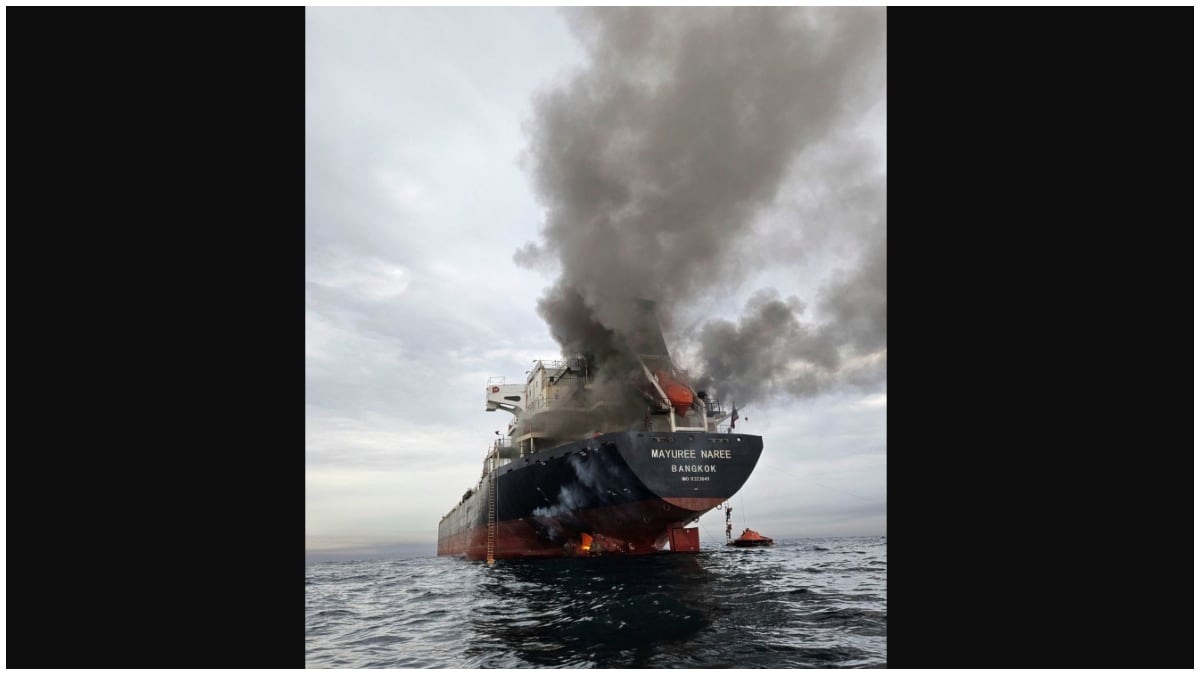
The United States has issued an ultimatum to Tehran, demanding that Iran publicly declare the Strait of Hormuz is completely safe and open for commercial shipping. Washington wants Iranian officials to issue a formal statement confirming that their forces will stop firing on vessels moving through the waterway. The demand comes after a 60-day ceasefire broke down when commercial ships came under attack in the strait. The Trump administration expects this assurance to come after weekend talks in Muscat between Iranian Foreign Minister Abbas Araghchi and Omani mediators.
If Iran refuses to cooperate, the US has indicated that consequences will follow, both militarily and economically. Officials have said non-compliance will not end well for Iran, and that a range of military options is being prepared. Washington's patience appears limited. Trump has declared the previous ceasefire "OVER!" and said any renewed Iranian strikes will draw retaliation twenty times greater in scale.
Meanwhile, Trump has also issued a warning to Iran regarding assassination plots targeting him. He wrote on his Truth Social platform that “1000 Missiles are Locked and Loaded and aimed at the Islamic Republic of Iran, with thousands of more to immediately follow, should the Iranian Government act on its threat, pronounced in many corners of the Globe, to assassinate, or attempt to assassinate, the sitting President of the United States of America, in this case, ME!” He also said that the US military was "ready, willing, and able" for a one-year period, subject to extension, “to completely decimate and destroy all areas of Iran.”
The military positioning reflects this: more than 20 US Navy warships, including the carriers USS Abraham Lincoln and USS George H.W. Bush, have moved into the Gulf of Oman. That buildup could lead to a fresh naval blockade of Iranian ports, similar to one that previously constrained Tehran's economy, and oil sanctions are already back in place. US negotiators are also working against a mid-August deadline to finalise a broader, permanent nuclear deal.
For Tehran, the picture is more complicated than straightforward defiance or agreement. In back-channel talks, Iranian negotiators have described the strikes that broke the ceasefire as a mistake, attributed to an "errant part" of their own system. The White House believes there is an internal debate under way in Iran, between moderates who favour continued negotiation and hardliners, particularly certain IRGC units, who would prefer to see the nuclear talks fail.
Iran's underlying position, though, looks different from outright obstruction. Tehran is not seeking to close the strait permanently. Rather, it wants commercial transit to take place under the coordination of the IRGC Navy. Any US effort to escort or reroute tankers independently, without Iranian involvement, is viewed in Tehran as a challenge to its maritime authority. So if Washington wants safe passage guaranteed, Iran may in turn ask that the US stop directing its ships through the strait unilaterally. Tehran would prefer transit to be handled through the Muscat mediators rather than a separate US-led arrangement. Publicly, Iranian leaders may also frame things differently from their private comments, saying they never sought negotiations and were simply responding proportionately to US strikes.
What happens next depends on whether these two positions on control of the strait can be reconciled. Analysts suggest treating any Iranian statements of de-escalation with some caution, since the underlying dispute over maritime authority remains unresolved. The clearer indicator will be the actual behaviour of Iranian forces on the water, rather than statements made in Oman. If Tehran does not allow US commercial tankers to move without Iranian oversight, tensions are likely to continue.
At present, the strait is operating well below its usual capacity: only 15 ships have passed through recently, while at least 285 remain stranded, contributing to higher US petrol prices. Despite considerable US retaliation, which reportedly hit up to 170 Iranian coastal defence and missile sites, both sides appear to still be observing some unwritten limits. By keeping their exchanges largely confined to the strait, Washington and Tehran seem to be trying to avoid a wider regional conflict, which for now keeps direct Israeli involvement relatively unlikely. Even so, the timeline set out by Trump leaves negotiators little room. Without a swift understanding on both maritime access and the broader nuclear issue, including the handling of near bomb-grade material at Isfahan, the situation could revert to blockades and further military confrontation.
