



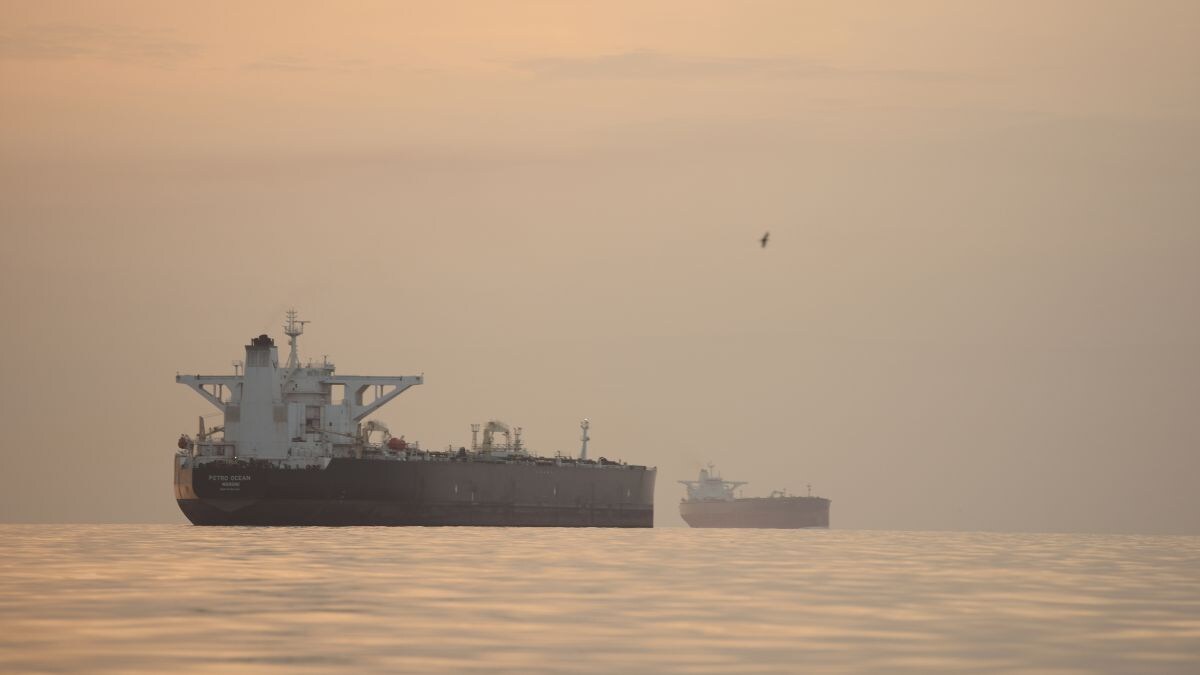
The fragile ceasefire between the United States and Iran was pushed to the brink yesterday after both sides exchanged heavy fire in and around the Strait of Hormuz, marking their most serious military confrontation in months. The US military said it carried out “self-defence” strikes against Iranian targets after what it described as an “unprovoked” attack on three American Navy destroyers transiting the strategic waterway. According to a statement from US Central Command, Iranian missiles, drones and fast attack boats targeted the USS Truxtun, USS Rafael Peralta and USS Mason as they moved through the strait towards the Gulf of Oman.
CENTCOM said the US responded by striking Iranian military facilities linked to the assault, including missile and drone launch sites, command and control centres, and intelligence and surveillance nodes. The military maintained that none of the American vessels suffered damage and insisted Washington was not seeking a wider conflict, though it remained prepared to defend its forces. The confrontation rapidly escalated into one of the most intense naval and aerial engagements between the two countries in recent days. Explosions were reported across several parts of Iran, including Tehran, Bandar Abbas, Minab, Qeshm Island, Bandar Khamir and Sirik.
The latest clash came against the backdrop of mounting tensions in the Gulf following an earlier US operation against an Iranian-flagged oil tanker, the M/T Hasna. American forces reportedly disabled the vessel by firing at its rudder to stop it reaching an Iranian port in defiance of a US naval blockade. Tehran has cited the tanker incident as proof that Washington violated the ceasefire first.
Iran has also sought to tighten control over maritime traffic through the Strait of Hormuz by demanding that ships submit a “Vessel Information Declaration” to its newly created Persian Gulf Strait Authority. Commercial shipping through the route, one of the world’s most important energy corridors, has largely ground to a halt amid fears of further escalation.
President Donald Trump described the Iranian attack as a mere “love tap” and claimed Tehran had simply “trifled with us today”. Posting on Truth Social, Trump said the Iranian small boats involved in the assault had been “completely destroyed”, while drones were “incinerated while in the air”, falling “very much like a butterfly dropping to its grave”. Despite the dismissive language, Trump also issued a stark warning to Tehran. He said the United States would strike Iran “a lot harder, and a lot more violently” if it failed to quickly agree to a peace deal. He added that the three destroyers had completed their transit “very successfully” and would soon return to enforce what he called a naval “Wall of Steel” under an operation dubbed “Project Freedom”.
Iranian officials accused the United States of initiating the violence and described the American military as “aggressive, terrorist and bandit”. According to Tehran, Iranian forces only opened fire after US forces attacked Iranian vessels near Jask and off the coast of Fujairah, thereby violating the ceasefire agreement reached last month. Iranian authorities also accused the US of bombing civilian areas near Qeshm Island, Bandar Khamir and Sirik, allegedly with the cooperation of unnamed regional states. The Islamic Revolutionary Guard Corps Navy rejected US claims that the destroyers escaped unharmed. Iranian commanders claimed their retaliatory strikes caused “significant damage” to the American vessels and forced them to retreat towards the Gulf of Oman.
The confrontation has placed the already fragile ceasefire under enormous strain. Still, both governments appear reluctant to formally declare the truce dead. Trump insisted the ceasefire remained in effect, telling reporters: “The ceasefire is going. It’s in effect.” Chairman of the Joint Chiefs of Staff General Dan Caine echoed that position, noting that Iranian forces had targeted US positions more than ten times since the truce began, though none of those incidents had previously crossed into full-scale combat.
Iran sees the situation very differently. Iranian officials argue that the latest US strikes amount to a direct breach of the agreement and accuse Washington of attempting to impose a one-sided arrangement in which the US can continue military operations without officially ending the ceasefire. Analysts say Tehran fears a model similar to those seen in Gaza and Lebanon, where ceasefires have coexisted with periodic strikes and military pressure.
Despite the dramatic escalation, diplomatic channels remain open. Pakistani mediators involved in back-channel negotiations have indicated that an interim understanding could still emerge. Trump confirmed that a new proposal had been presented to Tehran, requiring Iran to abandon its nuclear ambitions and surrender what he called its “nuclear dust”. While acknowledging that a deal “might not happen”, Trump said an agreement “could happen any day”.
For now, both Washington and Tehran appear caught between confrontation and restraint. Neither side seems willing to back down completely, yet both also recognise the immense risks of allowing the conflict to spiral into a wider regional war.
