



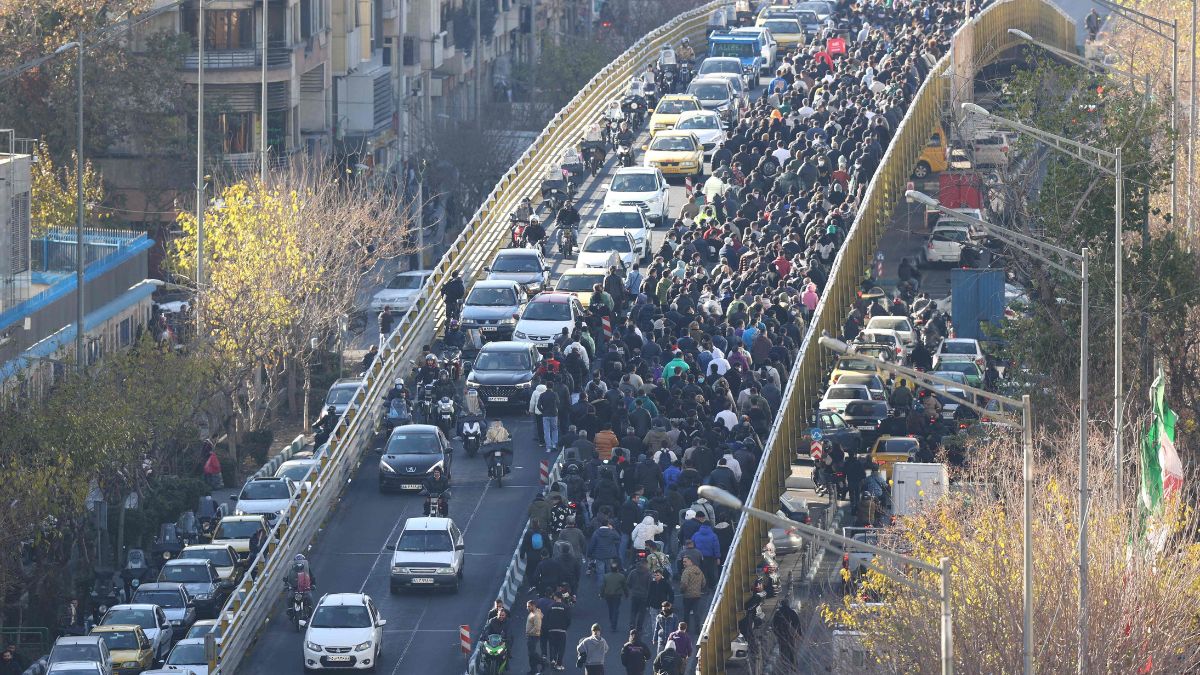
Loyalists of the Iranian government, once staunch in their support of the Islamic Republic, are increasingly expressing dissatisfaction as economic conditions continue to deteriorate in the embattled cash-strapped nation. Amid rising prices for essential goods and a collapsing rial, many who once backed the regime are now questioning its ability to navigate the growing crisis. The ceasefire has further created an uncertainty as citizens fear that normalcy could take a while to return with long-lasting peace not on the horizon.
Add to this, the infighting among the Iranian regime's top brass. On one side, we have President Masoud Pezeshkian and Parliament Speaker Mohammad Bagher Ghalibaf and on the other, the IRGC is reportedly trying to call shots amid the war. Foreign Minister Abbas Araghchi had leaned towards IRGC's hardline stance, which has angered other political leaders. This has caused confusion among the regime's loyalists who are undecided about which faction to support.
Experts in Iran fear that a prolonged US naval blockade could be more damaging than a military conflict. Ali Bigdeli, an international affairs analyst, told Khabar Online that there are visible signs of discontent among Iranians. People are in an exhausting situation. "At the societal level, signs of fatigue and restlessness are completely evident," he told the outlet. "Ultimately, if no concessions are given to the United States, more complex internal social and political consequences may arise."
The protests in December 2025-January 2026 saw opposition-aligned protesters taking to the streets. It was the largest demonstration in Iran since 2022, when protests erupted following the death of 22-year-old Mahsa Amini. However, on January 12, Iran began witnessing pro-government rallies with tens of thousands allegedly seen waving the Iranian flag and chanting Islamic slogans.
Some warn that if the economic situation does not improve, the loyalty of these core supporters could falter, and undecided segments of the population may drift toward opposition movements.
Iran's prolonged internet shutdown has also caused frustration among its citizens. The regime is allegedly weaponising nationwide internet blackouts. Recently, Iranian authorities reportedly tortured a 40-year-old father of two, Hesam Alaeddin, to death for accessing the internet with Starlink, according to IranWire.
Reza Pahlavi, the exiled son of the last shah of Iran, shared the news on social media, saying, "The brutal and criminal regime of the Islamic Republic killed Hesam Alaeddin under torture after he was reportedly arrested for using Starlink. For 62 days, this regime has shut down the internet and continues to massacre Iranian people. The world cannot stay silent."
