



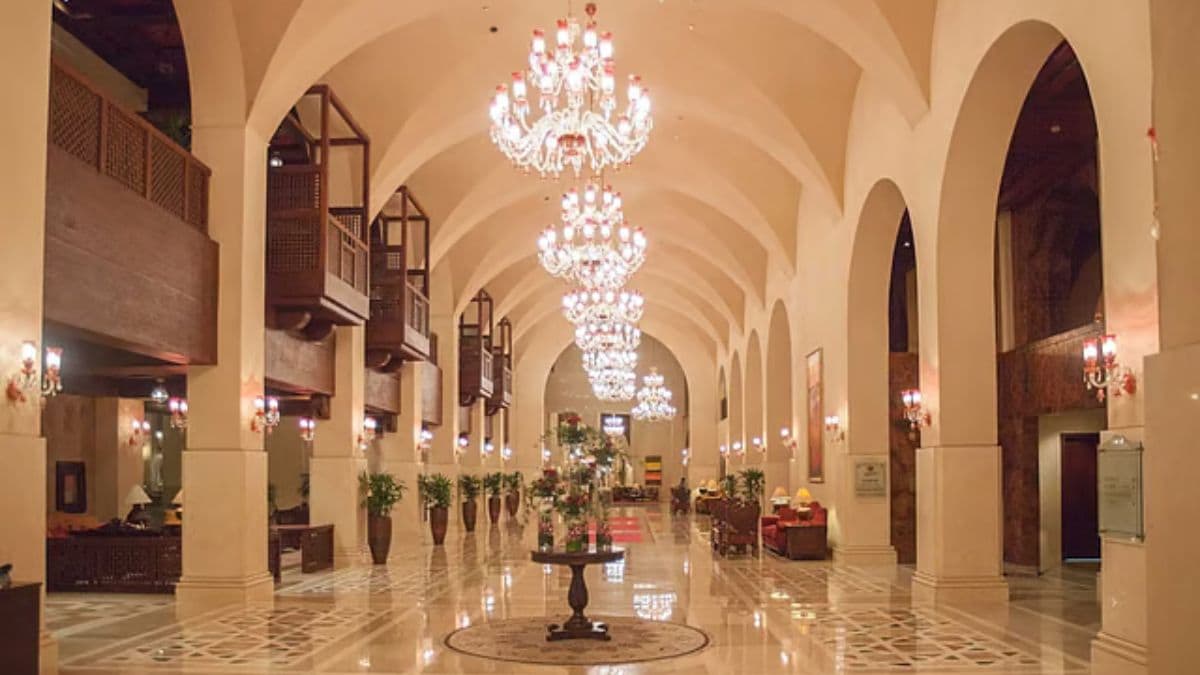
Three days ago, Pakistan hosted the ambitious talks between the US and Iran, which was the highest level direct negotiations between the two nations since the 1979 Iranian Revolution. However, Pakistan seems to have bitten more than it can chew as the government failed to clear the dues at the five-star hotel, where the talks were held.
Islamabad Serena Hotel, situated in Khayaban-E-Suharwardy near top government institutions in the capital city, is known for its scenic 15-acre property in the Margalla Hills. The room rent starts from $160 for standard rooms and $2,375 for the Presidential Suite per night. The discreet, scenic and highly secure location made it the apt choice for the government to host the diplomatic negotiations which lasted for 21 hours. It is operated under the Serena Hotels chain and is owned by the Aga Khan Fund for Economic Development. Ahead of the talks, the government asked all the guests to vacate the hotel, which means the exchequer has to pay rent for all the rooms.
This comes as Pakistan is engaged in high-level contacts to bring Iran and the US back to the negotiating table. If Pakistan succeeds, the two sides may meet again in Islamabad for a second round of talks likely by later this week. However, the cash-strapped nation's inability to pay the bills at Serena Hotel raises doubts about how well it could broker peace between the warring nations.
The cash-strapped nation is set to receive $5 billion in financial aid from Saudi Arabia and Qatar after the exchequer was forced to repay $3.5 billion owed to the UAE. After Abu Dhabi asked Islamabad to repay the loan, Pakistani senator Mushahid Hussain sparked controversy for calling the UAE "bechara" and "majboor" on live TV.
This comes weeks after it reached an initial agreement with the International Monetary Fund (IMF) to unlock about $1.2 billion from a $7 billion bailout programme. On Tuesday, the IMF lowered Pakistan's economic growth forecast to 3.5 per cent from the earlier 4.1 per cent and raised the inflation projection to 8.4 per cent for the next fiscal year up from 7 per cent.
The war in the Middle East has also directly hit the ailing Pakistani economy as the country sources 90 per cent of its energy imports from the Gulf region. Pakistan's current foreign exchange reserves are estimated at around $16 billion, which is sufficient for just about three months of imports.
Islambad is also looking to introduced its first yuan-denominated Panda bond next month, with an initial issue of $250 million. The $1 billion plan is reportedly backed by the Asian Development Bank and the Asian Infrastructure Investment Bank.
