



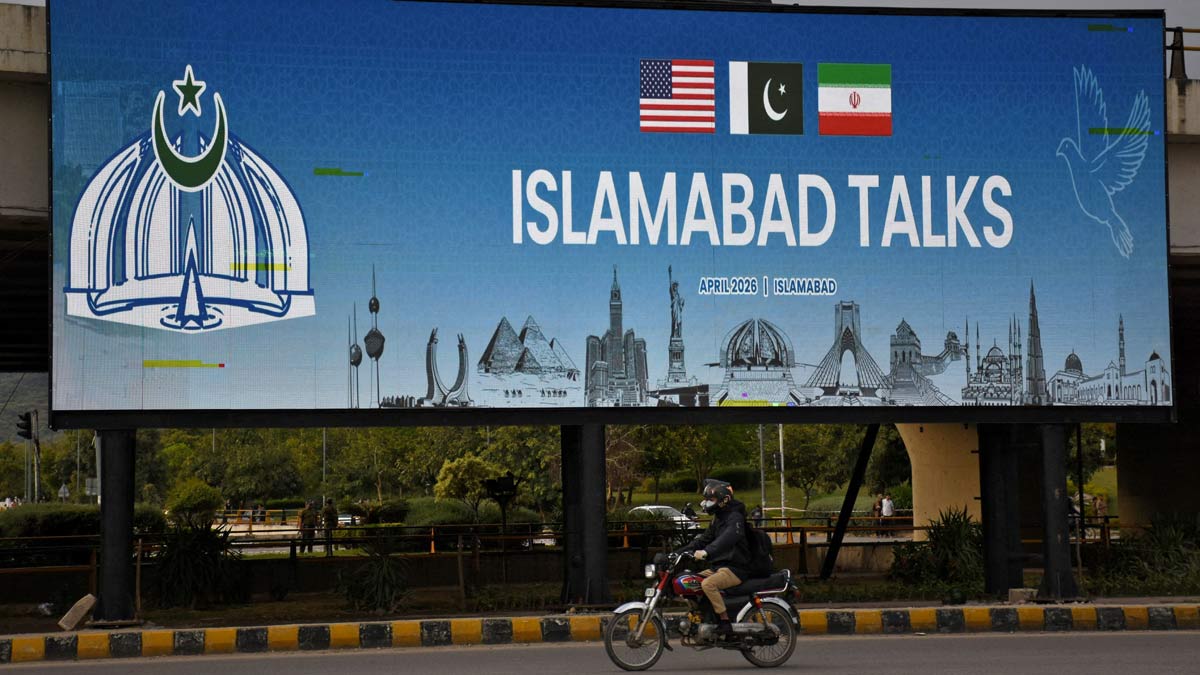
An Iranian delegation has arrived in Islamabad to hold negotiations with US officials aimed at resolving the Middle East conflict that erupted on February 18. The US team, led by Vice President J.D. Vance, is expected to land in the Pakistan capital shortly.
Despite the scheduled peace talks, tensions remain high. Tehran has reiterated its deep distrust of the United States, while Vance has warned Iran against attempting to “play” the US negotiators.
The Iranian delegation is led by Parliament Speaker Mohammad Bagher Ghalibaf and includes Foreign Minister Seyed Abbas Araghchi, Ali Akbar Ahmadian, Secretary of Iran’s Defence Council, and Abdolnaser Hemmati, Governor of the Central Bank of Iran. Several members of the Iranian parliament are also part of the team.
Speaking to reporters upon his arrival, Ghalibaf acknowledged past negotiation failures while signaling a continued willingness to engage in dialogue. “Our experience with negotiations with the Americans has always been met with failure and breach of promise. They attacked us twice in the middle of the negotiations. We have goodwill but no trust,” he said, according to Tasnim News Agency.
Seeking to display a poignant gesture, Ghalibaf carried pictures of Minab victims on the official flight. He emphasised that Iran is ready to reach a deal if Washington offers a genuine agreement and recognises Iran’s rights, Iranian state media reported.
Vance expressed cautious optimism, stating he expected a positive outcome but added: “If they try to play us, they will find the negotiating team is not receptive.”
The dialogue follows US President Donald Trump’s announcement of a two-week ceasefire, made just an hour before the previous deadline for Tehran to reach an agreement expired.
Security in Islamabad was heightened, with more than 10,000 police and security personnel deployed to ensure multi-layered protection for the visiting delegates.
The negotiations are being closely watched globally, as their success or failure could significantly impact West Asian security, international diplomacy, and energy markets.
The conflict has already disrupted global markets, driving oil prices to new highs and fueling inflation in several countries. Following a US-Israel attack, Tehran had closed the Strait of Hormuz, a key global oil chokepoint, but it has agreed to reopen it during the ceasefire, though uncertainty remains over the safety of shipping in the region.
