



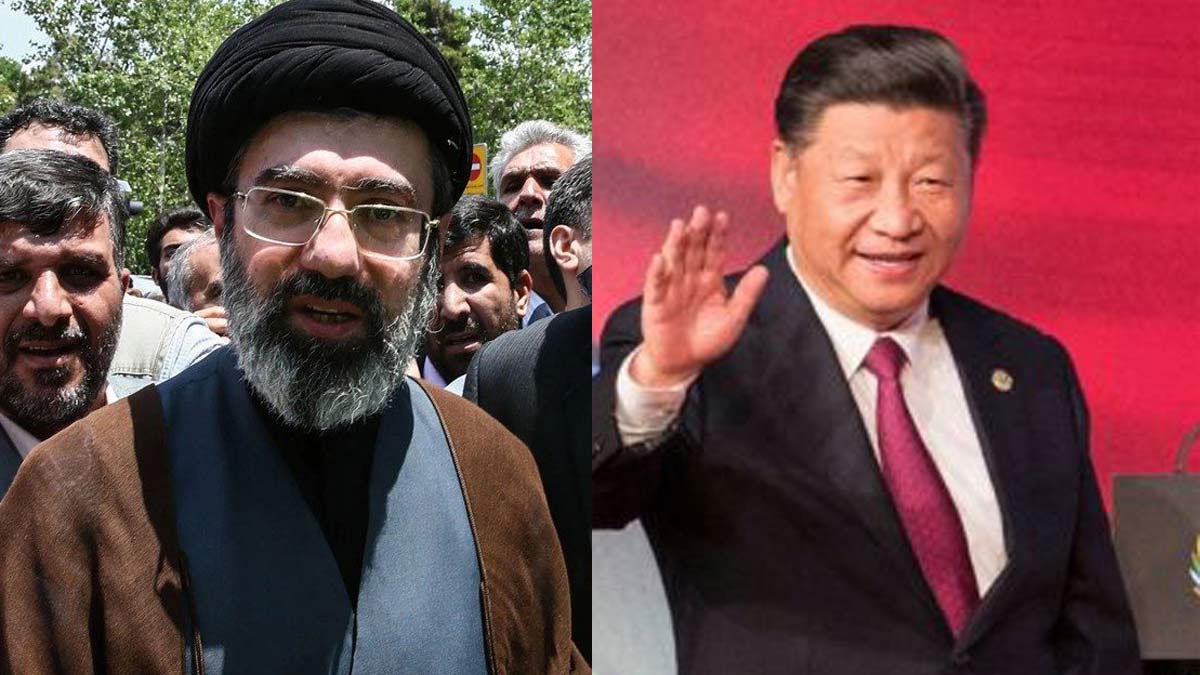
As the United States and Iran agreed to a two-week ceasefire, following the intervention of Pakistan, reports have emerged suggesting China played a covert role in encouraging Iran to pursue a path toward negotiations.
Two Chinese officials, speaking anonymously, told the Associated Press that Beijing had been in contact with Tehran throughout the evolving negotiations. While China had not publicly commented on its involvement, one official revealed that Beijing had been working through intermediaries, including Pakistan, Turkey, and Egypt, to leverage its influence on Iran.
Though China has not officially made any comment on its role, a spokesperson for China’s Foreign Ministry, Mao Ning, on Tuesday called for all parties to show sincerity and quickly end the war “that should not have happened in the first place”.
Ning said Beijing was "deeply concerned" about the impact the conflict has on the world economy and energy security.
On Tuesday, China, alongside Russia, vetoed a UN resolution urging states to coordinate efforts to protect commercial shipping in the Strait of Hormuz. China's UN envoy, Fu Cong, argued that adopting the resolution while the US was threatening the survival of civilization would have sent the wrong message.
US President Donald Trump announced the two-week ceasefire on Tuesday evening, just an hour before a deadline for Tehran to finalise an agreement was to end. Pakistani Prime Minister Shehbaz Sharif has invited representatives from both nations to Islamabad and the negotiations are likely to be held in Islamabad on April 10.
Iranian Foreign Minister Seyed Abbas Araghchi confirmed that Iran would suspend its military operations for two weeks and allow safe passage through the Strait of Hormuz during this period.
