



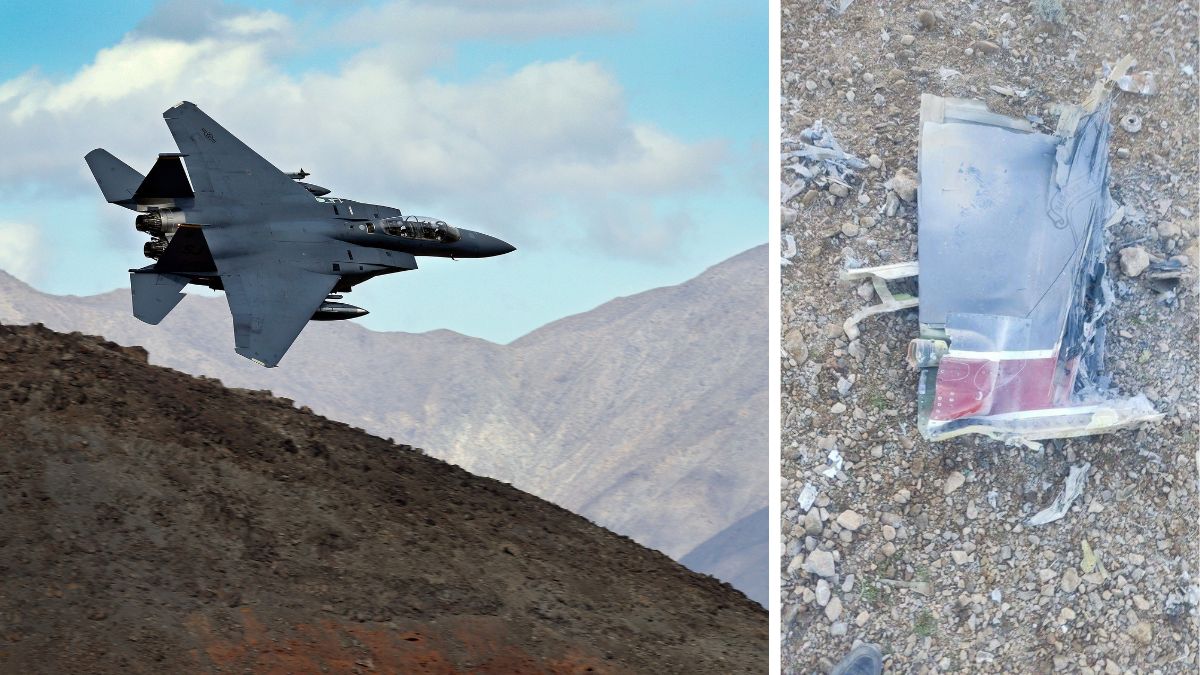
The loss of an F-15E Strike Eagle over Iran, followed by an A-10 attack aircraft and two Black Hawk helicopters during a rescue attempt, has turned what was sold to the American public by Donald Trump and the Pentagon as a clean, controlled operation into something that looks increasingly complicated and open-ended.
The F-15E is a jet built precisely for the kind of environment it was flying into: fast, long-ranged and loaded with defensive systems. When it was shot down over Iran’s Khuzestan province, it didn't just represent the loss of a $30 million aircraft. It quietly pulled the rug from under the administration's earlier claims that Iran's air defences had been taken apart. Washington had been fairly emphatic that Iran’s radar systems were knocked out, anti-aircraft capabilities neutralised, and airspace essentially owned. The wreckage told a different story.
It turns out Iran's air defence network is harder to kill than the briefings suggested. Mobile missile systems, such as the Third Khordad, have apparently been doing exactly what they were designed to do: pop up, fire, and disappear before anyone can lock onto them. The Pentagon is realising that to hunt and suppress those kinds of systems is genuinely difficult. And beyond that, Iran still appears to have a meaningful chunk of its missile stockpile and a large inventory of attack drones intact. The picture of a thoroughly degraded adversary was, at best, premature.
Tehran has been quick to seize on all of this. Iranian officials have moved swiftly to frame the incidents as proof that the US overplayed its hand. Senior figures have pointedly contrasted the early talk of regime change with the current reality of search-and-rescue missions.
And then there's the missing pilot. Somewhere in Iran, a crew member from the downed F-15E is reportedly still at large, relying on survival and evasion training to stay free. The Iranian media has already reported that rewards are being offered for information leading to a capture. If that pilot is taken prisoner, the entire dynamic of this conflict changes. A hostage doesn't just create a humanitarian crisis—it boxes in American military planners and hands Iran enormous political leverage.
The effort to find and recover the missing crew member has already pulled more American personnel into harm's way. Personnel recovery is some of the hardest work in modern military operations as it demands perfect intelligence, split-second timing and a willingness to take on enormous risk. In an environment where Iranian defences are clearly more capable than advertised, that risk is even higher.
All of this is happening at a moment of unusual turbulence within the US defence establishment itself. Senior military leadership, including the Army chief, has been dismissed in the middle of a war. Such a disruption would make headline news even under normal circumstances. In a complex, fast-moving situation, consistency of command matters enormously.
The mood could be shifting in the US. Fuel prices have been creeping up, partly tied to disruptions in the Strait of Hormuz, and people are starting to feel it. Public support for the operation was never especially strong to begin with, and visible losses have a way of hardening scepticism. The gap between what was promised and what's happening is hard to paper over.
The options reportedly on the table now, like strikes on Iranian energy infrastructure, forcing open the Strait of Hormuz and deploying special operations forces, each carry their own serious risks of escalation, and none come with a guarantee of success. What makes the position harder still is that the US appears to be navigating this largely without close allied support, which limits both what's operationally possible and what's politically defensible.
What the past few days have made plain is that Iran has the capacity to absorb the initial shock of strikes and hit back in ways that complicate and slow an adversary's plans. The aircraft losses are, in cold numerical terms, relatively small. But their symbolic and strategic weight is far greater than the numbers suggest. They expose assumptions that didn't hold, reveal vulnerabilities that weren't supposed to exist and introduce complications that nobody in Washington was publicly planning for.
