



The Donald Trump administration has signaled a possible shift in its stance on the ongoing conflict with Iran, suggesting that military operations could conclude even without a formal deal.
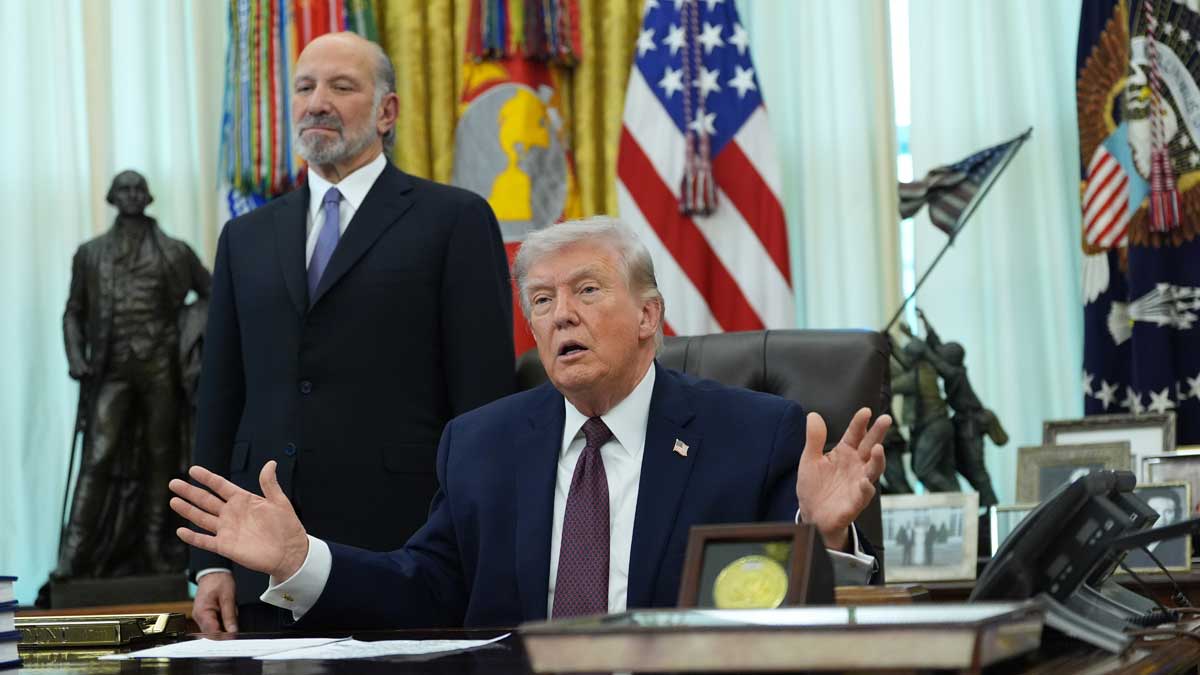
Speaking from the Oval Office, Trump said the US could wind down the war within “two to three weeks,” while still expressing optimism about a potential deal with Tehran. However, he emphasised that such an agreement is no longer a prerequisite for ending the conflict—a notable departure from earlier warnings that Iran must comply with US demands.
“We’ll be leaving very soon,” Trump told reporters, adding that the exit could occur “within two weeks, maybe two weeks, maybe three.”
Previously, Washington had threatened to escalate military action if Iran refused a 15-point ceasefire framework. The proposal included key demands such as halting uranium enrichment, committing not to pursue nuclear weapons, and reopening the Strait of Hormuz.
Trump’s latest remarks suggest a softening of that position. “Iran doesn’t have to make a deal, no,” he said. “No, they don’t have to make a deal with me.”
At the same time, he described Iran’s current leadership as more pragmatic and suggested that Tehran may still be inclined toward negotiations. “It’s possible that we’ll have a deal because they want to make a deal. They want to make a deal more than I want to make a deal,” he said. “But in a fairly short period of time, we’ll be finished.”
On Tuesday, Defence Secretary Pete Hegseth had stated that the US remained prepared to continue military operations if Iran did not meet its demands.
However, officials in Iran have expressed deep skepticism. Foreign Minister Abbas Araghchi dismissed the prospect of a diplomatic breakthrough, citing a complete lack of trust.
Speaking to Al Jazeera, Araghchi said, “The trust level between the two nations is at zero”. Accusing the US of dishonesty, he pointed to past negotiations, including a previous agreement that Washington later abandoned, as well as more recent talks that were followed by military action.
Meanwhile, Iran’s Revolutionary Guards have escalated tensions by threatening US-linked companies operating in the region. A list of 18 firms—including Microsoft, Google, Apple, Intel, IBM, Tesla, and Boeing—was named as potential targets starting Wednesday evening, Tehran time.
Trump, however, downplayed these threats, stating, “They don’t have much left to threaten.”
