



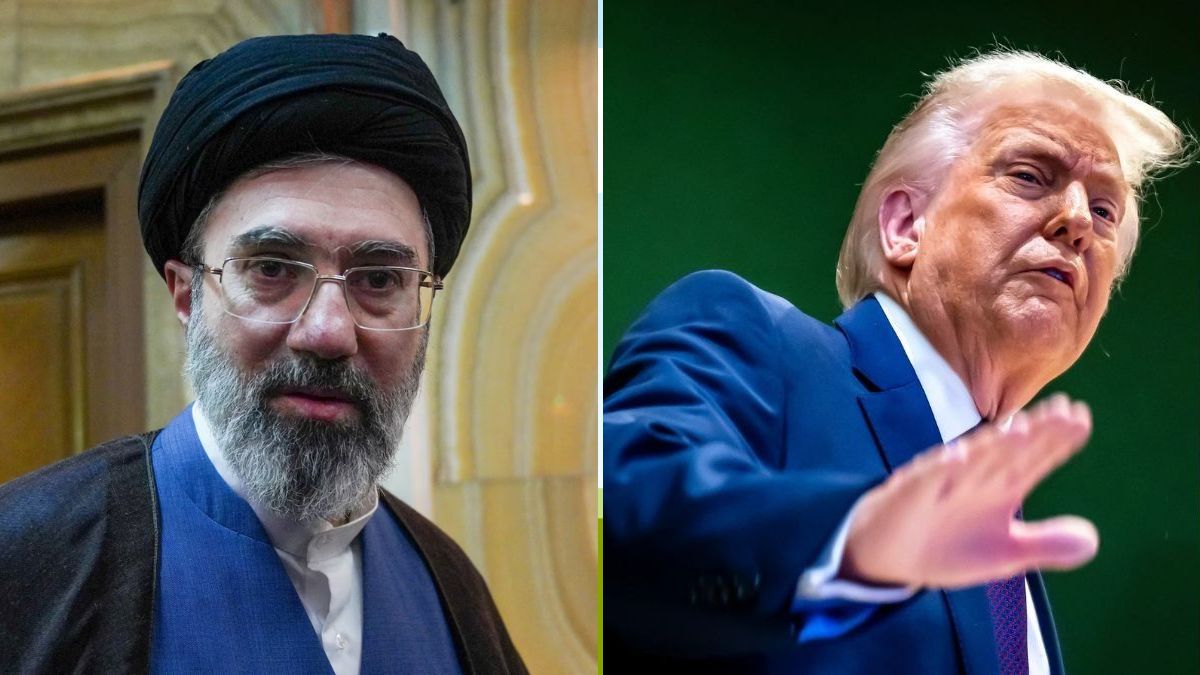
Iran on Wednesday rejected yet another "false and baseless" claim by US President Donald Trump that it had requested a ceasefire.
“You cannot speak to the people of Iran in the language of threats and deadlines ... We do not set any deadline for defending ourselves,” Iran's foreign minister Abbas Araghchi told Al Jazeera on Tuesday night.
This comes amid Trump's repeated claims that Iran's "New Regime President, much less Radicalised and far more intelligent than his predecessors", had "asked" for a ceasefire.
"We will consider when Hormuz Strait is open, free, and clear," Trump wrote in a Truth Social post on Wednesday.

This is the latest addition to the escalating rhetoric around the chaos in the Gulf, with Trump trying to find a way to exit the war, while also saving face and imposing conditions on Tehran that are seen as uneven.
Iran, on the other hand, often signals it is open to diplomacy and ending the war, but clashes with Trump's conditions, which also leads to grand declarations that the war would go on, and that it would defend itself.
Trump has also indicated to Reuters that the US could be out of Iran "pretty quickly", returning for "spot hits" if needed.
This again hints at Washington's possible desire to exit the war that it once claimed would be a simple military operation along the lines of Operation Midnight Hammer, which itself led to a 12-day war between the same sides.
The US, which has already distanced itself from Israel to some extent by saying that its objectives in the war were close to completion, continues to face growing pressure from home to withdraw from the war—not only due to rising gas prices and their impact on cost-of-living prices—as his approval ratings stand at an all-time low.
