


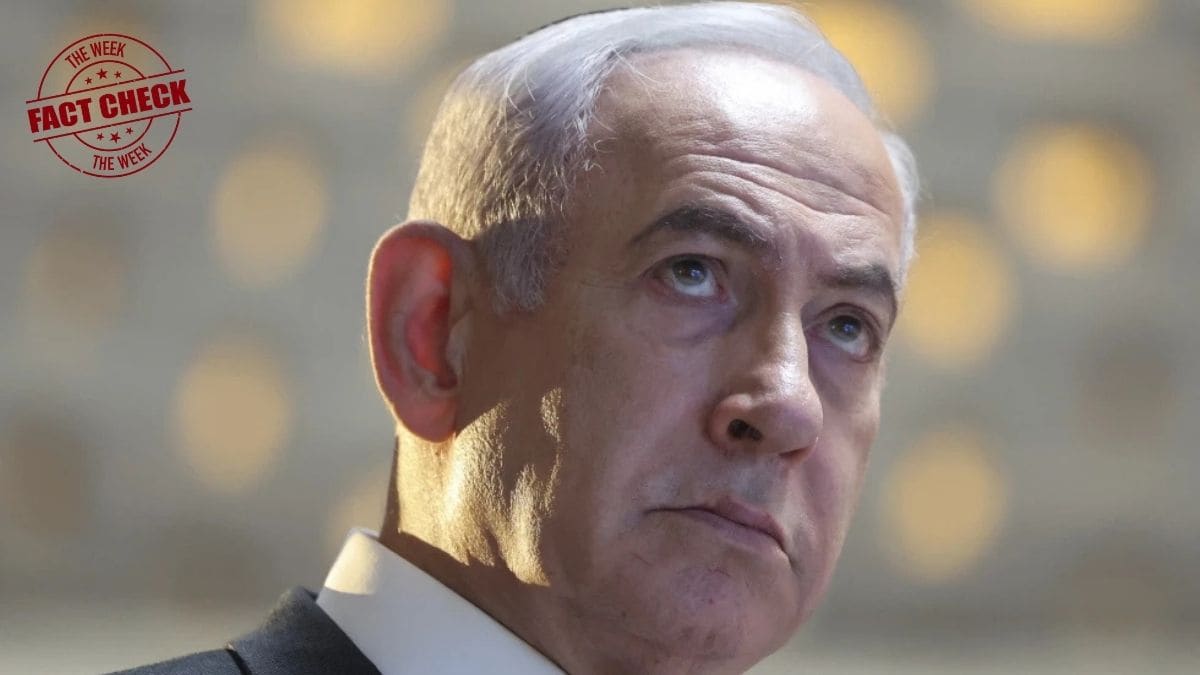
Israel on Monday dismissed claims that PM Benjamin Netanyahu's office was hit in a missile attack amid Iran's tenth wave of retaliatory strikes against Washington and Tel Aviv.
This comes after a military spokesperson from the Iran Revolutionary Guard Corps (IRGC) claimed in a video statement that Tehran's Khaibar missiles had successfully struck Netanyahu’s office, as well as the home of Israel's Air Force chief Tomer Bar in a "surprise attack".
"The office of the criminal prime minister of the Zionist regime and the headquarters of the regime’s air force commander were targeted," the IRGC said, as per a report from semi-official news agency Fars.
This also came amid a fresh set of explosions heard above Jerusalem as air raid sirens sounded on Monday, AFP journalists said.
"A short while ago, the IDF identified missiles launched from Iran toward the territory of the State of Israel. Defensive systems are operating to intercept the threat," the Israel Defense Forces (IDF) had said in a statement at around that time.
This comes in response to claims by the Iran Revolutionary Guard Corps (IRGC) that it had launched four ballistic missiles that had 'struck' the 'USS Abraham Lincoln'.
— THE WEEK (@TheWeekLive) March 1, 2026
(us iran news trump centcom, roaring lion, beit shemesh uss abraham lincoln)https://t.co/KRPiNk4L3i
A Times of Israel report noted that Netanyahu's office had called the IRGC's claims "fake news", and said that the Israeli premier's office was "intact".
Though Iran had begun its response to the coordinated US-Israel airstrikes on its soil, it was ramped up after the death of Supreme Leader Ayatollah Ali Khamenei and several of Tehran's top brass.
The issue worsened after Iran ramped up its counteroffensive against the US and Israel for attacking it on Saturday, under what it calls Operation True Promise 4.
— THE WEEK (@TheWeekLive) March 2, 2026
(news war trump israel, irgc khaiber missile netanyahu, maritime news shipping insurance)https://t.co/ftkqtaI4ud
The two sides continue to be engaged in fierce combat, which has also drawn in the wider Middle East, as countries like the UAE, Qatar, Bahrain, Saudi Arabia—and even mediator Oman—take damage after a significant part of the infrastructure here continues to be struck by either kamikaze drones or debris from drones and missiles shot down by air defence systems.
Tensions in the region have also led to widespread airspace closures, stranding thousands of passengers and often delaying flights currently operating around the world.
