



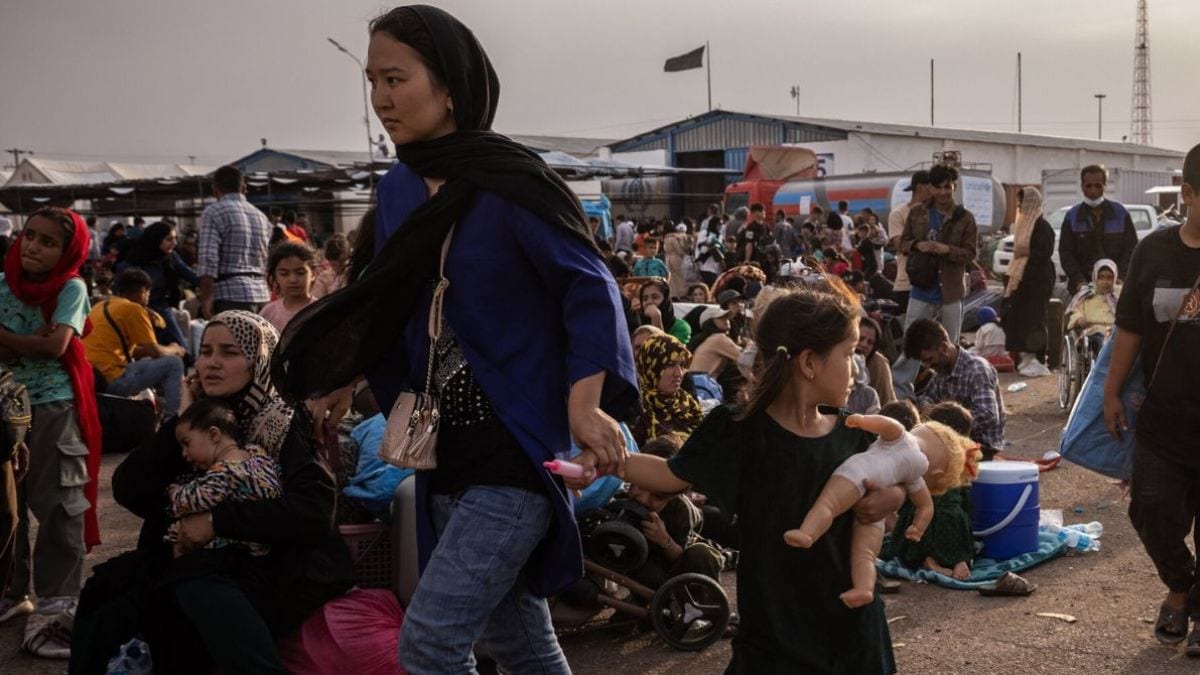
Every second day, media headlines blare: migrants and refugees subjected to systematic violence; attacks on refugee camps; arbitrary arrest and detention of refugees; and so on. These raise the question of how many refugees are actually there and what their origins are. While there are millions of refugees worldwide, let’s focus on those from the Middle East and North Africa. What are the refugee trends in 2025 as compared to 2015?
For a better understanding, most of the MENA countries are grouped into three categories: the GCC (Saudi Arabia, the UAE, Bahrain, Qatar, Kuwait, and Oman), North Africa (Egypt, Libya, Tunisia, Algeria, and Morocco), and the Levant (Syria, Lebanon, Israel, Jordan, and Palestine). Countries like Iran, Iraq, and Yemen, which do not fall into any grouping, can be analysedseparately. At the same time, countries such as Mauritania and Western Sahara are not typically included in the North African group.
According to UNHCR estimates, the origins of refugees in the Middle East from 2015 to 2025 provide valuable insights. By 2025, 1,59,882 refugees come from the Islamic Republic of Iran, which is 88.2 per cent higher than in 2015, when it was only 84,950. Similarly, in Iraq, the numbers have steadily decreased after reaching their peak of 3,72,332 in 2018. Currently, 292,822 refugees are from Iraq, a 10.9 per cent increase from 264,086 in 2015. Meanwhile, in Yemen, the number of refugees in 2025 is 53,996, which represents a significant 239.5 per cent increase from 15,901 in 2015.
First, analysing the number of refugees from the Gulf Cooperation Council (GCC) from 2015 to 2025 reveals startling results. Over the past decade, the number of refugees originating from GCC countries has grown rapidly. In 2015, there were 2,332 recorded refugees from these nations; by 2025, this number had increased by an impressive 181.7 per cent to 6,570. Kuwait leads with 51.7 per cent, followed by Saudi Arabia with 36.9 per cent, while the remaining 12.4 per cent is shared among the others. Additionally, Qatar has the smallest number of refugees, making up only one per cent.
Second, the same pattern has continued in North Africa, where the situation has not improved; in fact, it has worsened. Compared to 2015, when 30,790 refugees originated there, North African countries reported more refugees in 2025. Currently, the number is 64,808, representing a 110.5 per cent increase over the past 10 years, with Egypt accounting for 38.8 per cent of the total refugee population. Meanwhile, Tunisia remains at the bottom with only 5.5 per cent.
Third, the Levant is the largest refugee origin country in the entire MENA region, with 55,46,734 refugees in 2025. It slightly increased to 11.4 per cent from 2015, when the majority of these refugees, who originated from Syria, accounted for 98.9 per cent or 54,84,575 of the total refugees. In second place are Palestinian refugees, with a total of 46,503 and 0.8 per cent of the total population. However, the actual information on registered Palestinian refugees under UNRWA’s mandate is limited.
Ultimately, over a decade, the number of refugees originating from MENA countries has increased by 53,76,284 (13%) from 2015 to a total of 61,24,812 refugees from 19 countries in the region. The data shows that growing tensions in the region have made it a breeding ground for refugees, accounting for half of the world’s total refugee population.
Furthermore, the number of refugees from the Kingdom of Saudi Arabia and Kuwait is 2,424 and 3,399, which is surprisingly higher compared to Israel, which is 1,271. While Saudi Arabia and Kuwait are the most powerful, wealthiest, and most stable rentier states in the Middle East, they produce a higher number of refugees than Israel. This raises a critical question: how do these peaceful GCC countries generate more refugees than the states involved in active territorial conflicts?
The author is a doctoral candidate at the Centre for West Asian Studies, Jawaharlal Nehru University, New Delhi.
The opinions expressed in this article are those of the author and do not purport to reflect the opinions or views of THE WEEK.
