



The Syrian armed forces and the Kurdish-led Syrian Democratic Forces are once again exchanging fire in eastern Aleppo province, signalling a dangerous escalation after days of clashes in and around the northern city. Although no casualties were immediately reported, the fighting underscores a deepening deadlock between Damascus and the SDF over the future of tens of thousands of Kurdish fighters and the fate of Syria’s fragile post-war order.
The Syrian army has declared a swathe of territory east of Aleppo a “closed military zone”, a move that formalises what has long been an uneasy frontline. Eastern Aleppo province marks the fault line between areas held by the central government and the vast stretches of north-eastern Syria controlled by the SDF. What is unfolding there now represents the most serious challenge to Syria’s stability since the fall of Bashar al-Assad in December 2024, exposing the limits of a transition that promised unity but has delivered mistrust.
The current crisis started on January 6, when fighting broke out in Sheikh Maqsoud and Ashrafiyeh, Kurdish-majority neighbourhoods that had remained semi-autonomous even after the rest of Aleppo returned to government control. These areas were the last parts of the city to be fully integrated, and their status was meant to be resolved through a power-sharing deal reached last March. That agreement envisaged the gradual incorporation of Kurdish institutions and SDF fighters into the national framework by the end of 2025. Instead, negotiations collapsed, and the streets of Aleppo became the battleground for a political failure.
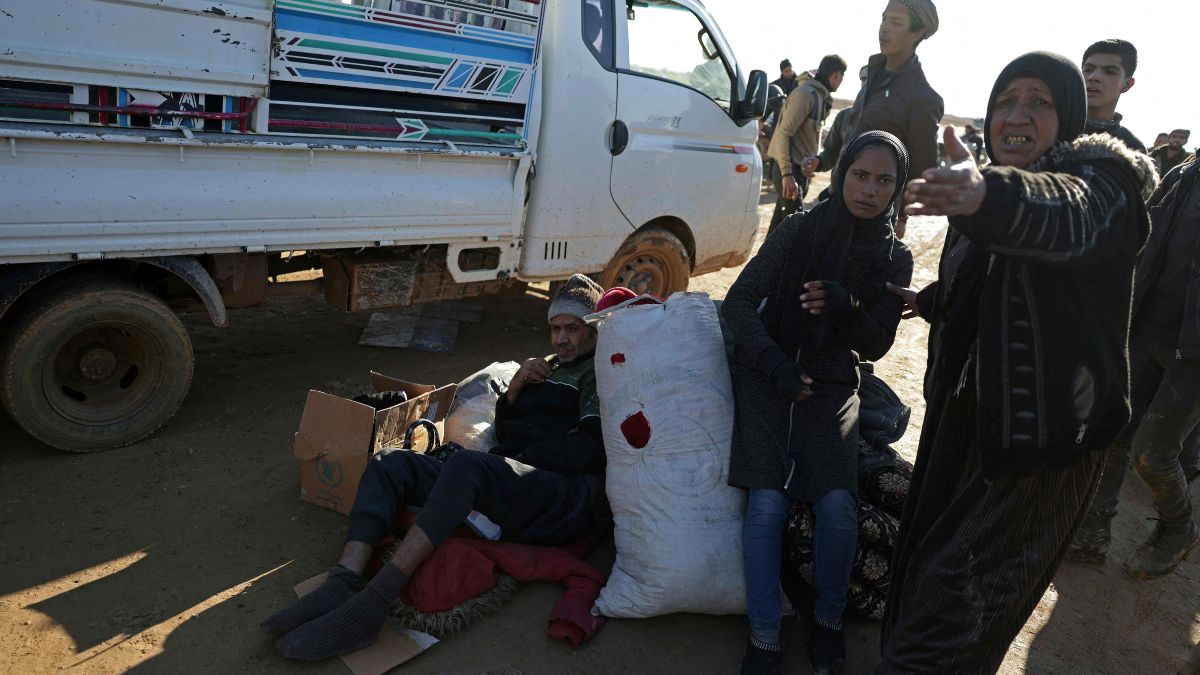
Around 1.5 lakh people were displaced as fighting spread through densely populated districts. Estimates of the death toll vary widely, from at least 21 civilians to more than 100 people when combatants are included. After days of violence, a ceasefire allowed the government to reassert full control over the city. The interior ministry brokered the evacuation of more than 400 Kurdish fighters and wounded personnel to the SDF’s de facto autonomous zone in the north-east. At the same time, the detention of some 300 Kurds, including members of local security forces, has further vitiated the atmosphere.
With Aleppo itself being brought under government control, the conflict has moved further eastward into the rural areas. The army’s declaration of a closed military zone now covers the areas around Deir Hafer and Maskana, roughly 50 to 60 kilometres from the city. This corridor is strategically important, linking government-held western Syria to the SDF-controlled north-east. Damascus has issued an ultimatum, demanding that all armed groups withdraw east of the Euphrates. The SDF, seeking to slow or deter any advance, has destroyed three bridges connecting its territory to government areas. Heavy machine-gun fire and drone strikes have been reported near villages such as Humaymah and Zubayda, raising fears that a limited confrontation could quickly widen.
At the heart of the violence lies the failure of integration. The March 2025 deal was always ambitious, requiring the absorption of an estimated 50,000 to 100,000 SDF fighters into a reconstituted national army. President Ahmed al-Sharaa’s Islamist government has struggled to reassure Kurdish leaders that their forces would not be marginalised or broken up. Disputes over command structures, deployment and the future of the SDF’s autonomous administration have proved insurmountable so far.
Ideology and history have compounded these tensions. Elements within the new Syrian army include former Turkey-backed rebel factions with a long record of hostility towards Kurdish forces. Kurdish officials have accused the government of incorporating extremists into its ranks, with senior figures warning that the presence of fighters linked to the Islamic State amounts to a declaration of war.
Regional and international pressures are further inflaming the crisis. Turkey, a crucial ally of the new Syrian authorities, continues to view the SDF as an extension of the Kurdistan Workers’ Party and has openly welcomed operations in Aleppo. The United States, meanwhile, is caught in a difficult position as it remains the SDF’s main partner against residual Islamic State cells. At the same time, the Trump administration has cultivated close ties with al-Sharaa’s government and is pressing Kurdish leaders to accept the integration deal, even as fighting intensifies.
The repercussions are being felt across the north-east. In Qamishli, thousands of protesters have taken to the streets, burning portraits of Al-Sharaa, often referring to him by his former nom de guerre, Abu Mohammed al-Jolani, as well as images of Turkish officials. There are concerns that what began in Aleppo could turn into a broader assault on the autonomous region itself.
