



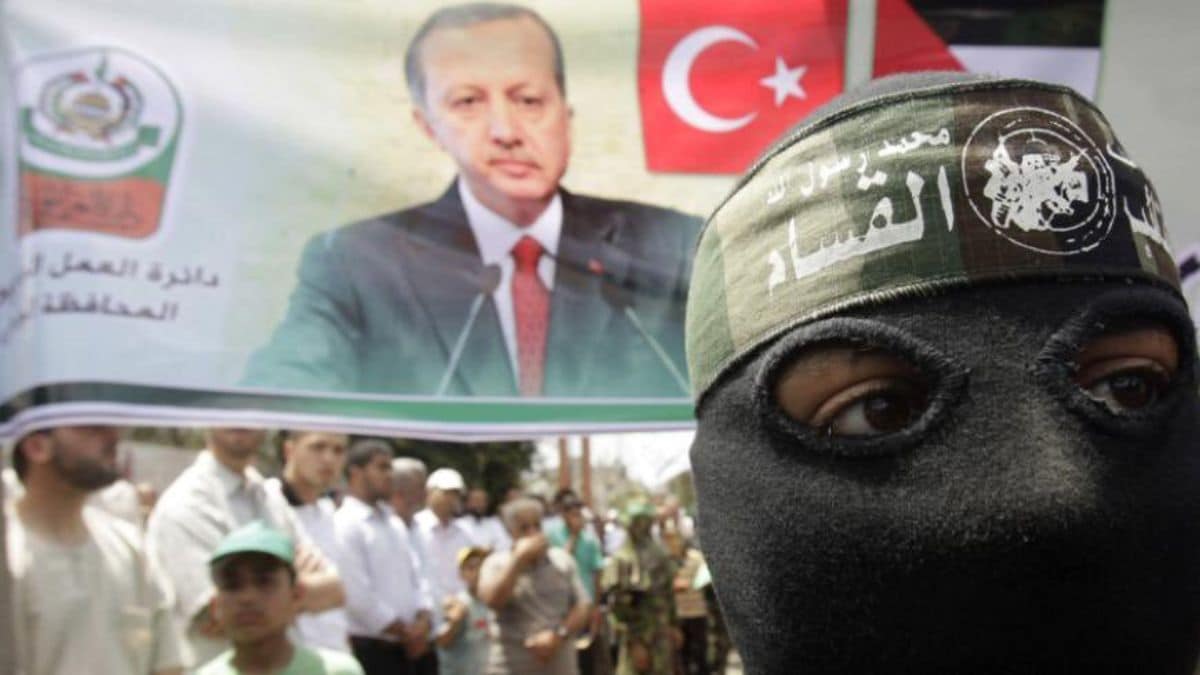
The recent disclosure by the Israel Defence Forces and internal security agency Shin Bet about a Hamas financial hub operating in Turkey shows how the group sustains itself beyond Gaza. Central to the revelations is the identification of a sophisticated financial platform managed by Gazans living in Turkey.
Israeli intelligence has named specific operatives, including Tamar Hassan, a senior figure in Hamas’s finance ministry who works under Khalil al Hayya, along with financial facilitators Khalil Farwana and Farid Abu Dayir. They are accused of using Turkey’s commercial and banking systems to launder and store Iranian funds before sending them to Hamas structures throughout the region. The scale of these financial movements, which amount to hundreds of millions of dollars, shows that despite heavy destruction of infrastructure in Gaza, Hamas’s economic supply line remains active abroad.
The arrangement reveals a significant change in Hamas’s operational approach. Even as it gradually retakes its predominant role in Gaza following the truce, the group is also accelerating efforts to rebuild its strength from external safe havens. By making use of Turkey’s economic environment, Hamas has broadened its financial presence in ways that help it avoid border controls and international sanctions. Analysts say the network gives Iran the means to resurrect a regional proxy able to project force and support future attacks from the relative safety of a NATO country.
The geopolitical consequences for Turkey are considerable. IDF spokesperson Colonel Avichay Adraee has openly questioned what a NATO member is doing by enabling activity that supports terrorism, highlighting growing Israeli frustration with Ankara. President Erdogan has long presented himself as a defender of the Palestinian cause, a stance that plays well with his conservative base. Yet analysts believe he is also playing a more pragmatic game, intent on avoiding confrontation with the Trump administration. Nonetheless, the presence of this financial structure shows a degree of alignment between Iran’s proxy strategy and Ankara’s readiness to allow its territory to serve as a logistical base.
This tension has contributed to broader diplomatic friction involving the United States. Israel has voiced serious concerns about the conduct of the US ambassador to Turkey, Tom Barrack, accusing him of promoting Turkish interests rather than those of the United States and its allies. Israeli officials have described his approach as unfriendly, pointing to recent remarks in Doha in which he suggested that benevolent monarchies may offer the best governance model for the region. The situation illustrates the complicated environment the Trump administration is navigating.
The timing of Israel’s disclosures is designed to apply pressure on both Ankara and Washington. By publicly identifying the operatives involved and warning that any business dealing with them will face consequences, Israel aims to raise the cost of handling Hamas funds. This tactic removes the appearance of legitimate commerce that these money changers have relied upon in Turkey. It forces the Turkish government to choose between cracking down on the financial network and risking political fallout at home or maintaining the status quo and risking sharper conflict with the United States and Israel.
The exposure of this network shows that the struggle against Hamas now extends far beyond Gaza’s tunnels. It has become a contest fought through financial intelligence, diplomacy and border enforcement.
