



The US-Saudi strategic partnership has endured decades of upheavals in international politics, as well as conflicts and turmoil in the Middle East. Founded on the oil-for-security arrangement at the end of World War II, the partnership sustained the Cold War era despite hiccups, such as the oil embargo, as the Kingdom emerged as one of the main pillars of US foreign policy in the Middle East. The beginning of the post-Cold War era reinforced the significance of the US for Saudi Arabia's security and stability in the Persian Gulf as the US-led international military intervention liberated Kuwait from Iraqi aggression. Although the 9/11 attacks in the US threatened to derail the trust between Washington and Riyadh, the relationship was reinforced through Saudi Arabia’s proactive participation in the American-led “war on terror” in the Middle East.
Over the past two and a half decades, the nature of the US-Saudi partnership has undergone a shift, becoming more interdependent and transactional. Two global factors have played a major role in bringing about this gradual shift. Firstly, the US has gradually become self-reliant in energy security due to the shale revolution, which means the oil-for-security arrangement is no longer valid. Secondly, international politics has gradually moved towards multipolarity, allowing Saudi Arabia to diversify its external partnerships. The shifts, such as the US-Saudi strategic partnership, were evident during the Arab Spring-induced upheavals in the Middle East. Saudi Arabia was looking towards the US to ensure the status quo in the region. However, the Obama administration was restrained due to its commitment towards democracy promotion, and the stated policy of “pivot to Asia” focused on containing a rising China.
Consequently, Saudi Arabia was forced to realign its foreign policy, as evidenced by its military interventions in Bahrain and Yemen, regional competition with Iran and Türkiye, and sustained efforts to improve relations with China and Russia. Under Trump 1.0, the transactional nature of the bilateral ties became clearer, with a focus on business deals that entailed Saudi investments in the US in return for imports of weapons and technology. Under President Biden, the situation became tense due to the growing noise in the US about the humanitarian situation in Yemen. The Khashoggi affair made the situation even worse. This led to a shift in expectations in Riyadh, as it no longer relied on the US as a security provider, despite its continued dependence on the US for defence. Saudi Arabia, therefore, began to seek diplomacy to reduce regional tensions, improve relations with Türkiye, and seek reconciliation with Iran. It also supported the Abraham Accords, signed by the UAE, Bahrain, Morocco, and Saudi Arabia, to normalize relations with Israel, to promote regional peace and reduce security risks. The Beijing-sponsored March 2023 deal for restoring diplomatic ties between Tehran and Riyadh was a culmination of the same policy.
Under Trump 2.0, the transactional nature of the US-Saudi partnership has been further reinforced. The Trump administration, focused on making America Great Again (read: strengthening the American economy), has looked to the rich Gulf states to bring investments and purchase American weapons, with the hope that they would rejuvenate the manufacturing sector and raise job opportunities for middle-class Americans. MBS, on the other hand, has set his sights on a post-oil future, focusing on resetting the socio-economic basis of the Saudi social contract. The fast-paced economic and societal changes require significant technological imports in addition to capitalising on Saudi Arabia's cultural, religious, strategic and business potentials. This has created a new complementarity in the Saudi-US partnership, with a focus on business, investments, trade, technological exchanges, and arms imports.
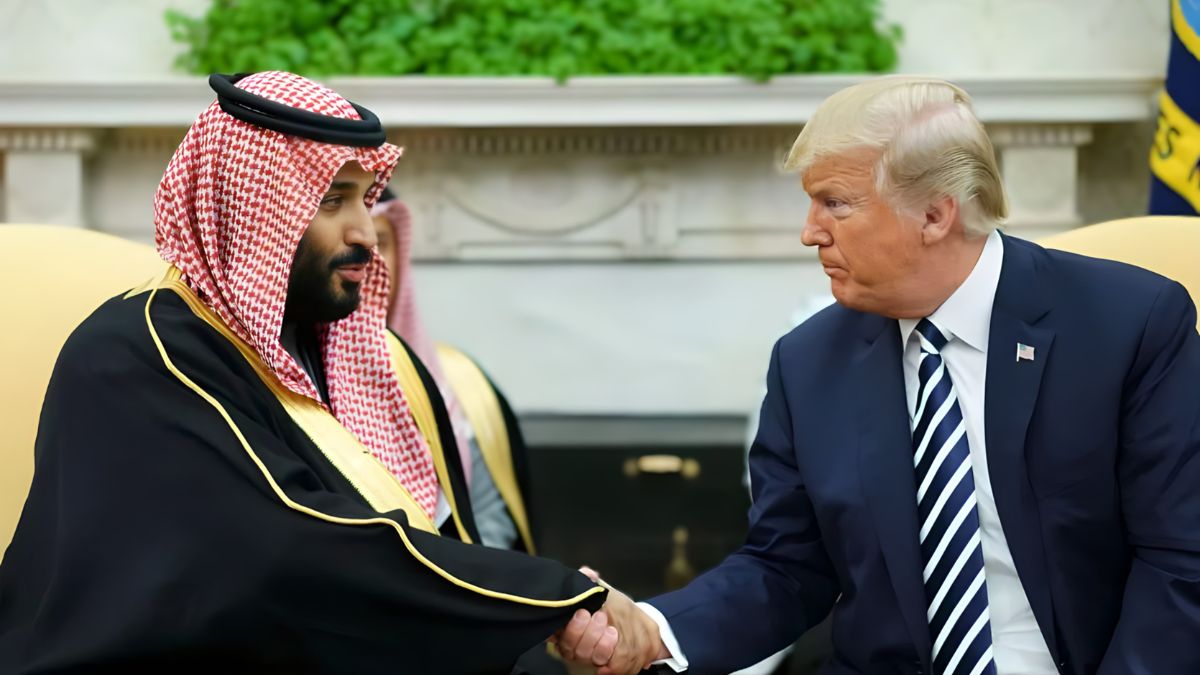
The Trump-MBS meeting on 18 November at the White House reinforced transnationality as the new normal in the US-Saudi partnership. The Trump administration views Saudi Arabia primarily through a business lens while recognising its significance as a leading regional actor in the Middle East. MbS, on the other hand, acknowledges the continued pre-eminence of the US in terms of security and regional stability, while also recognising the growing business and economic opportunities elsewhere. That way, there was a continuity in terms of the previous meetings and engagements between the two leaders.
The bulk of the agreements reached during the Trump-MBS meeting focused on realising economic and business opportunities. Hence, MBS announced that Saudi Arabia is ready to invest US$1 trillion in the US market, representing a US$400 billion increase from the US$600 billion announced during the May Trump visit to Riyadh. With this, the Trump administration hopes to strengthen the US economy and generate more jobs for Americans. From the Saudi perspective, it signalled continued confidence in the American economy, showing readiness to commit significant funds to foreign investments. Besides, three critical agreements were signed, namely the Joint Declaration on the Completion of Negotiations on Civil Nuclear Energy Cooperation, a Critical Minerals Framework agreement and an MoU on AI cooperation. These deals align with MbS's vision for a post-oil future for Saudi Arabia, which aims to capitalise on its business and strategic potential.
Finally, the two sides announced the signing of the US-Saudi Strategic Defence Agreement (SDA), which reinforces Saudi dependence on the US for its defence and security. In addition, President Trump approved the sale of F-35 fighter jets to Saudi Arabia, while the two sides also agreed to the sale of nearly 300 American tanks to the Kingdom. This was accompanied by the announcement that the Trump administration would designate Saudi Arabia as a major non-NATO ally (MNNA), underlining the continued commitment to the Kingdom's security.
The Trump-MBS meeting underscored the enduring special relationship between the US and Saudi Arabia, which dates back over eight decades. However, it also reinforced the changing nature of the partnership, which has become more transactional and interdependent in the twenty-first century due to several domestic, regional, and international factors.
