



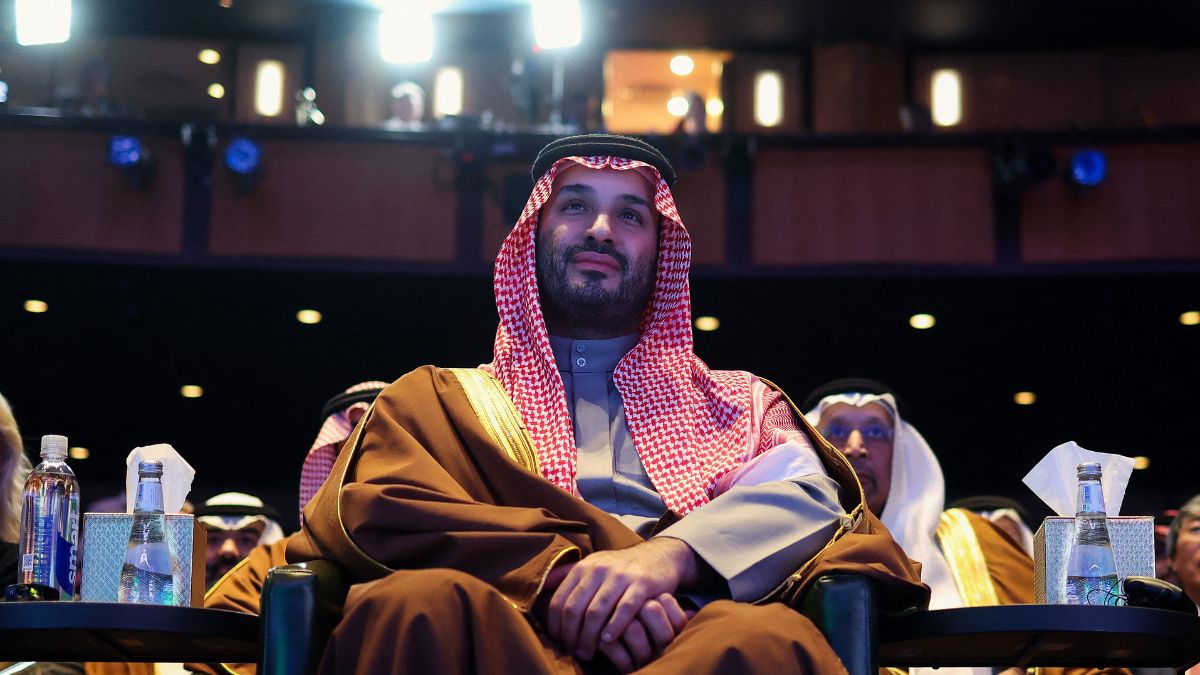
The successful visit of Saudi Crown Prince Mohammed bin Salman to the US is garnering so much attention, for the royal treatment accorded to the future king by Washington.
At the lavish black-tie dinner in the East Room on Tuesday to honour Mohammed bin Salman, US President Donald Trump described himself as the “best friend” of the monarch. His “bear hug” of the Crown Prince was interpreted by many as a reflection of Trump’s appreciation and interest in absolute monarchy.
But, the keen eyes of social media have now begun to analyse the body language of the Crown Prince, focusing on his micro-expressions during his interaction with media persons at White House.
The event also saw Mohammed bin Salman fielding a question over his alleged role in the killing of New York Times journalist Jamal Khasshogi, a topic of great discomfort.
Multiple users on X noticed that Mohammed bin Salman was rubbing his fingers or pressing them tightly, a classic sign of tension or anxiety. In another instance, he was seen placing his arm across his body as a barrier, which they believe “indicated emotional withdrawal or a desire for self-protection.”
”This contrasts with the outward celebration and is interpreted as a sign of discomfort from sensitive questions or media pressure,” a user said on X.
The same user also claimed that when Trump boasted about an attack on Iran, Mohammed bin Salman showed clear signs of discomfort: a sideways glance, partial eye closure (eye block), and hand movements.
“This reflects diplomatic tension, especially with the improvement in Saudi-Iranian relations since 2023, and is interpreted as an indirect rejection of escalation,” he claimed.
Meanwhile, some disagreed with this observation. One user said the gesture had nothing to do with discomfort. “I mean, a statesman of the stature of Mohammed bin Salman didn't take lessons in body language?. The gesture conveys discipline and control over the situation because the President deviated from the formal context and directed direct praise to the Prince, and the response here is in body language—the hand movement here is discipline and control over the situation and respect for every word he said about him without getting carried away with him in conversation,” one user justified.
