



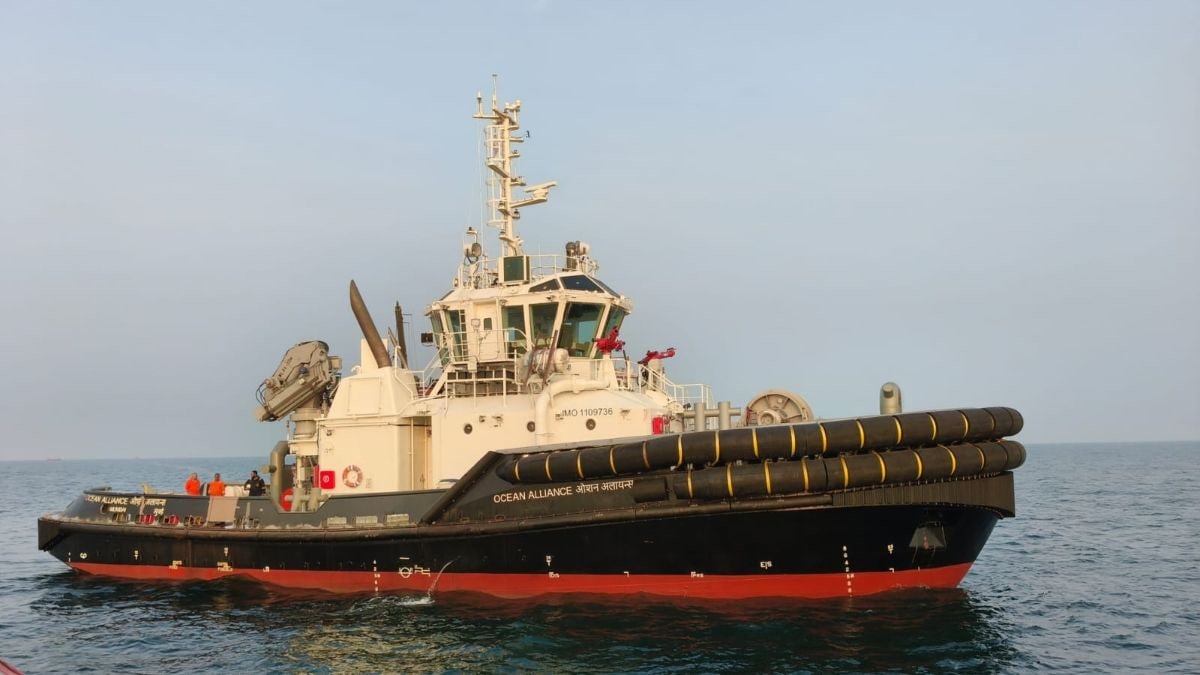
India’s maritime ambitions are entering a pivotal phase, with shipbuilding emerging as an important part of a broader industrial ecosystem spanning manufacturing, logistics, trade, technology, skills, financing and infrastructure. India aims to become one of the world’s top 10 shipbuilding nations by 2030 and rank among the top five by 2047.
The global maritime industry is also evolving rapidly. Cleaner fuels, digital vessels, automation and changing trade patterns are reshaping how ships are designed, built and operated.
From individual projects to an interconnected programme
Shipbuilding at scale cannot be approached as a collection of independent infrastructure projects. Expanding a shipyard requires land, utilities, equipment, financing and regulatory approvals. Building vessels also depends on engineering and design capabilities, specialised machinery, reliable suppliers and a skilled workforce.
The interdependencies are significant. A shipyard may be completed on schedule, but its capacity cannot be fully utilised if equipment is delayed, suppliers are not ready, skilled workers are unavailable, or orders do not materialise as planned. This is why programme execution matters. It connects individual projects to a larger strategic objective, enabling organisations to manage dependencies, align resources and sequence investments in a way that supports the overall outcome.
India is advancing multiple priorities to strengthen its shipbuilding ecosystem, including financing, infrastructure development, shipbuilding capacity, research, technology and skills. Each contributes to the sector’s development.
Coordination will determine the speed of scale
Shipbuilding brings together a wide range of stakeholders, including government agencies, shipyards, vessel owners, equipment manufacturers, technology firms, classification societies, financial institutions, logistics providers and suppliers. The challenge is not to eliminate complexity, which is inherent in large industrial programmes, but to anticipate and manage interdependencies before they become delays, cost overruns or underutilised capacity.
This requires aligning shipyard expansion with future vessel demand, providing suppliers with sufficient visibility to plan investments, and developing workforce capabilities before facilities become operational. Financing, regulatory approvals, equipment procurement and commissioning must also be planned in relation to one another rather than treated as separate activities.
Effective programme governance can help bring these elements together. Clear decision-making structures, regular reviews of progress and risks, and timely escalation of issues enable stakeholders to address constraints before they affect wider delivery.
Building an ecosystem, not just shipyards
India’s shipbuilding opportunity extends well beyond the shipyard itself. A competitive industry can support a broader manufacturing base, creating demand across steel, engineering, propulsion systems, electrical equipment, electronics, digital technologies, specialised components, logistics and professional services.
Developing this ecosystem requires supplier readiness to be treated as an integral part of programme planning. As shipyards scale, domestic suppliers need greater visibility into future demand, production volumes, quality expectations and technology requirements. Stronger coordination between shipbuilders and suppliers can improve planning, reduce uncertainty and support more reliable delivery schedules.
Standardisation, where commercially and technically appropriate, can also improve productivity and simplify procurement and production processes. At the same time, investments in supplier capability, quality assurance and technology adoption can help domestic businesses meet the requirements of a more sophisticated shipbuilding industry.
Technology will play an increasingly important role in this transition. Digital systems, automation and alternative fuels are creating new requirements across vessel design, engineering, safety and operations.
Bridging the skills gap
India’s shipbuilding ambitions will also depend on the availability of professionals who can manage complex, interconnected programmes. As India expands its manufacturing and infrastructure capabilities, the demand for professionals equipped to manage large-scale, complex projects will continue to grow. This highlights the importance of strengthening project management capabilities across sectors, including shipbuilding, manufacturing, infrastructure, energy and technology.
Shipbuilding will draw on many of the same capabilities required across these sectors. Workforce planning must therefore progress alongside infrastructure development, rather than follow it. Technical expertise will remain essential, but it must be complemented by leadership, communication, strategic thinking, risk management and the ability to navigate uncertainty.
Turning ambition into industrial advantage
India’s shipbuilding opportunity is significant. Realising it will require the country to translate policy intent, investment and infrastructure into sustained industrial growth. This means looking beyond capacity expansion to build stronger coordination across the value chain, develop a resilient supplier ecosystem, prepare the workforce for future requirements and improve the predictability of project delivery.
Ultimately, India’s shipbuilding ambitions will be measured not only by the capacity it creates, but by the value that capacity delivers. Programme execution will be critical to turning that ambition into a lasting industrial advantage.
The author is managing director, Project Management Institute (PMI), South Asia.
The opinions expressed in this article are those of the author and do not purport to reflect the opinions or views of THE WEEK.
