



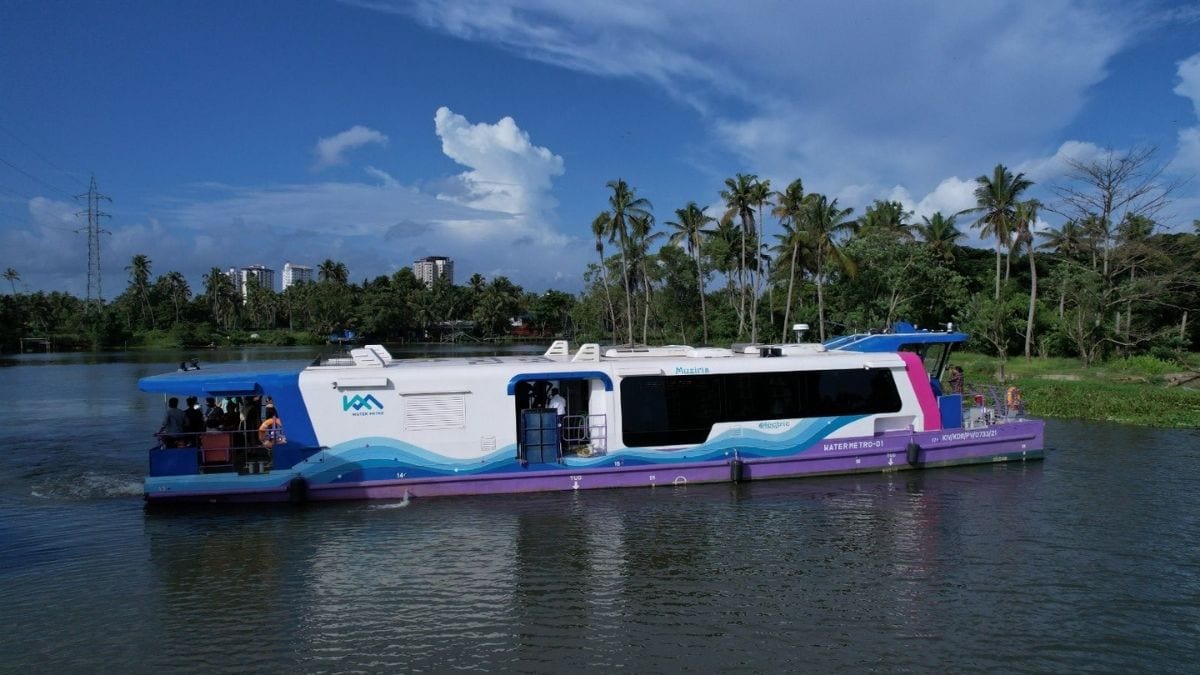
The Kochi Water Metro Limited (KWML) has moved closer to becoming India's first water transit service to begin generating carbon credits in its daily operations.
Known as the Carbon Credit Validation initiative, the agreement was signed on Wednesday with Bengaluru-based Kosher Climate to convert environmental impact into long-term value.
The carbon credits project will be implemented under a revenue-sharing model to ensure that KWML will face no financial liability.
"All costs related to carbon credit certification, technical studies, documentation, and international approvals will be borne by the agency,” it said in a statement, as per an Indian Express report.
As per the new agreement, KWML stands to gain 71 per cent of the green revenue generated from the sale of its carbon credits—separate from that generated by fares.
What exactly are carbon credits?
Carbon credits are tradeable certificates that represent one metric tonne of carbon dioxide (CO2)—or an equivalent amount of another greenhouse gas—that has been stopped from reaching the atmosphere.
Improving the efficiency of vessels to have them reduce or eliminate their carbon emissions is one way in which carbon credits can be generated. Other ways include protecting forests, restoring wetlands, or improving building designs.
But what is the point behind this futuristic-looking barter-like system? It provides an incentive to cut carbon emissions, in line with global sustainability goals to fight climate change.
Once verified, these carbon credits can be sold—like trading cards—to buyers in carbon markets. Companies or governments that buy carbon credits are those who are above their legally mandated carbon emission limits, and would need to buy carbon credits to fall within them.
Apart from converting efficiency into profit, carbon credits have also become an asset class, meaning that they can be traded in carbon and stock markets like you would with other assets like oil, gold, or real estate.
By positioning itself at the forefront of the carbon credits system push in the maritime sector, the KWML move also serves as a push for India's own rate-based Emissions Trading System (ETS) under its Carbon Credit Trading Scheme (CCTS), adopted in July 2024.
In that regard, Kosher is also expected to assess the environmental impact of the overall Kochi Water Metro framework—from infrastructure to operations—to help it get certified under internationally recognised carbon credit standards.
It is only once the water metro service is certified that the carbon credits it generates can be traded in global carbon markets, getting the ball rolling for more water metro services and other maritime stakeholders to follow suit.
