



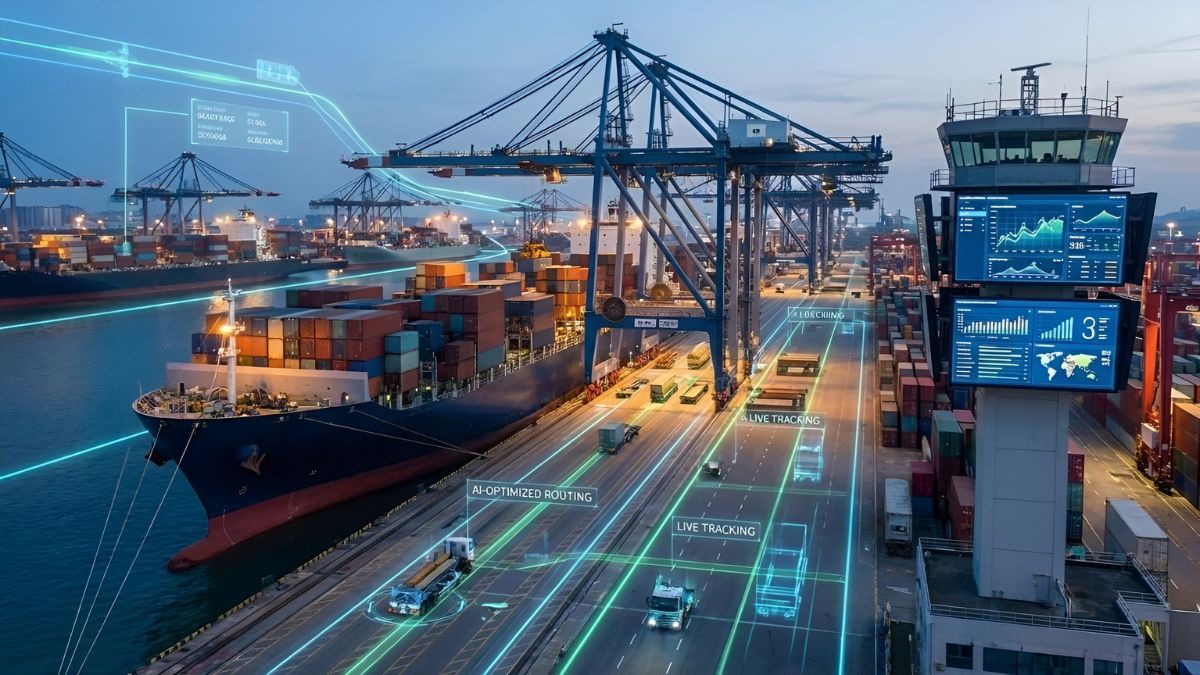
Adani Ports and Special Economic Zone (APSEZ) on Tuesday announced plans to deploy an AI-augmented operating system and related tech at 15 of its container terminals across nine ports.
This deployment is part of investments worth up to $100 million by Adani Ports into Kaleris, a cloud-based supply chain execution firm that makes terminal operating systems.
The APSEZ investments into Kaleris' operating systems, set to take place in two phases, are aimed at automating operations, improving productivity, and unlocking additional cargo handling capacity.
Indeed, Adani Ports notified that it has already deployed N4 Terminal Operating Systems (TOSs) across six of its ports under the first phase of the partnership, while the second will not only expand on this reach, but also improve on the TOS with Kaleris' Advanced Optimization (AO) integration.
The AI-led system is expected to boost Adani Ports' overall capacity by about 91 million metric tonnes (MMT)—or about 10 per cent of its current capacity—by 2030, which is when APSEZ plans to reach a cargo throughput of one billion tonnes per annum (1 BTPA).
The AO integration is also expected to improve efficiency—20 per cent in Rubber Tyred Gantry (RTG) cranes, and up to 14 per cent in terminal trucks.
In that regard, the $100 million partnership with Kaleris is part of its broader $850 million spending towards technology and decarbonisation, in the run-up to a 1 BTPA throughput in 2030.
"AI-enabled automation will define the next frontier of competitiveness in ports and logistics ... the Kaleris integration will enhance productivity, improve turnaround time, and consistently deliver a superior customer experience," said Ashwani Gupta, Whole-time Director and CEO, APSEZ.
