



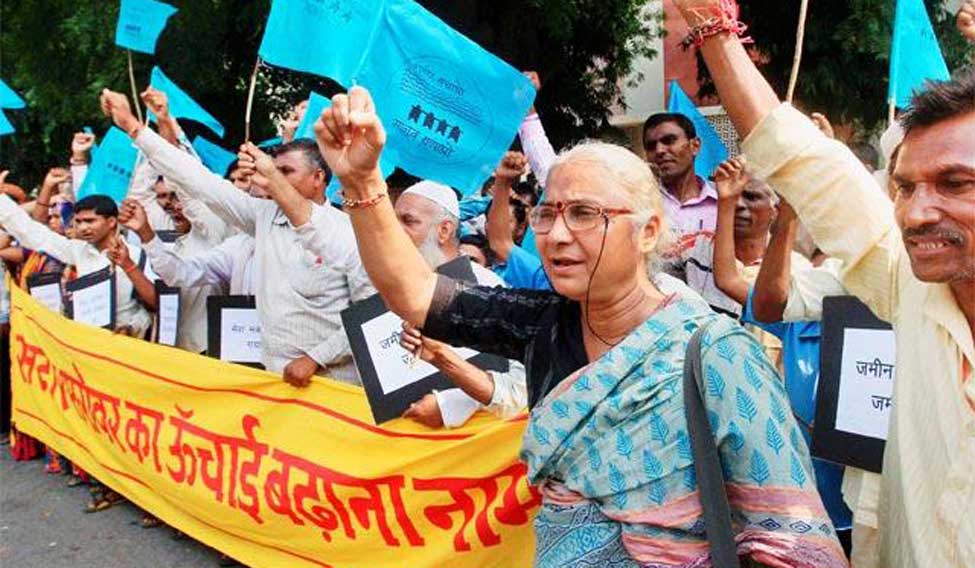
The Sardar Sarovar Dam, built across river Narmada in Gujarat, is a harmful project for various reasons. What Prime Minister Narendra Modi dedicated to the nation at the Kewadia dam site on September 17, 2017, was a disastrous structure that has made life hell for lakhs of people. The project envisages irrigating the water-starved areas such as Kutch and Saurashtra of Gujarat and of Rajasthan as well as generating electricity. The reservoir of Sardar Sarovar spreads beyond the hilly ranges of Gujarat to numerous villages of Maharashtra and Madhya Pradesh.
There were agitations by public and litigations during the construction of the dam which lasted for years. The Narmada Bachchao Aandolan has been fighting in courts of law and in government offices for 33 long years for justice.
Most nations of the world have realised and accepted the fact that giant projects that require large-scale evacuation of people are a mistake and that the damage these projects inflict on people, environment and culture can never be reversed. While withdrawing financial assistance to Sardar Sarovar in 1992, World Bank had asserted that large-sized dams are being decommissioned all over the world.
About 2.5 lakh people have already been evacuated, according to the government. About half of the evacuees are adivasis from Gujarat, Maharashtra and Madhya Pradesh. The order by the Narmada Water Disputes Tribunal to give adivasis alternative land as compensation was scuttled. Court verdicts passed in 2000 and 2005 went unheeded. Now, when the dam’s height is raised by 17metres, 192 villages and one town in Madhya Pradesh alone will be submerged. A total of 40,000 houses will disappear; lakhs of people will be forced out of their homes. Besides, the reservoir will swallow 30,000 hectares of farmlands.
The country’s laws, court verdicts and tribunal verdicts clearly stipulate how rehabilitation must be carried out. There are strict orders that the water level must not be raised before the rehabilitation is complete. However, the officials are submitting false affidavits in courts on behalf of the government. The Narmada Control Authority allowed all the gates of the dam to be closed and to raise the water level by 138.68metres based on the untrue reports submitted to it by the sub-committees on environment and on rehabilitation. The government’s stance that the dam’s construction has been completed is untrue. Construction of canals are only half way through. Farmers, adivasis and the fisherfolk have been forcibly driven out of their dwellings and lands in order to provide water and electricity to corporates.
Efforts at rehabilitation have hardly reached anywhere. The villagers who were forced out of their homes have been asked to live in tin-sheds in wretched conditions. Rules require that amenities such as clean water, electricity, toilets, schools, hospitals, markets and places for entertainment have to be provided when evictees are rehabilitated. However, the government is maltreating the evictees by not giving them any amenities, by not giving them space to raise their cattle, by not giving them alternative land, and by raising the dam’s level.
The government must not embark on any development project which disregards the concerns and comforts of its own people, which pollutes land and water, or which is of no use to the people at large. Our times demand a development policy that is decentralised and eco-friendly.
The beautiful and scenic state of Kerala needs to be very careful while envisaging and implementing development projects. Projects that are not eco-friendly are mainly to be blamed for Kerala’s fast-changing climatic conditions. This must be kept in mind while considering Athirappilly or any other such construction project. True development is protecting earth, which has to be handed down generations.