



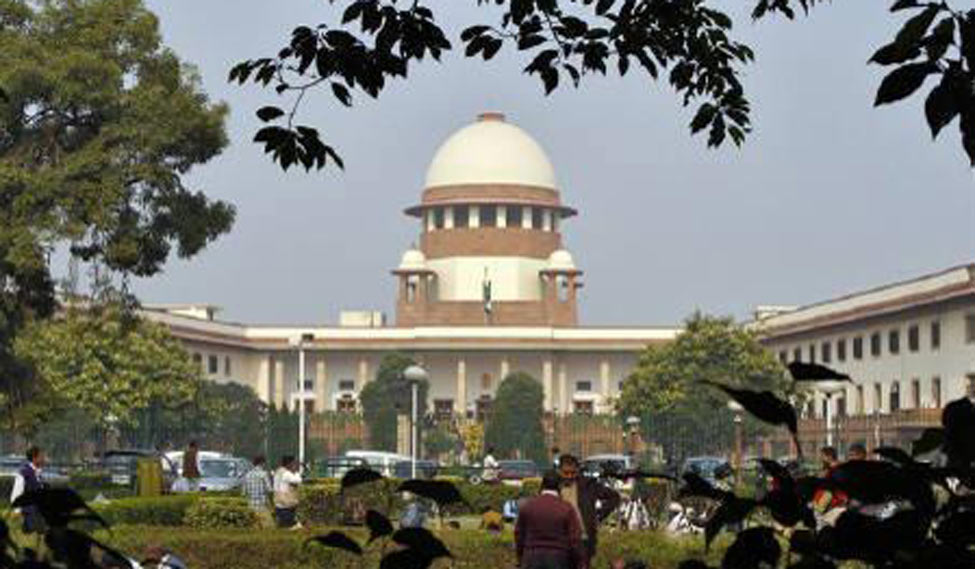
Sunlight is the best disinfectant, said Justice Louis Brandeis of the US Supreme Court, way back in 1913. On January 24, 1975, in State of UP v. Raj Narain, Justice K.K. Mathew of the Indian Supreme Court said, “The people of this country have a right to know every public act, everything that is done in a public way, by their public functionaries. They are entitled to know the particulars of every public transaction in all its bearing.”
These pleas for transparency in state action echoed in the Supreme Court of India recently. The matter in issue was whether the governor of Goa would be answerable under the Right to Information Act.
On July 6, a bench consisting of Justice Arun Mishra and Justice Amitava Roy reportedly asked the Solicitor General Ranjit Kumar as to why there is a demand for secrecy for gubernatorial office, when there is nothing to hide even for the chief justice of India. Inter alia, the bench opined that the governor and the chief justice should be brought within the ambit of the Right to Information Act.
These were only observations and not conclusive findings in a judgment. The question whether the office of the chief justice of India comes within the ambit of India’s most radical legislation is now pending consideration by the larger bench of the Supreme Court. The High Court of Delhi had earlier decided the question in the affirmative. In 2010, a three-judge bench of the Delhi High Court consisting of Justice A.P. Shah, Justice Vikramjit Sen, and Justice S. Muralidhar, in a historical verdict held that the Information Act would extend to the office of the chief justice of India as well. The verdict demonstrated not only the rigour of the law, but also the unique potential of judicial federalism in the country where a High Court can render a judgment “against the Supreme Court.” The Delhi High Court said that “judicial independence is not the personal privilege or prerogative of the individual judge; it is the responsibility.... (A) judge must keep himself absolutely above suspicion; to preserve the impartiality and independence of the judiciary and to have the public confidence thereof.”
The Delhi judgment could not operate, as it was taken up before the Supreme Court in appeal. However, on the administrative side, the Supreme Court has, at least theoretically, consented to declare the assets of the individual judges. But, according to legal journalist Murali Krishnan, details of the assets of 13 Supreme Court judges have not been so far published on the Supreme Court website (Bar & Bench, July 6, 2017). This situation occurred despite the full court resolution in 1997 that “every judge should make a declaration of all his/her assets” which was reiterated by the full court in 2009 that said that the publication will be done in the court’s official website.
Few cases relating to transparency in the process of judicial selection and other connected issues are awaiting adjudication of the Supreme Court. Though the bench consisting justices Misra and Roy was dealing with the question of openness required in Goa Raj Bhavan, the comment reflected a judicial view that correctly treats the office of the chief justice of India also as a public office, like any other office.
Judiciary, in all respects, is part of the modern state and the office of the chief justice of India cannot remain enigmatic. The nation has been demanding more transparency in the process of selection of judges, the umpires of democracy. Justice Ruma Pal, who herself was a respected judge of the Supreme Court, in another context, had said that “the process by which a judge is appointed to a superior court (in India) is one of the best kept secrets in this country.”
Recently in a separate judgment in Justice Karnan’s case, Justice Chelameswar and Justice Gogoi have pleaded for a national debate on the unsatisfactory method of judicial selection and the lack of judicial accountability in higher courts. Fortunately, by now, we have radicals on the bench to urge for reforms.
To be open means to be accountable. This is why even the passing observations from the bench of the highest court make a fascinating read. Ultimately, the apex court needs to assert its democratic credentials. Transparency is also a judicial imperative.
Kaleeswaram Raj is a lawyer in the Supreme Court and the Kerala High Court