


 Add as a preferred source on Google

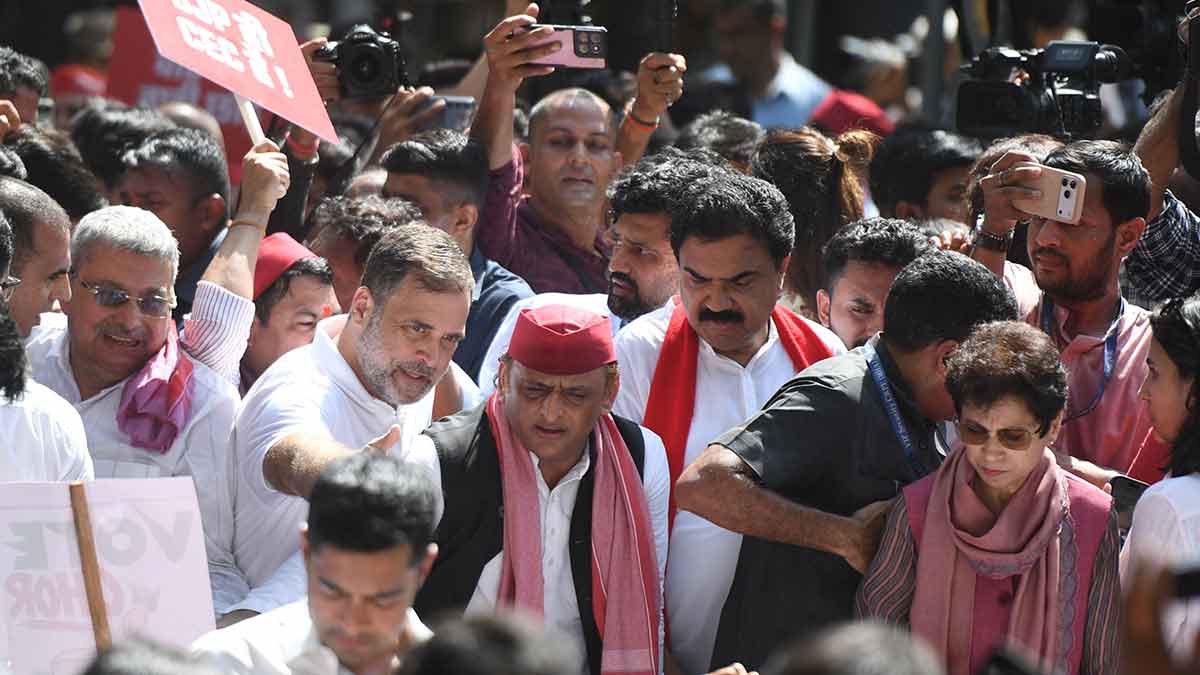
As the Congress and the Samajwadi Party sit down to discuss the number of seats each will contest in the upcoming Uttar Pradesh Assembly elections, the Congress is seeking more than what its electoral network on the ground might justify. However, its political face, which is expected to attract backward communities, has given it an edge beyond the conventional criteria of seat-sharing, where leadership, past electoral performance and social arithmetic usually determine the distribution of seats among alliance partners.
But if the Congress is demanding more than 100 seats, what is its actual standing on the ground? In the 2022 Assembly elections, it won just two seats. In the 2024 Lok Sabha elections, it won six of the 17 seats it contested, a performance that translates into an advantage across roughly 30 Assembly segments. However, this time, the party has a bigger political advantage. It has sought to build a Dalit-Muslim-Brahmin political identity that could complement the SP's traditional support base among Muslims and Yadavs. According to political observers, the movement of Dalit voters towards the Opposition could be smoother with the Congress being part of the alliance.
Therefore, the Congress's relevance in Uttar Pradesh goes beyond its ground network, cadre strength, leadership or standalone electoral prospects. Its political appeal could provide an additional boost to the SP's existing support base, helping the alliance win seats where the electoral arithmetic is otherwise finely balanced.
"If Congress gets more than 75 seats, with at least one seat in each district, it will send a message across the state and encourage Congress leaders to work on the ground. It will give them hope of reviving the party in a state where it has not performed well lately. If it gets more than 100 seats, it will make Congress more confident and active across several constituencies and also give the alliance a sense of respectability," a Congress leader said.
However, the Samajwadi Party has an established cadre network across Uttar Pradesh and enjoys decisive influence among sections of the electorate. According to SP leaders, giving the Congress too many seats could leave their own party workers disappointed, particularly in constituencies where they have already begun preparing for the elections. The seat-sharing arrangement, therefore, will have to strike a balance so that neither side feels short-changed.
For both parties, however, the real test will begin after the seat-sharing arrangement is finalised. They will have to work together, coordinate campaigns, share strategies and give each other's leaders adequate space so that voters see them as a cohesive alliance and a credible alternative to the BJP.
The top leadership on both sides appears positive about taking the partnership forward. Akhilesh Yadav of the SP and Priyanka Gandhi Vadra of the Congress, who has been entrusted with the responsibility of negotiating the final arrangement with Akhilesh, are seen as keen to nurture a relationship that translates into a coordinated campaign and, eventually, a winning combination.
The partnership has already delivered electoral dividends. In the 2024 Lok Sabha elections, the SP-Congress alliance won 43 of Uttar Pradesh's 80 seats, dealing a major blow to the BJP and preventing it from securing a majority on its own.
