


 Add as a preferred source on Google

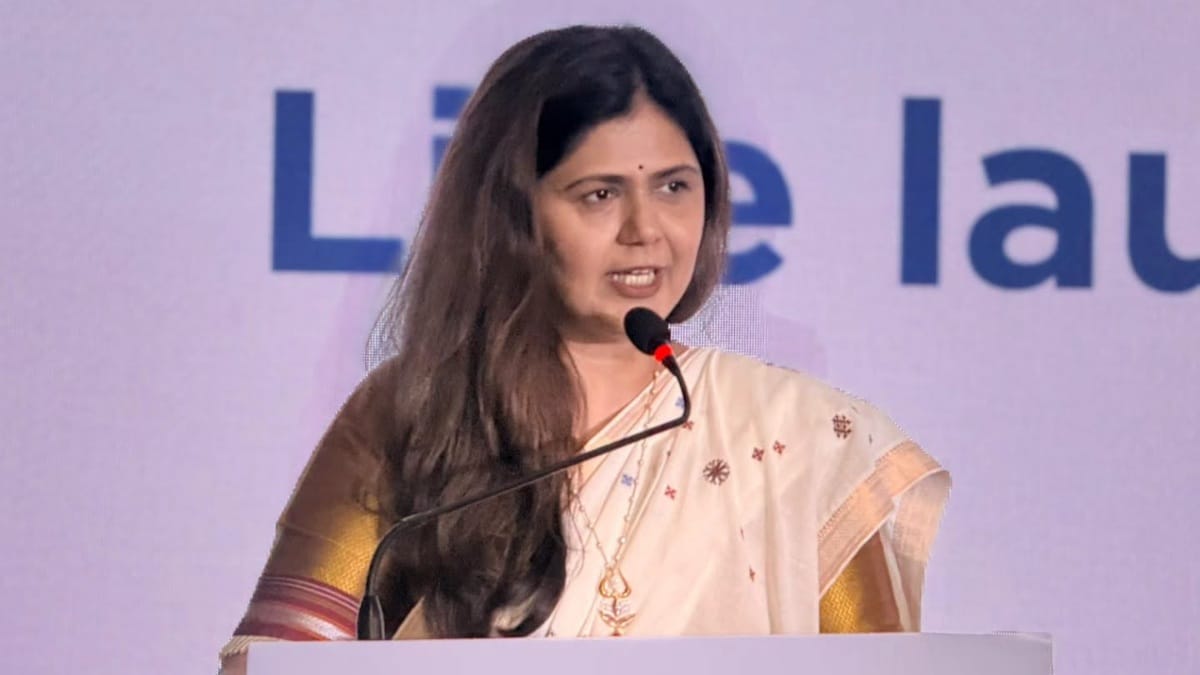
Maharashtra is set to pioneer a new approach to tackling industrial pollution with the launch of India's first sulphur dioxide (SO₂) emissions market. The initiative, launched by the Maharashtra government and the Maharashtra Pollution Control Board (MPCB), aims to reduce SO₂ emissions by 30 per cent over the next five years by allowing industries across 17 categories to trade emission permits and meet pollution targets more cost-effectively.
In a conversation with THE WEEK, Maharashtra Environment and Climate Change Minister Pankaja Munde discusses the significance of this first-of-its-kind initiative, the challenges of balancing industrial growth with environmental protection, the government's strategy to tackle air pollution and the role of emerging technologies such as artificial intelligence in strengthening environmental monitoring and enforcement.
Maharashtra is pioneering India's first SO₂ emissions market. What does this initiative signal about the state's commitment to tackling industrial pollution, and why was this model necessary at this stage?
For all these years, the environment department and regulatory authorities have largely played the role of controlling pollution. It was like being a whistleblower: if an industry was polluting, we would issue notices or even order the closure of its operations. For the first time, we are adopting an approach in which we are participating in resolving the problem of pollution rather than merely regulating it. This is a more collaborative approach, and initiatives such as the SO₂ emissions market are a step in that direction.
Since emissions trading allows industries to buy and sell permits, how will you ensure that this does not become a licence for polluting industries to continue emitting harmful gases?
There is a limit for everyone. This initiative is not about giving industries permission to pollute; it is about encouraging them to innovate. Trading will happen only when industries do not utilise their entire emission allowances. In other words, industries that reduce their emissions can trade their surplus permits. This creates an incentive for them to pollute less, which is why I believe this model is beneficial.
Is the target of reducing SO₂ emissions by 30 per cent over five years ambitious enough, given Maharashtra's industrial pollution burden? Do you see scope for making the targets more stringent in the future?
We are very strict about pollution control. Industries also need to renovate and modernise their plants because many of them are very old, and that itself contributes to pollution. We are working with industries to encourage such renovation and modernisation. This is why we are welcoming innovative ideas and initiatives such as the SO₂ emissions market.
Maharashtra has struggled with air pollution in cities such as Mumbai, Pune and Nagpur. Beyond the SO₂ emissions market, what are the government's key interventions to tackle pollutants such as PM2.5 and PM10?
As I said, our department is responsible for controlling pollution. We are engaging with builders because Maharashtra is witnessing significant infrastructure development. Coastal roads, metro projects, bridges, national highways and state highways are being constructed across the state.
Alongside this, industrialisation is also progressing rapidly. Such development inevitably brings environmental challenges, particularly pollution. In cities such as Mumbai, winter brings changes in atmospheric pressure and other weather conditions that affect air quality and visibility. This can create a foggy atmosphere.
However, if you look at the AQI, not every area is in the orange or red category. In Mumbai, for instance, the problem is concentrated in certain pockets. Reduced visibility does not necessarily mean that air quality is equally harmful everywhere. These seasonal conditions tend to recur every year, particularly in December and January.
What tangible improvements in air quality and public health can citizens expect from the government's pollution-control initiatives?
People must celebrate festivals responsibly. They should avoid creating noise pollution and using firecrackers that disturb others. Festivals can be celebrated in different ways without inconveniencing people around us. The Supreme Court has also issued guidelines, and people must follow them.
But the issue is not limited to festivals. We also need to look at transportation and construction activities. There are several construction sites that are not following the prescribed environmental norms. We are taking action in such cases.
As I said, Maharashtra is a growing economy, and development is happening at a very rapid pace. However, we must ensure that the environmental consequences of this growth are addressed. Pollution is one of the side effects of rapid development, and we have to work towards minimising it.
