



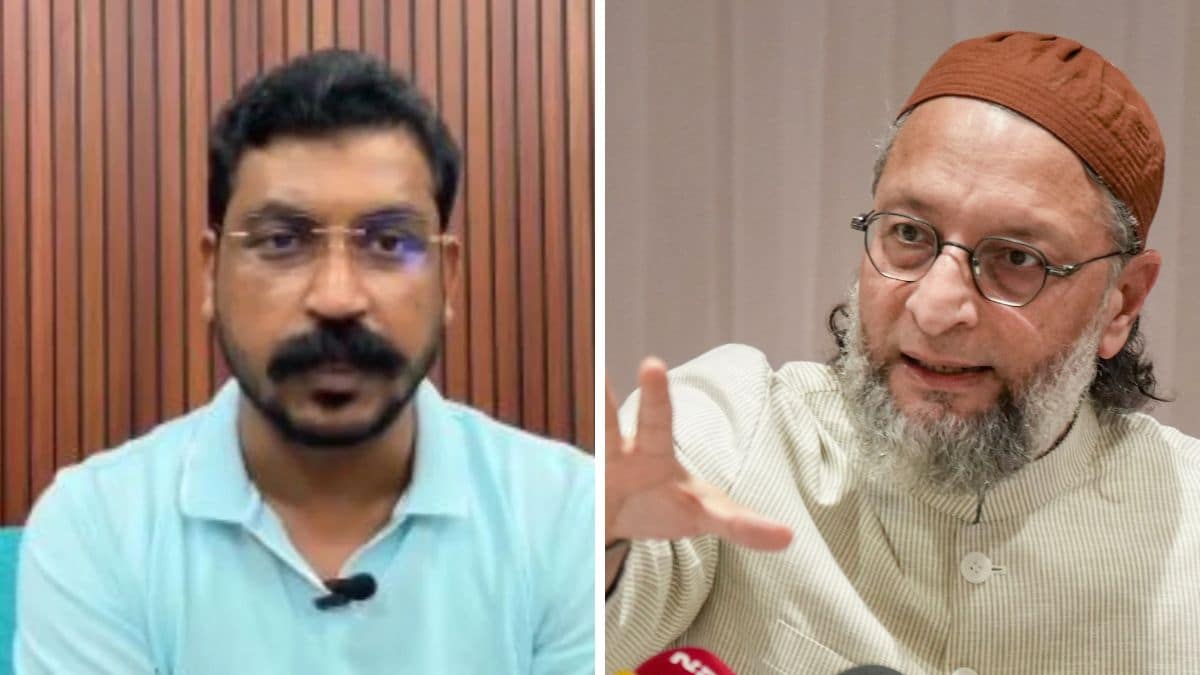
Gearing up for the 2027 Uttar Pradesh Assembly elections, All India Majlis-e-Ittehadul Muslimeen (AIMIM) president Asaduddin Owaisi and Azad Samaj Party (Kanshi Ram) chief Chandrashekhar Azad announced their political alliance in Lucknow on Thursday.
Both leaders announced 'Samajik Parivartan Morcha' ahead of UP assembly polls. After announcing the pact, Azad said it's being dubbed the 'third front', but this is a 'front for social change'. Both leaders announced that their parties will jointly contest the 2027 Uttar Pradesh Assembly polls.
Azad added that the coalition was "large-hearted" and any other party, including the Samajwadi Party and the Congress, were welcome to contesting the polls in support of their alliance if they wanted to stop the BJP from coming to power in UP again.
Political observers say the proposed alliance could pave the way for a third front in Uttar Pradesh, positioned outside both the BJP-led NDA and the Samajwadi Party–Congress opposition camp.
“The nature of the pact and other details will be revealed on Thursday during the press conference to be addressed by AIMIM and Bhim Army leadership," Chauhan told PTI.
Both leaders arrived separately in Lucknow ahead of the press conference. While responding to the media, Azad said that there are many issues that need to be discussed.
“There are many issues we need to discuss. Issues like vote theft are before us. We are still suffering the consequences of demonetisation, but the bigger concern is the declining number of government jobs," he said.
He further pointed out the difficulties faced by educated young people from Dalit and backward communities in securing employment despite having degrees.
“The government will have to answer to the people for all these failures in the coming elections," Azad said.
Aiming for the Dalit-Muslim vote bank?
The proposed alliance is seen as an attempt to consolidate Dalit and Muslim voters, who together constitute a significant share of Uttar Pradesh’s electorate.
Approximately 19 per cent of the state's population is constituted by Muslims, while Scheduled Castes (SC) account for around 21 per cent, reported ANI. The two communities together represent nearly 40 per cent of the population, making them an important electoral constituency.
Despite efforts to expand beyond its Telangana stronghold, the AIMIM failed to open its account in the 2022 Uttar Pradesh Assembly polls, winning less than 0.5 per cent of the vote across 95 seats. Nevertheless, Owaisi retains pockets of influence among minority voters, particularly in western Uttar Pradesh and Rohilkhand.
Meanwhile, Azad has emerged as a prominent Dalit political leader. His victory from the Nagina Lok Sabha constituency in the 2024 general elections gave his party greater visibility in UP politics.
The proposed alliance could also affect the electoral calculations of the Samajwadi Party, which has been building its political strategy around its PDA formulation, representing backward classes, Dalits and minorities.
